Community Leaders
Education as a Calling: Joseph Kerry on Teachers, Families, and the Future of Utah Schools
Joseph Kerry frames education not as a system, but as a calling rooted in relationships, trust, and human formation. Drawing from personal experience and policy insight, he warns that as schools drift toward technology and standardization, they risk losing what matters most. Students need more than content delivery. They need teachers who see them, skills that endure, and environments where they feel safe enough to truly learn.



At its best, public education is not just a system. It is a calling. It is built on relationships, shaped by trust, and measured by what a student becomes long after the bell rings.
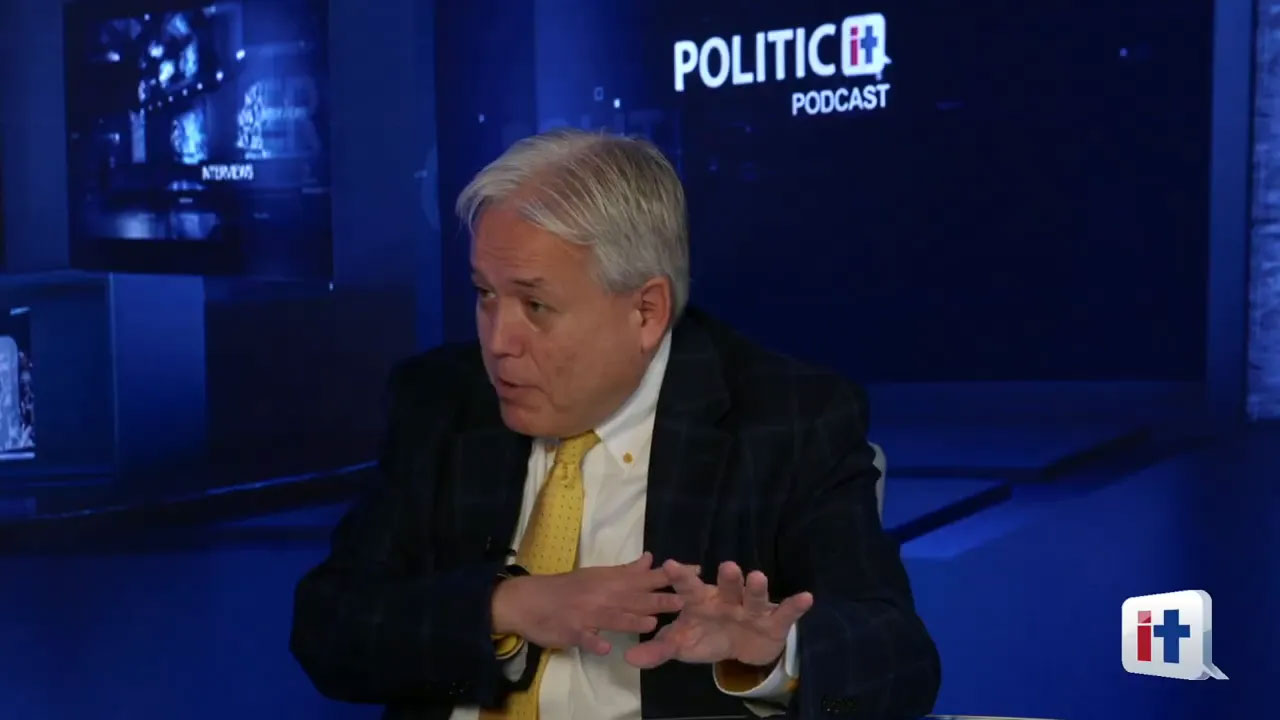
In this episode of the PoliticIt Podcast, Senator John D. Johnson sits down with Joseph Kerry, a member of the Utah State Board of Education representing District 2, to explore a question that sits beneath nearly every education debate today:
What happens when schools drift from relationships to systems, from formation to delivery, and from trust to friction?
Kerry’s answer is not abstract. It is rooted in lived experience, and it carries clear implications for policy, technology, and the future of Utah schools.
PoliticIt Radio – Teach Me How to Think
A foundation built before policy
Kerry traces his earliest understanding of education to his mother.
Her story carries the weight of upheaval and survival. Born in what is now North Korea, she fled south before the war broke out, crossing to safety near the DMZ. Years later, Kerry learned something that deepened the meaning of that story. His grandfather had run a bookstore in North Korea.
By day, the store’s public face included regime-approved material. At night, it became something else. A place where ideas about liberty, personal responsibility, and good governance were discussed quietly, and at great risk.
Someone turned him in.
The family later learned that his last known location was near the border between North Korea and China, where he was reportedly sentenced to hard labor.
Kerry does not present this as distant history. He presents it as inheritance.
In his home, education was not optional. It was survival.
“You can skip a meal, but you can’t skip school.”
That line is not rhetorical. It establishes the moral hierarchy that drives his view of education today.


From experience to public service
Kerry’s own academic path reflects a blend of law, policy, and public purpose. He attended Brigham Young University, then Rutgers Law School, and later earned a master’s in public policy from the Eagleton Institute of Politics. He notes that Eagleton is similar in purpose to Utah’s Hinckley Institute, a connection that reflects his return to local service.
But credentials alone did not shape his perspective.
He describes a growing friction he observed between education institutions and parents. A sense that trust was weakening. That decisions were being made at a distance from the families most affected by them.
That friction led him to “jump in.”
Not because education is neutral, but because it is not.
Teach students how to think, not what to believe
Kerry returns repeatedly to a core principle. Schools must teach students how to think, not what to believe.
The statement is widely accepted. The implementation is not.
Every curriculum reflects values. Every institution embeds assumptions. The real issue is not whether beliefs exist in education, but how they are introduced, examined, and challenged.
When pressed on this point, Kerry does not argue for value-free education. He argues for intellectual discipline.
Students should be exposed to ideas. They should be taught to analyze, compare, and evaluate them. They should develop the judgment to make decisions for their own futures.
The drift he describes is subtle but consequential.
When education shifts from reasoning to reinforcement, students may learn what to say without learning how to think. They may succeed within the system while losing the ability to navigate beyond it.

The teacher who changed everything
Kerry’s philosophy becomes concrete in a story from his childhood.
As a student, he struggled socially. His mother looked different from other mothers. She spoke differently. He describes being bullied and feeling out of place.
Then a teacher intervened.
Mrs. Thomas saw something in him that he did not yet see in himself. She helped him fit in. She recognized potential where others saw disruption.
The impact was lasting. For years, her name was part of his password.
That detail matters because it captures something data cannot.
Teachers are not simply instructors. They are often the first adults outside the home who help a child understand who they are and what they can become.
Kerry returns to this as a warning.
When education becomes transactional, when it becomes primarily about content delivery, something essential is lost. Not gradually, but structurally.

AI changes the tools. It cannot replace the mission.
The conversation sharpens when it turns to artificial intelligence.
Kerry is not dismissive of AI. He recognizes its inevitability and its potential. Students will use it. Educators will use it.
But he raises a concern that goes beyond technology itself.
What happens when personalization becomes synthetic?
He points specifically to individualized education plans, particularly in special education. If AI systems begin assembling or shaping these plans, the appearance of customization may mask underlying standardization.
The question is not whether AI can assist. It is whether it quietly shifts decision-making away from human judgment.
This raises real policy questions:
Who is accountable when AI influences student outcomes?
How is human oversight defined and enforced?
What happens when efficiency begins to displace discernment?
Kerry’s position is clear.
AI is a tool.
Students must learn to use it.
Educators must guide it.
But education cannot outsource the human relationship at its core.
Failing students, in his view, looks like placing them in front of screens while removing the teacher from the relational experience. The system may become more efficient. The student becomes less formed.

Durable skills in an uncertain world
Kerry connects this to what he hears from employers.
Technical skills matter. Software matters. Data analytics and visualization matter.
But those are not the limiting factors.
Employers consistently ask for durable skills. The ability to think critically, communicate clearly, generate ideas, and lead.
These are not tied to a specific platform or tool. They are capacities that allow individuals to navigate uncertainty.
This reinforces his broader argument.
A system optimized for delivery can produce competence. It does not necessarily produce judgment.
Safety is the precondition
When Kerry discusses what parents care about most, his answer is direct.
Are students safe?
Are they learning?
He describes visiting public, private, and charter schools and asking families why they chose their school.
The answers are often positive. They love the teachers. They value the experience.
But when families leave, the reason changes.
Students do not feel safe.
Kerry is explicit that safety is not limited to physical security. It includes emotional and relational safety. When students feel threatened, excluded, or unstable, learning is compromised.
Fear consumes cognitive space. Trust changes behavior.
Safety is not an accessory to education. It is a prerequisite.

The financial tension families feel
Kerry also points to a reality that is often discussed but rarely resolved.
At truth and taxation hearings, he heard the same message from both teachers and parents.
Schools need funding.
Families are financially stretched.
This is not an ideological divide. It is a practical constraint.
People support education. They also face limits in their own budgets.
Kerry does not argue for cutting resources reflexively. He argues for prioritization and transparency.
What are we funding?
What outcomes are we producing?
He also raises a point often overlooked. Federal funding comes with conditions. Those conditions influence decision-making and can affect independence.
The tradeoff is not only financial. It is structural.
Stewardship, audits, and independence
This concern led Kerry to push for auditing federal funds received by the Utah State Board of Education.
His reasoning is straightforward.
How much money is being received?
What does it cost to administer?
What conditions are attached?
This is not a rejection of federal support. It is an insistence on understanding its full implications.
Leadership, in his view, requires stewardship. Not just of dollars, but of decision-making authority.

Let teachers teach
Kerry describes a recurring theme in teacher surveys.
Teachers want to teach.
Compensation matters, and recent legislative efforts have improved salary structures. But a persistent concern remains.
Micromanagement.
Teachers feel constrained by layers of oversight that limit their ability to respond to students in real time.
Kerry’s response is not deregulation. It is alignment.
Set clear expectations. Then allow professionals to operate within them.
When teachers have that autonomy, students benefit. Engagement improves. Attendance increases. School becomes a place students want to be, not a place they endure.
When parents speak, listen
Kerry illustrates the importance of community trust through a school closure debate involving Lomanview.
The district had planned to close the school. Parents showed up in large numbers to oppose the decision.
Their argument was not primarily about the building. They acknowledged its limitations.
Their argument was about the teachers.
They trusted them. They believed those teachers cared about their children.
Kerry suggests that this kind of response should trigger a different question.
Not just whether a school is efficient, but what it is doing to generate that level of trust.
That is not easily measured. But it is visible in behavior.
Beyond a single path
Kerry also challenges the assumption that college is the default outcome for all students.
He values higher education. His own path reflects that.
But he argues that the system should not imply that other paths are inferior.
Students should be prepared to pursue a range of futures.
Career and technical education plays a central role in this vision.
Modern CTE includes fields such as:
- digital marketing
- film production
- aeronautics
- advanced technical trades
These are not fallback options. They are legitimate, high-skill pathways.
The goal is not to direct students into one path, but to equip them to choose.

Coordination and leadership
Kerry also reflects on the relationship between the State Board of Education and the legislature.
He describes improved coordination and communication, crediting board leadership, including Chair Hymas, for helping align efforts.
The board consists of 15 elected members with differing perspectives. Attempting to suppress those differences, he argues, is counterproductive.
Effective governance requires engaging those differences and incorporating them into decision-making.
Education policy is not purely administrative. It reflects values, priorities, and community expectations.
Trust as the governing principle
Across every topic, one theme repeats.
Trust.
Trust between families and schools.
Trust between teachers and administrators.
Trust between students and teachers.
When trust exists, systems function more effectively. When it erodes, even well-funded systems struggle.
Kerry’s framework is practical.
If a policy strengthens trust, it supports the mission.
If it weakens trust, it undermines it.
What education is ultimately for
Kerry returns to a final question.
What is the purpose of education?
Not just in terms of content or credentials, but outcomes.
Are students prepared to:
- think independently
- communicate effectively
- pursue meaningful work
- adapt to change
If not, the system may be operating, but the mission is not being fulfilled.

Closing thought
Education debates often focus on systems. Kerry redirects attention to people.
A teacher who sees a student.
A student who feels safe enough to learn.
A system that supports those relationships rather than replacing them.
Technology will continue to evolve. Policy will continue to shift.
But the core question remains.
Does education form individuals who can think, choose, and lead, or does it simply move them through a system?
For Joseph Kerry, that distinction defines everything.
Education is not just a system.
It is a calling.