Community Leaders
Randy Watt on Protest Management, Special Operations & Nonlethal Military Tech | Politicit Podcast
On this episode of the PoliticIt Podcast, Senator John D. Johnson interviews Randy Watt about protest management, use-of-force standards, elite mission planning, and emerging nonlethal military technologies. Drawing on decades in municipal policing and Special Forces command, Watt explains how disciplined preparation, constitutional guardrails, and accountable leadership reduce escalation and casualties. The conversation connects civic protest management with high-risk operations under a single principle: competence plus accountability preserves legitimacy.



Introduction
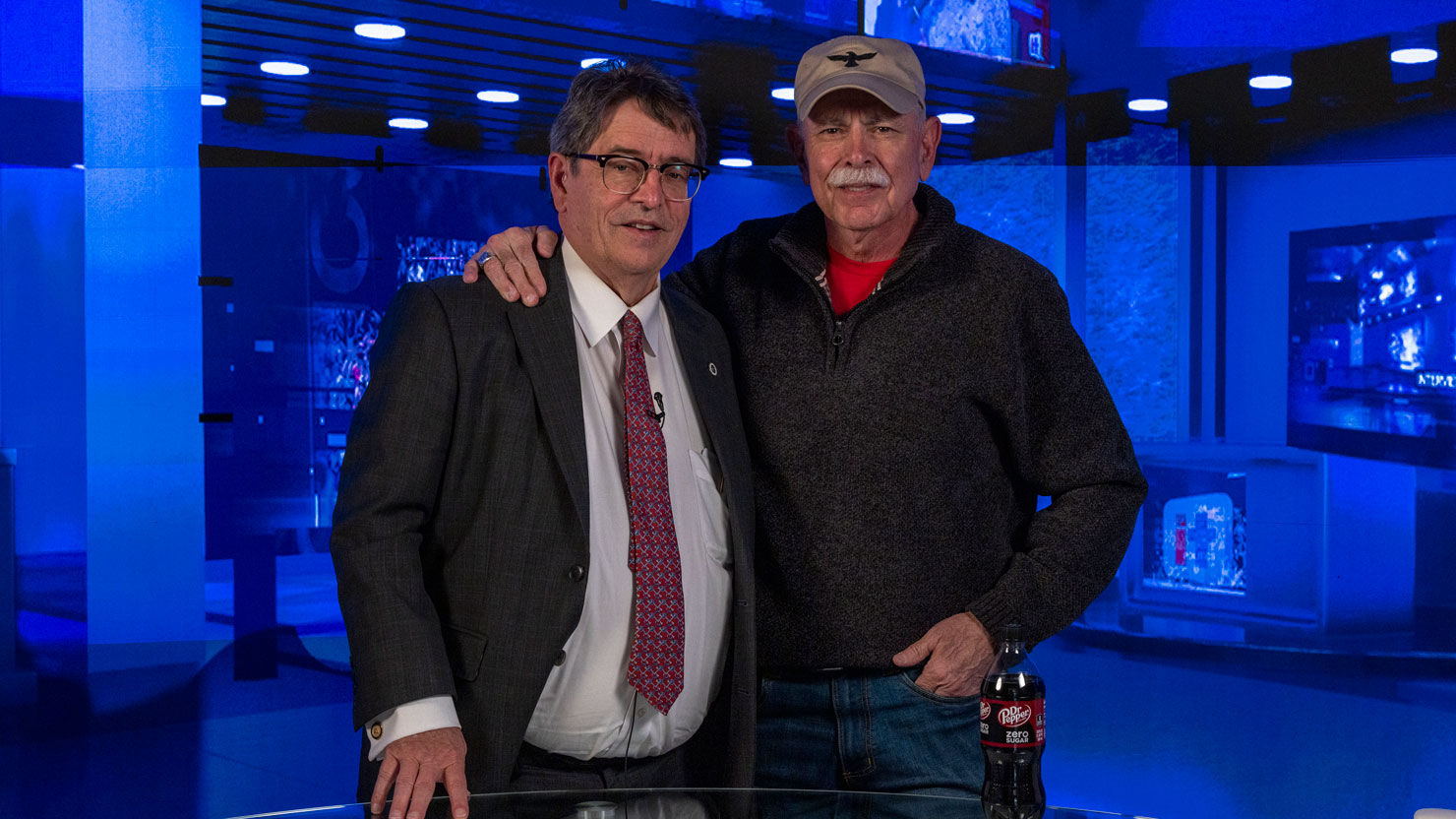
In this episode of the PoliticIt Podcast, Senator John D. Johnson sits down with Randy Watt for a wide-ranging, transcript-driven discussion about leadership when the stakes are high and the margin for error is thin. Watt’s career spans three decades in municipal policing and 34 years in the Army National Guard, including Special Forces command. That uncommon overlap allows him to move fluidly between two environments that appear different on the surface but share a common leadership DNA: downtown protest corridors and high-risk special operations theaters.
This long-form essay is drawn from the full interview transcript and rendered in narrative form. The conversation unfolds gradually, connecting protest management, use-of-force standards, interagency coordination, elite mission planning, and emerging military technologies under a single theme: disciplined leadership is the difference between escalation and stability.
PoliticIt Radio – Hold the Line for All
Two Worlds, One Playbook
As the discussion begins, Watt does not frame leadership as ideological. He frames it as structural.
Whether managing a protest in Ogden or overseeing a high-risk mission abroad, the fundamentals remain constant. Leaders must define intent clearly. They must communicate consistently. They must rehearse. They must coordinate. And when outcomes fall short, they must accept accountability.
The conversation does not jump from topic to topic. It builds. Street-level enforcement principles give way to broader operational doctrine, which then loops back to civic application.
The throughline is preparation.


Public Order Is Police Work
Early in the exchange, Watt states a principle that anchors everything that follows:
Public order is the job of a police department for all people.
He means that literally.
Policing must remain apolitical in execution. A department cannot enforce differently based on sympathy for a protest’s cause or alignment with media narratives. The mandate is steady:
Protect peaceful protest.
Prevent criminal conduct.
Maintain safe access for residents and businesses.
Enforce the law impartially.
When enforcement becomes selective, escalation risk increases. And, Watt argues, many high-profile use-of-force incidents begin long before force is applied. They begin with unclear boundaries and hesitant leadership.


When Enforcement Hesitates
Watt walks through escalation not as theory, but as pattern recognition.
When minor violations go unaddressed, when leaders send mixed messages about what is tolerable, the crowd reads those signals. Actors inclined toward disruption test limits. If no response follows, momentum shifts.
What begins as lawful assembly can quickly become volatile.
At that point, officers are operating in compressed timelines. Options narrow. Federal agencies may step in. Political fallout compounds operational strain.
The lesson, as Watt frames it, is not aggression. It is clarity. Clear boundaries enforced early reduce the probability of force later.

Ogden: A Protest Managed, Not Suppressed
The discussion turns to Ogden’s experience during Black Lives Matter demonstrations. Watt describes the approach as disciplined facilitation.
Police leadership defined protest zones within a controlled periphery. Organizers were engaged in advance. Expectations were set. Logistics were coordinated.
Protesters were allowed to chant, assemble, and speak freely. Support services were provided to reduce tension. Officers maintained visible but professional presence.
Simultaneously, enforcement capacity was staged. Arrest teams were prepared out of sight. Rules of engagement were defined. Criminal conduct would end the protest immediately.
The dual message was unmistakable: constitutional rights would be protected, and criminal acts would not.
The result was not suppression. It was stability.

Use of Force: Defined and Accountable
When the conversation turns directly to use-of-force standards, Watt becomes precise.
Lawful force is defined by statute and department policy. Officers must understand proportionality and necessity. Training must be repetitive and realistic. Scenario-based exercises matter because hesitation under stress produces mistakes.
Accountability is not an afterthought. Transparency strengthens legitimacy. When departments drift from their own policies—because of inconsistent leadership or political pressure—trust erodes quickly.
Competence and accountability must move together.
From SWAT to Special Forces
The interview widens into military doctrine. Watt outlines how elite units prepare differently than conventional forces.
Planning is exhaustive. Intelligence is layered. Mockups are built. Rehearsals are repeated until movement is instinctive. Aviation, intelligence, logistics, and ground teams operate as an integrated system.
He explains the structural hierarchy: SOCOM providing strategic oversight, JSOC executing specialized missions through tightly integrated assault elements, Ranger security, specialized aviation regiments, and intelligence units.
What determines success is not bravado. It is shaping.

Shaping Before Engagement
Before any assault begins, conditions are shaped.
Human sources build terrain awareness. Psychological operations communicate overwhelming capability. Electronic intelligence identifies radar and communication signatures. Countermeasures degrade coordination.
By the time boots touch the ground, resistance may already be weakened.
Shorter engagements mean fewer casualties. That is not luck. It is design.
Rehearsal and Precision
Full-scale mockups allow teams to rehearse ingress and egress patterns repeatedly. Helicopter landings are timed precisely. Counterthreat positions are anticipated.
Muscle memory replaces uncertainty.
Watt emphasizes that zero-casualty outcomes in high-risk missions rarely occur accidentally. They reflect layered preparation and integrated systems working in concert.

Emerging Nonlethal Capabilities: Stunning Without Killing
At this point in the discussion, the conversation moves into evolving military capabilities—specifically, technologies designed to incapacitate without causing permanent injury.
Watt references discussions within military circles about systems sometimes described as directed-energy, acoustic, or electromagnetic tools. These devices are reported to induce intense but temporary physiological effects—disorientation, nausea, balance disruption, cognitive confusion—long enough to degrade coordinated resistance.
The intent, he explains, is not punishment. It is shaping.
If a defending force is stunned or physically unable to coordinate for even a brief window, operational timelines compress. Assault teams move faster. Gunfire decreases. Casualties—on both sides—drop.
Watt is careful not to claim confirmed deployment specifics. But the larger principle is clear: modern operations are increasingly seeking to expand the space between verbal command and lethal force.
That expansion, however, immediately raises legal and ethical considerations.
Legal and Constitutional Guardrails
For military operations abroad, authorities differ. For domestic law enforcement, constitutional standards govern.
Any technology capable of physically affecting a person—even temporarily—would almost certainly qualify as force under Fourth Amendment analysis. That means objective reasonableness, proportionality, and necessity standards apply.
Additional concerns arise:
What medical data supports deployment?What are short- and long-term physiological effects?
How is deployment documented?
What independent oversight mechanisms are triggered?
How is transparency maintained?
Watt frames these not as barriers but as prerequisites.
Innovation cannot outrun governance.
If such tools were ever considered for civilian application, they would require statutory clarity, defined use-of-force classification, medical validation, and public policy transparency.
Ethical Burden of Precision
Nonlethal does not mean harmless.
Variables such as age, preexisting conditions, pregnancy, neurological vulnerability, and environmental factors matter. A tool that reduces gunfire but introduces poorly understood physiological effects creates a different category of risk.
Elite units integrate new capabilities only after rigorous testing, command authorization protocols, and structured after-action review. Civilian deployment would require standards at least as strict.
Public trust depends not merely on effectiveness, but on oversight.
Returning to Leadership
As the conversation closes the loop back to civic governance, Watt underscores that advanced tools do not substitute for disciplined leadership.
Technology may shape outcomes. But clarity of purpose, interagency coordination, rehearsal, and accountability remain decisive.
A stunning device cannot repair confused messaging from city hall. A new nonlethal system cannot compensate for weak command discipline.
The fundamentals remain unchanged.
Leadership Under Pressure
Across protest management and special operations, a consistent model emerges:
Clarity of purpose.
Meticulous preparation.
Disciplined execution.
Relentless training.
Transparent accountability.
The environments differ. The principles do not.
Randy Watt’s experience—from patrol corridors to SWAT rooms to Special Forces command—demonstrates that protecting constitutional rights and maintaining public order are not opposing goals. They require courage, competence, and consistency.
Public order does not sustain itself. It is preserved by leaders willing to prepare before crisis arrives.
🎙 PoliticIt Podcast
Elite Leadership and Use of Force | Randy Watt on Protest Management, Special Operations & Nonlethal Military Tech
In this episode of the PoliticIt Podcast, Senator John D. Johnson sits down with Randy Watt — retired Ogden Police Chief and Special Forces Colonel — for a deep, operational conversation about leadership under pressure.
Watt brings a rare dual perspective: three decades in municipal law enforcement combined with 34 years in the Army National Guard, including Special Forces command. The result is a disciplined framework that bridges street-level protest management with elite military mission planning.
This is not a partisan conversation. It is a structural one.
The episode explores:
• Why public order is a nonpartisan duty of policing
• How protests escalate — and how they can be prevented
• The Ogden model for managing demonstrations without ceding the streets
• Political signaling and its operational consequences
• Clear use-of-force standards and accountability
• How SWAT discipline mirrors Special Forces doctrine
• Interagency coordination during civil unrest
• The anatomy of high-risk special operations missions
• Battlefield “shaping” through intelligence and psychological operations
• Emerging nonlethal and directed-energy technologies
• Legal and constitutional guardrails for future tools
Watt explains how elite units reduce casualties through rehearsal, intelligence integration, electronic countermeasures, and disciplined command. He also addresses the ethical and constitutional implications of evolving military technologies that temporarily incapacitate rather than kill.
Throughout the discussion, one theme remains constant:
Clarity. Preparation. Accountability.
Whether protecting a protester’s First Amendment rights or planning a precision military mission, leadership discipline determines whether events stabilize or spiral.
If you care about public safety, constitutional governance, interagency coordination, or the future of use-of-force policy, this conversation delivers serious insight grounded in experience.
🔔 Subscribe to PoliticIt for in-depth interviews on Utah policy, national security, constitutional governance, and civic leadership.
🎧 Listen on podcast platforms: [Insert link]
🌐 Read the full narrative feature: [Insert link]
📲 Follow PoliticIt for updates and clips.
#PoliticIt #RandyWatt #UseOfForce #ProtestManagement #PublicOrder #SpecialForces #LeadershipUnderPressure #NationalSecurity #LawEnforcement #ConstitutionalRights