Community Leaders
Inside the ‘Big Beautiful Bill’: Rob Bishop’s Guide to Governing When Congress Can’t
Former Congressman Rob Bishop pulls back the curtain on how Washington really works—why imperfect wins like the recent “big beautiful bill” matter, how reconciliation and the Byrd Rule shape outcomes, and why the filibuster paralyzes action. Then he turns local: Utah’s edge in critical minerals, the case for state-backed loans, infrastructure, and rural housing, and a pragmatic playbook for turning rules into results—while teaching the next generation how to govern.


Former Congressman Rob Bishop doesn’t romanticize Washington. After nearly two decades navigating its procedural labyrinths, he speaks with the candor of a teacher who’s seen how ideals crash into institutional reality.
In a wide-ranging conversation with PoliticIt, Bishop reflects on the legislative machinery that governs Congress, the limits imposed by arcane rules like reconciliation and the filibuster, and the opportunities Utah now holds in critical mineral production and economic diversification.
His message blends civics with strategy: understand the rules, accept incremental wins, and act locally where Washington stalls.


Introduction: Why This Conversation Matters
Rob Bishop served Utah’s 1st Congressional District from 2003 to 2021. His perspective is grounded in nearly two decades of federal service and a lifetime in public life that began in local politics and education. He speaks from direct experience about the friction between political aspiration and institutional constraint.
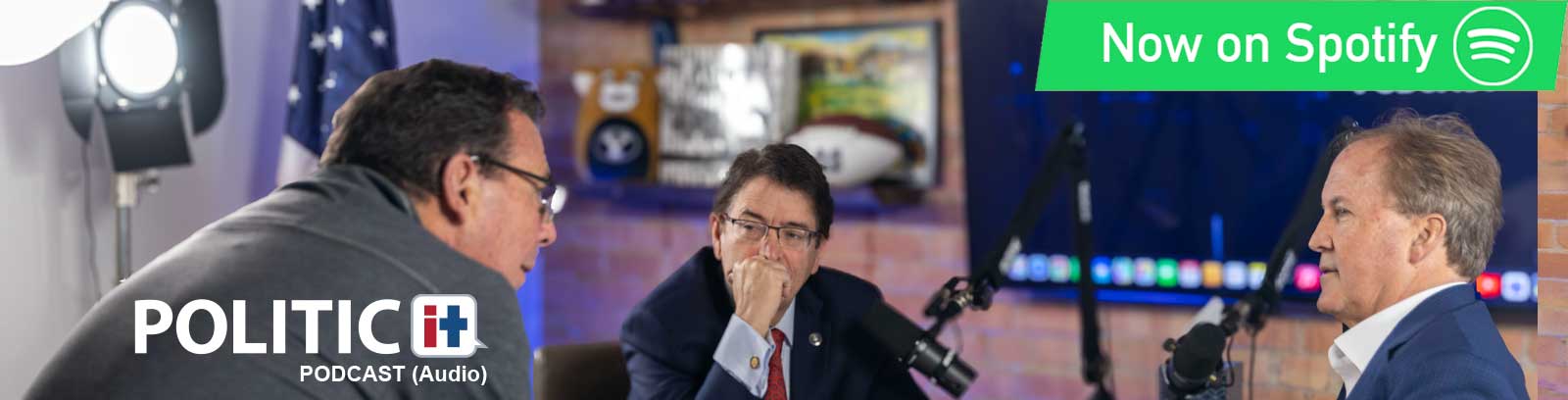
PoliticIt Radio – The Rules that Hold the Republic
In this conversation, Bishop explains why the mere passage of a complex budget measure can be a reason for cautious celebration, how rules like reconciliation and the filibuster actually shape what is feasible, and why states—particularly Utah—should act proactively to secure critical minerals and build a diversified economy.
The aim of this article is to unpack Bishop’s key points, restate them clearly for readers who want to understand how Washington works, and explore the practical implications for state policymakers, industry stakeholders, and engaged citizens.

In This Article
- Understanding the “Big Beautiful Bill”: What Passed and Why It Matters
- Reconciliation: Origins, Limits, and the Byrd Rule
- Tax Policy, Fiscal Realities, and the Economics of Growth
- Congressional Procedure and the Modern Problem of Roll Votes
- The Filibuster: History, Critique, and Consequences
- Budget Reconciliation as a Tactical Workaround
- Critical Minerals and Utah’s Strategic Opportunity
- State-Level Solutions: Loans, Revolving Funds, Infrastructure, and Housing
- Personal Reflections: Teaching, Public Service, and Lessons in a New Book
- Concluding Thoughts and Practical Takeaways

Understanding the “Big Beautiful Bill”: What Passed and Why It Matters
When Bishop refers to the “big beautiful bill,” he means a comprehensive budget package that managed to navigate the faction-driven river of modern Congress to become law. His first point is blunt: the fact that anything substantial could pass at all is a major accomplishment.
“The big beautiful bill wasn’t everything I wanted, but in Congress, nothing ever is.”
Rob Bishop
He frames success in pragmatic terms: when institutional friction is so great that legislating often stalls, producing something that moves the country forward—however imperfect—is a victory.

Why Imperfect Legislation Can Still Be a Win
- Preserves governing credibility and shows the majority can deliver results.
- Creates policy footholds that can be expanded or corrected later.
- Avoids the paralysis that comes from uncompromising positions.
Bishop argues that incremental wins build political capital and set precedent for deeper reforms later. “This can facilitate some major changes coming in the future.” In other words, incremental victories can be strategically transformative.

Reconciliation: Origins, Limits, and the Byrd Rule
A central theme in Bishop’s comments is the role of reconciliation in getting the package through. The procedure, originally designed to align spending and revenue, allows bills affecting the federal budget to pass with a simple Senate majority—avoiding the filibuster.
Callout: What the Byrd Rule Does
- Bars provisions with no direct budget impact.
- Strikes items “incidental” to budget changes.
- Enforced by the Senate parliamentarian.
The tradeoff is constraint: reconciliation can only include provisions that directly impact the budget. The Senate parliamentarian, through the Byrd Rule—named after Senator Robert Byrd—enforces these limits by striking items considered extraneous.
“The Senate parliamentarian cut a whole bunch of stuff out of it and ruled that things could not be considered in a reconciliation bill,” Bishop recalls. This process reshaped the final legislation and illustrates how procedural rules dictate substance.
- Positive: avoids filibuster, enabling majority passage.
- Negative: excludes non-budgetary provisions, often gutting reform.
Tax Policy, Fiscal Realities, and the Economics of Growth
Bishop rejects the notion that extending tax provisions simply helps the wealthy. Many were continuations of prior reforms, rooted in the Reagan-era model of stimulating growth by lowering burdens. He articulates a supply-side thesis: allowing people to keep more of their income drives productivity and investment, which in turn raises revenue over time, citing episodes from Eisenhower to Kennedy, Reagan, and Trump.
“If you put more money into the government in taxes, they just spend more.”
Rob Bishop

Two Competing Frameworks for Fiscal Management
- Raise taxes to increase revenue and reduce deficits.
- Reduce spending and spur private-sector growth via tax relief.
Bishop views the first as self-defeating: increased revenue often fuels expanded spending. The second—growth-driven restraint—better aligns incentives, though he concedes that neither approach alone can fix structural deficits. True fiscal reform requires structural changes beyond marginal tax tweaks.
Congressional Procedure and the Modern Problem of Roll Votes
Bishop’s background as a committee chair leads to one of his sharpest critiques: bad procedure produces bad policy—or none at all. He describes the modern “roll vote” system, in which dozens of votes occur in a flurry after sparse debate. Members absent for substantive discussion return to vote along party lines with little understanding of the issues.

One Room, Forty-Eight Votes
During debate on mining-law reform, only three members were present to discuss amendments. When voting began, 48 more arrived—none having heard the debate. The result was a partisan-line outcome driven by ignorance, not deliberation.
“We were making law, but hardly anyone in the room knew what they were voting on.”
Rob Bishop
Why Procedure Matters
- Ensures transparency and informed debate.
- Prevents leadership from centralizing power.
- Fosters legitimacy through deliberation.
“Good procedure doesn’t guarantee good policy—but bad procedure guarantees bad policy.”
Rob Bishop

The Filibuster: History, Critique, and Consequences
While often defended as a protector of minority rights, Bishop views the filibuster as a procedural veto that paralyzes democracy.
A Brief Historical Arc
- 1917: Cloture introduced to limit endless debate.
- 1970s: Adjustments aimed to streamline process but entrenched obstruction.
- Since then, 1,700+ filibusters or threats have stalled major legislation.
“You may get bad stuff done, but you can fix bad stuff faster than you can fix gridlock.”
Rob Bishop
Because even a single senator can threaten a filibuster, broadly supported measures die before debate. Bishop’s controversial proposal: abolish the filibuster. For him, the risk of temporary bad law is worth the gain of functional governance.
Budget Reconciliation as a Tactical Workaround
Reconciliation became a crutch because it bypasses filibuster constraints for fiscal measures. Legislators increasingly “cram” priorities into reconciliation bills to get anything passed, distorting policy to fit budget relevance and concentrating power in opaque negotiations.
“They try to cram as much stuff in a reconciliation simply because you don’t have to put up with the filibuster.”
Rob Bishop

Critical Minerals and Utah’s Strategic Opportunity
Turning from Washington to Utah, Bishop argues the U.S. has neglected its mineral wealth for decades, surrendering supply chains to adversarial nations.
What Are Critical Minerals?
- Electronics: semiconductors, smartphones, sensors
- Clean energy: EV batteries, wind turbines
- Defense: alloys, magnets, guidance systems
- Nuclear & AI industries: enriched materials and conductors
Utah’s Edge
Bishop points to fluorite (fluorspar) and gallium deposits in Juab County—the only U.S. site capable of large-scale fluorspar production. Gallium, critical for semiconductors, is heavily concentrated in China, posing economic and national-security risks.
National Security and Economic Resilience
Strategic minerals underpin defense readiness and high-tech manufacturing. Bishop argues that states can’t wait for federal inertia: “Utah should lead where Washington drags.” Dependence on foreign minerals weakens both economic sovereignty and military capability.
State-Level Solutions: Loans, Revolving Funds, Infrastructure, and Housing
1. Dedicated Loan & Revolving Funds
Provide upfront capital for mining and processing projects, repaid once operations are profitable. This model multiplies impact as repayments recycle into future ventures.
2. Invest in Infrastructure
Roads, broadband, utilities, and logistics are the foundation for rural industry. Without them, even rich mineral deposits remain dormant.
3. Address Rural Housing Shortages
Construction labor clusters along the Wasatch Front, leaving regions like Roosevelt short-handed. Incentivize builders and train local workers to support rural development.
4. Streamline Permitting
Most mineral-rich lands are federally managed. Reform should balance environmental stewardship and timely approvals to unlock investment.
5. Partner with Industry & Military
Defense-sector collaboration can anchor demand and justify investment in domestic supply chains, ensuring both economic and strategic dividends.
Why Utah Is Uniquely Positioned
With its diverse geology, experienced workforce, and proactive government, Utah can lead the next resource renaissance. Bishop envisions a balanced approach: responsible extraction, rural revitalization, and strategic self-reliance.
“Utah shouldn’t wait for Washington to get its act together.”
Rob Bishop
Personal Reflections: Teaching, Public Service, and a New Book
In retirement from Congress, Bishop has returned to his first vocation—teaching. As a political science professor at Utah State University, he shares hard-earned lessons on the realities of government. His forthcoming book, Things I Learned in Congress, Which They Didn’t Teach in School, blends institutional history with civic pedagogy.


Bishop notes that standard civics curricula often miss how Congress truly functions—the informal norms, committee dynamics, and procedural bottlenecks that define policymaking. His book aims to translate experience into education, preparing the next generation to engage with government knowledgeably.
“I give it to my students. Making them buy it would feel immoral.”
Rob Bishop
Lessons from a Legislator: What Citizens and Policymakers Should Take Away
- Institutional Structures Matter — Rules shape results. Reforming policy requires reforming process.
- Incremental Gains Can Be Strategic — Small wins can open doors to large reforms.
- States Can Act Where Federal Action Lags — Utah’s proactive funding and infrastructure strategy is a model.
- Be Pragmatic About Politics — Avoid all-or-nothing thinking; build coalitions and momentum.
- Educate the Next Generation — Civic literacy sustains democracy.
“Government isn’t magic—it’s architecture. If you want better outcomes, you have to rebuild the framework.”
Rob Bishop
Common Criticisms and Counterpoints
Filibuster Defenders
Argument: Protects minority rights and promotes compromise.
Bishop’s Counter: Now functions as a veto, not a negotiation tool; it obstructs more than it deliberates.
Tax-and-Spend Proponents
Argument: Higher taxes on the wealthy fund vital services.
Bishop’s Counter: Without spending restraint, higher revenues expand bureaucracy; sustainable growth, not extraction, funds the future.
Environmental Advocates
Argument: Mining endangers fragile ecosystems.
Bishop’s Counter: Responsible development and strong standards can coexist; shutting lands entirely increases foreign dependence and harms rural opportunity.

Practical Recommendations for Policymakers
- Expand state-backed loan programs for critical mineral development.
- Invest in rural infrastructure—roads, broadband, housing.
- Streamline environmentally responsible permitting.
- Partner with federal and defense agencies to stabilize markets.
- Support vocational training for mobile construction and industrial labor.
- Promote civic education to restore institutional literacy.
Conclusion: A Pragmatic Call to Action
Rob Bishop’s conversation with PoliticIt is a civic master class—an appeal for realism over rhetoric. He urges leaders and citizens to understand how institutions shape outcomes, to take incremental victories seriously, and to act locally when national machinery stalls.
His critique of the filibuster and insights on reconciliation reveal how congressional rules shape what is possible. His optimism about Utah’s mineral potential shows that governance doesn’t end in Washington—it begins wherever people take responsibility.
“You can’t fix bad stuff faster than you can fix gridlock. So get something done—and make it better next time.”
Rob Bishop

Former U.S. Congressman Rob Bishop (UT-01, 2003–2021) joins PoliticIt for an in-depth, no-nonsense conversation about how Congress really works—and what states like Utah can do while Washington stalls. With nearly two decades of experience navigating the procedural labyrinth of Capitol Hill, Bishop pulls back the curtain on the forces that shape legislation, the tradeoffs behind the recent “big beautiful bill,” and the deeper structural problems that define modern governance.
🔹 Inside this interview:
- – Why Bishop says the “big beautiful bill” was a victory—even if imperfect.
- – The real story behind reconciliation and the Byrd Rule, and how Senate procedure can make or break policy.
- – A candid critique of the filibuster and why Bishop believes it’s time to end the gridlock. – The economics of tax reform: growth, incentives, and fiscal realism.
- – A behind-the-scenes look at how roll votes and weak debate undermine good lawmaking. – Bishop’s blueprint for Utah’s critical mineral strategy—from gallium and fluorspar production to infrastructure, rural housing, and workforce development.
- – How state-level leadership can fill the gaps left by federal inaction.
- – Personal reflections on returning to teaching at Utah State University and his new book, Things I Learned in Congress, Which They Didn’t Teach in School. This conversation bridges theory and practice—combining Bishop’s insider knowledge with practical solutions for state policymakers, students of government, and citizens who want to understand how real reform happens.
🗝️ Key Themes: Governance • Institutional Reform • Filibuster Debate • Reconciliation • Fiscal Policy • Civic Education • Critical Minerals • Utah Economy • State Innovation • Public Service
🎓 About the Guest: Rob Bishop served nine terms in the U.S. House of Representatives and chaired the House Committee on Natural Resources. Before Congress, he was a high school teacher, speaker of the Utah House, and lifelong advocate for federalism and civic education. Rob was born into a politically active family—his grandfather served on the city council and his father was Kaysville’s mayor. Politics was woven into daily life, and it wasn’t until high school that he realized this wasn’t typical for most families. A graduate of Davis High School (high honors) and the University of Utah (magna cum laude in Political Science), he was active in the Teenage Republicans, College Republicans, and served on the State Central Committee. He also interned with House leadership and assisted in organizing student lobbying efforts. In 1974, he began teaching at Box Elder High School and settled in Brigham City, where he met his wife and raised five children. As a teacher, he emphasized civic engagement and even implemented a convention-style election system for students. At 26, he was nominated to the Utah State Legislature, where he served from 1979 to 1994. He chaired multiple committees, was elected Majority Leader, and later served as Speaker of the House. He stepped down shortly before his term ended to give his successor a seniority advantage—closing a chapter on what he considered the most enjoyable political role of his career.
🎙️ About PoliticIt: Politic-It brings in-depth, Utah-rooted political conversations to life—spotlighting leaders, legislation, and ideas shaping America’s future.
📚 Watch, learn, and share if you believe good governance starts with understanding the rules—and having the courage to reform them.
#RobBishop #PoliticIt #UtahPolitics #CivicEducation #CongressExplained #Filibuster #Reconciliation #ByrdRule #TaxPolicy #UtahEconomy #CriticalMinerals #PublicPolicy #StateLeadership #AmericanGovernance #politicit #utahelections #utpol