Candidates for Public Office
Weber County’s Future: Katrina Gibson’s Vision for Commission
Katrina Gibson’s campaign for Weber County Commission centers on a simple but demanding idea: growth must be planned, not reacted to. In this PoliticIt Podcast conversation, she outlines a vision grounded in property rights, infrastructure-first development, and disciplined budgeting. As Weber County faces rising pressure from expansion and taxes, Gibson argues the real question is not whether change is coming, but whether leaders will manage it with structure and accountability.


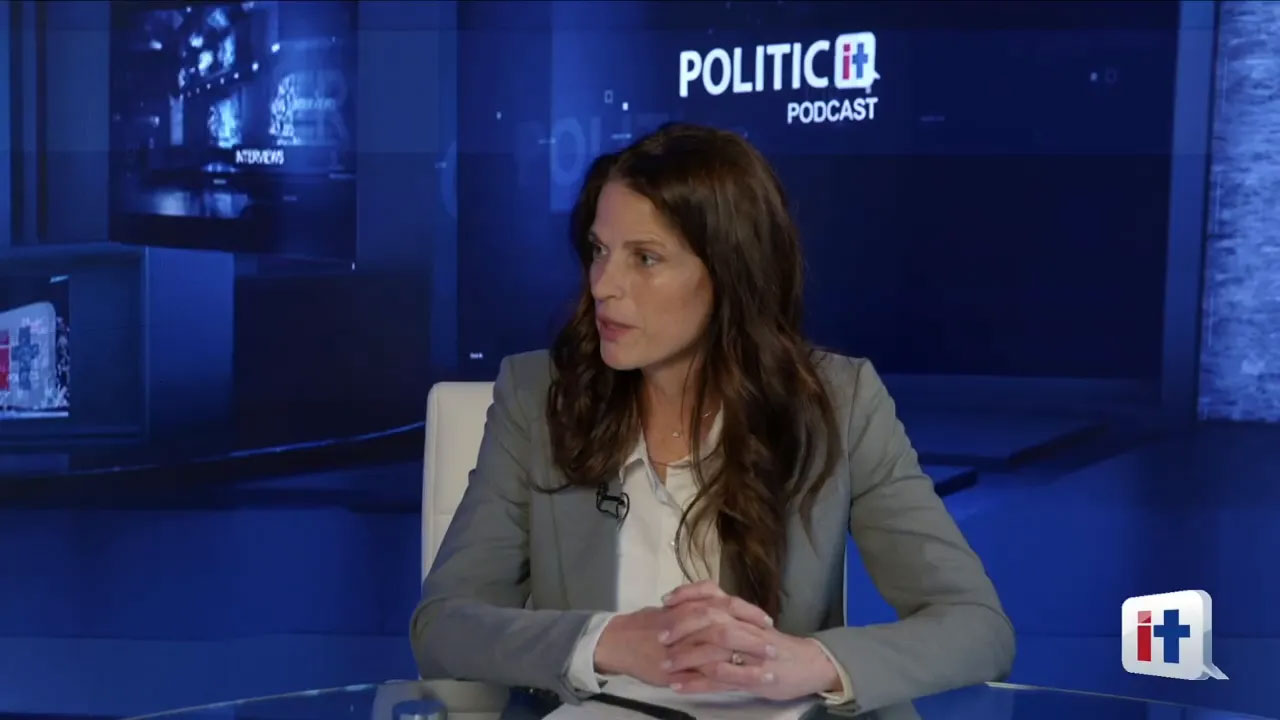

In this episode of the PoliticIt Podcast, host Senator John D. Johnson sits down with Weber County Commission candidate Katrina Gibson to examine what responsible growth actually looks like when it moves from theory into practice. Drawing on her roots in Ogden Valley and years raising a family in rural Weber County, Gibson offers a grounded perspective on property rights, infrastructure, and the rising pressure of property taxes. The conversation moves beyond slogans and into the real tension facing local government: how to plan for growth without losing the communities that made Weber County what it is.
County government rarely commands attention until it fails. Roads, sewer systems, zoning decisions, and property taxes operate quietly in the background until growth accelerates or costs rise. Then the consequences become immediate.
That reality frames Katrina Gibson’s campaign for Weber County Commission. In conversation, her focus is consistent: plan for growth before it arrives, respect property rights, and treat public dollars with discipline. The role of county government, in her view, is not to control communities, but to support them.
PoliticIt Radio – Built Right Here
A Weber County perspective shaped by lived experience
Gibson’s worldview is not theoretical. It is rooted in a lifetime in Weber County.
She grew up in Ogden Valley, attended Weber High, and later raised six children in rural western Weber County. Her family life was structured around agricultural work, including raising dairy cows and participating in 4-H and FFA. That experience, she explains, instilled a practical understanding of responsibility and sustainability.
Rural life, as she describes it, is not episodic. It is continuous. That distinction matters because it shapes how she views policy. Decisions about land, water, infrastructure, and development are not abstract. They directly affect families who rely on those systems every day.
Her argument is straightforward. Rural communities are not peripheral to Weber County’s identity. They are foundational, and any growth strategy that ignores them risks undermining what made the county viable in the first place.


From observer to participant
Gibson did not begin as a political actor. She describes herself as a long-time observer who eventually reached a point of decision.
After years of watching local and state government, and supporting her husband’s involvement in public life, she concluded that engagement required more than attention. It required participation.
Her reasoning is less ideological than situational. She believes she has the time, energy, and experience to contribute now. The campaign, in that sense, is not a pivot but a continuation of civic involvement.
Faith, family, and freedom as governing principles
Gibson frames her campaign around three pillars: faith, family, and freedom. In the conversation, these are not presented as slogans but as organizing principles.
Faith informs how she evaluates decisions, particularly in terms of accountability and long-term responsibility. Family, reinforced by her academic background in child and family studies, is treated as the primary institution that government should support rather than replace. Freedom, in her formulation, centers on protecting life, liberty, and property, with an emphasis on constitutional limits.
At the county level, this translates into a governing posture that is cautious about overreach and attentive to the boundaries of local authority.

Growth is coming. The question is whether it is planned.
Weber County is not deciding whether to grow. It is deciding how.
Gibson does not oppose development. She rejects the idea that growth can simply be halted. Instead, she focuses on whether growth is anticipated or forced.
One example she returns to is generational land transfer. Families who inherit farmland often face a different set of incentives than prior generations. Many do not want to continue agricultural operations. Selling or developing the land becomes the practical option.
That dynamic creates tension. Some residents resist change entirely, while others see development as necessary. Gibson does not frame this as a moral divide. She frames it as a structural reality that requires planning.
Her emphasis is on sequencing:
infrastructure first
planning second
development aligned to both
Without that order, growth becomes reactive and costly.
Where the tension lies
Gibson’s framework is coherent, but it leaves open a central question: how competing priorities are resolved when they collide.
Responsible growth requires infrastructure. Infrastructure requires funding. If tax increases are resisted, expansion must either slow or existing resources must be reallocated.
Similarly, strong property rights can conflict with infrastructure limits. A landowner’s ability to develop does not eliminate the public cost of roads, sewer capacity, or service delivery.
These tensions are not unique to her campaign. They are inherent to county governance. The question for voters is how she will prioritize when those tradeoffs become unavoidable.

A relational model of county government
One of Gibson’s clearest themes is that the county should not operate as a top-down authority.
She emphasizes relationships with city leaders across Weber County, including Ogden, North Ogden, Pleasant View, Roy, Riverdale, and the newly incorporated Ogden Valley. Each jurisdiction faces different pressures, and she argues that effective governance requires coordination rather than uniform policy.
In practice, that means:
listening to local leadership
aligning county resources with city needs
avoiding unnecessary interference
Her model places the county as a partner rather than a controller.New cities and shifting responsibilities
The incorporation of Ogden Valley illustrates how governance complexity increases over time.
Gibson describes the transition as uneven. The new city assumes responsibilities that were previously managed at the county level, often without a fully stabilized revenue base. Residents then question why taxes rise for services they believe were already covered.
Her position is that this tension is real and must be addressed directly. Transitional periods require transparency in budgeting and clear explanations of who is responsible for what.
This is less about ideology than administration. If roles are unclear, trust erodes quickly.

Property taxes and fiscal discipline
Property taxes are one of the most immediate concerns she hears from residents.
Gibson’s response is not centered on promising lower taxes. It is centered on demanding justification. Every line item, every position, and every expenditure should be defensible.
She uses a household analogy, but the underlying argument is institutional. Public budgets should not expand without clear reasoning tied to outcomes. If the county repeatedly returns to the same funding shortfalls, the issue is not only revenue. It is structure.
Her approach suggests a shift toward tighter internal accountability rather than reliance on recurring tax increases.
Infrastructure defines the limits of growth
The most concrete part of Gibson’s policy discussion comes in infrastructure.
She points to sewer systems and road capacity as binding constraints. Older systems, particularly in established areas, were not designed for current or future density levels. Expanding them is expensive and often politically difficult.
Her sequencing is clear. Infrastructure planning should precede development decisions. When that order is reversed, costs escalate and conflicts intensify.
In this sense, she sees government’s primary role not as restricting land use, but as preparing the conditions that make responsible use possible.
Housing and the limits of simple answers
On housing, Gibson avoids offering a single solution.
She acknowledges the reality that many families cannot afford homes without assistance. At the same time, she questions whether government-driven solutions consistently produce good outcomes.
Her framing returns to structure. Housing availability is tied to land use, infrastructure, and generational change. It cannot be addressed in isolation.
The implication is that the county’s role is to create conditions where housing can emerge in an ordered way, rather than imposing a single model across diverse communities.
What her approach would mean in practice
Taken together, Gibson’s priorities point to a specific governing style:
tighter scrutiny of public spending
emphasis on infrastructure-led planning
deference to property rights within structured frameworks
coordination with city governments rather than competition
willingness to engage conflict rather than avoid it
This is not a platform built on expansion of services. It is built on discipline in how services are planned and delivered.
Final thoughts: discipline as a governing strategy
Weber County is entering a phase where delayed decisions will carry higher costs. Growth, infrastructure, and taxation are converging into the same set of choices.
Gibson’s campaign does not promise to eliminate those pressures. It argues for managing them differently.
Her emphasis is on structure: plan early, justify spending, respect boundaries, and work across jurisdictions. The strength of that approach is clarity. The open question is whether it can absorb the financial and political pressures that come with sustained growth.
That is ultimately the choice in this race. Not whether Weber County will change, but how deliberately it will do so.

#politicit #utahelections #utpol