
Utah News Dispatch
Two years after Utah passed its anti-DEI law, legislators are still correcting it


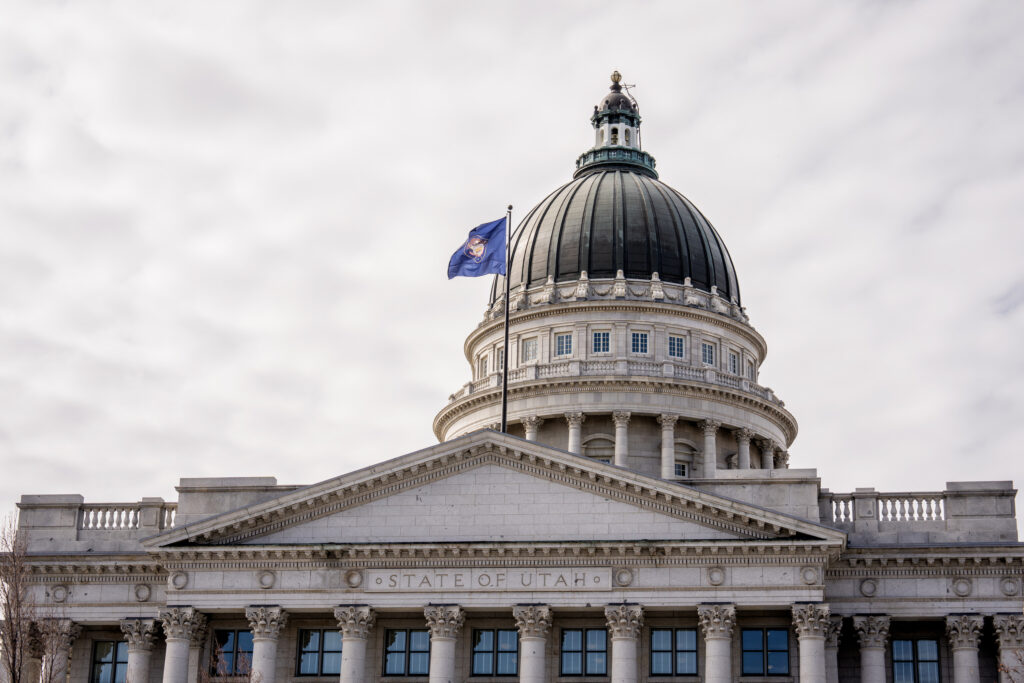


The Capitol in Salt Lake City is pictured on Friday, Feb. 27, 2026. (Photo by Spenser Heaps for Utah News Dispatch)
Two years after the Utah Legislature passed sweeping legislation restricting diversity, equity and inclusion in the state’s public schools and colleges, lawmakers keep adding to the list of exceptions and clarifications of what practices are still allowed under state law. This time, they are responding to an incident at Weber State University, in which an author rescinded a speaking commitment after receiving a list of prohibited terms and concepts for visiting speakers.
SB295, a bill Ogden Republican Sen. John Johnson is sponsoring this year, aims to clarify that DEI restrictions established in public entities don’t restrict presentations by guest lecturers or speakers.
SUBSCRIBE: GET THE MORNING HEADLINES DELIVERED TO YOUR INBOX
“Institutional neutrality does not mean speakers cannot state a point of view. It means institutions cannot compel belief or punish dissent. That clarification is necessary to prevent overcorrection and to protect open discussion,” Johnson told the House Economic Development and Workforce Services Committee on Tuesday.
As anti-DEI law takes effect, students and staffers share ‘great sense of loss’
According to Johnson the law passed in 2024 was applied incorrectly in the Weber State case.
The law isn’t a complete ban on expressing diverse views, but some higher education institutions have taken stricter measures to restrict them to be on the safe side. Weber State University, for example, eliminated all of its cultural centers in 2024 and repurposed them into a sole student success program. However, the law still allows those centers, as long as they are not exclusive.
Johnson’s bill, he said, adds affirmative expectations. If it becomes law, public universities must designate public policy events each academic year that introduce students to diverse viewpoints, and ensure that some of those events are debates.
The bill was unanimously recommended by the House Economic Development and Workforce Services Committee and is now waiting for consideration from the full house.
“This is not a partisan quota system. It is a structured reinforcement of the marketplace of ideas,” Johnson said. “Universities already hold events. This ensures public policy discussions are visible and intentional and transparent.”
Those events must be posted on publicly accessible calendars, he added.
Johnson’s proposal would also establish that schools may not approve or deny non-curricular student clubs based on ideology.
“All the clubs have to be open to all the students. It doesn’t mean they can’t call them, ‘the Muslim club,’ or any other particular group,” Johnson said.