Community Leaders
Randy Watt on Iran, the Strait of Hormuz, and What Comes Next
For nearly five decades, Iran has remained one of the most persistent challenges to stability in the Middle East. In this conversation, Randy Watt examines Iran’s nuclear ambitions, the role of the IRGC and its proxy networks, and the strategic importance of the Strait of Hormuz. He argues that any agreement with Tehran must be judged by enforcement and verification, not promises alone. The discussion explores regional alliances, global energy markets, Israel’s security concerns, and why the decisions made in Tehran can have economic and geopolitical consequences that reach far beyond the Middle East.



Iran is one of those subjects that refuses to sit still. The facts shift fast, the headlines shift faster, and if a person is not careful, the whole thing starts to look like one more daily political food fight. It is not. What is unfolding around Iran, its nuclear program, and the Strait of Hormuz sits at the center of energy markets, regional security, and the long running question of how the United States should deal with a regime that has spent decades working against American interests.
The broad argument here is simple. This is not a new problem. It is a problem with a long history, a dangerous ideology behind part of the Iranian ruling structure, and consequences that reach far beyond Tehran. The newly reported U.S.-Iran memorandum of understanding may be a step, but it is only a step. The real question is whether Iran follows through, whether the regime can be trusted, and whether the Strait of Hormuz stays open.
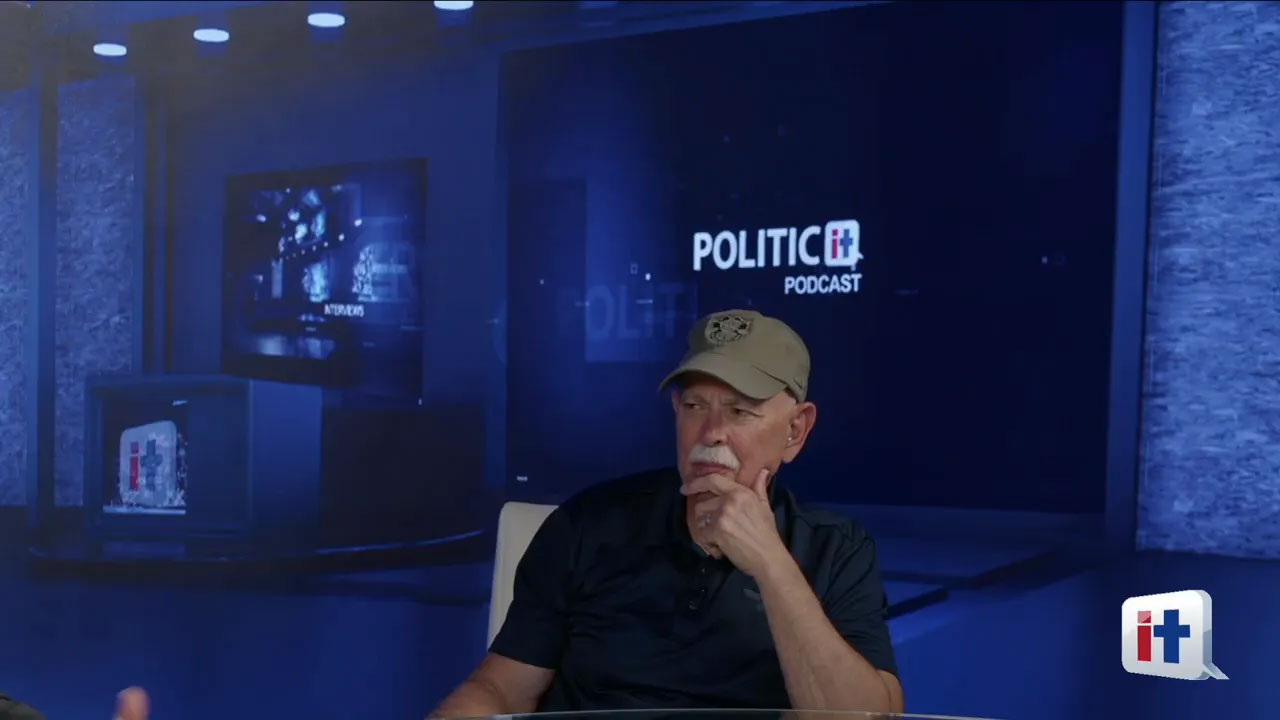
PoliticIt Radio – Keep the Strait Open
Iran did not become a crisis overnight
Any serious discussion has to start with history. The present standoff is not an isolated event and it is not the result of one recent policy decision. The current regime traces back to the Islamic Revolution, the rise of the ayatollahs, and the hostage crisis that burned itself into the American memory. From there, the pattern became familiar.
Over the decades, Iran has been tied to attacks on Americans, U.S. partners, and Israel through a mix of direct action, proxy warfare, training, funding, and political subversion. That long trail includes the Marine barracks bombing in Beirut, support for Hezbollah, support for Hamas, and a persistent strategy of destabilization across the region.
From an operational perspective, this is not theory. During the Iraq war, Iranian backed elements were implicated in attacks on American personnel. That included specialized militant activity in Baghdad, early drone threats, and the movement of supplies from Iran into militia networks. The problem was not abstract. It was tactical, deadly, and persistent.
The point matters because it changes how the present should be interpreted. This is not a misunderstanding between governments that simply need better communication. It is a conflict shaped by years of bloodshed, strategic patience, and repeated tests of American restraint.
Why Iran has been so hard to counter
One of the biggest Western mistakes in dealing with adversaries is assuming everyone thinks the same way. That assumption creates bad analysis and even worse policy. Iran does not think like the United States. Its internal power structure does not operate according to Western political instincts, and that creates a huge blind spot for people who expect normal state behavior.
Iran is not monolithic. There is a divide between the Iranian people and the hardline security state. That split is essential. Inside the regime, the Islamic Revolutionary Guard Corps, or IRGC, has functioned as the hard fist. It helped build and enforce the machinery of repression at home while extending influence abroad through the Quds Force, its expeditionary and terrorist arm.
The Quds Force has been central to Iran’s ability to project power far outside its borders. Through proxies and covert networks, it has helped arm, train, and direct organizations that advance Iranian interests while giving Tehran some level of deniability. That networked model is one reason Iran has remained such a difficult challenge. It does not rely only on conventional military confrontation. It uses local militias, regional chaos, and strategic ambiguity.


The ideological factor that cannot be ignored
There is also a religious and ideological layer that many people either dismiss or fail to understand. Part of the hardline ruling apparatus is tied to an extreme strain of Shia belief often described as Twelver fanaticism. The concern is not ordinary religious practice. The concern is the belief, among radicals, that apocalyptic conditions can be accelerated and that chaos can help bring about a desired end state.
That matters because ideology affects risk tolerance. A government driven only by normal cost benefit calculations can usually be deterred more predictably. A faction that believes massive conflict can serve a higher purpose is harder to read and much more dangerous. This is one reason the question of nuclear weapons is so serious. A regime with that kind of hardline faction cannot be allowed to reach a nuclear threshold.
That is the core strategic line. Whatever else happens diplomatically, Iran cannot be permitted to acquire nuclear weapons.
What the memorandum of understanding is really about
The newly reported memorandum of understanding appears to focus on two major issues. First, Iran’s nuclear capacity. Second, maritime and regional stability, especially around the Strait of Hormuz.
On the nuclear side, the most urgent concern is enriched uranium. Material enriched to around 60 percent is already alarmingly close to weapons grade. The technical jump from there to roughly 90 percent is far smaller than many casual observers realize. That is why reducing enrichment levels matters so much.
Reports around the agreement suggest efforts to bring that stock down to lower enrichment suitable for non weapons energy use, while also placing material under inspection and oversight. There are also reports that some of this material may need to be physically accessed, removed, or relocated because of how deeply buried certain facilities are. If true, that makes enforcement complicated and highly technical.
It also means this is not just a matter of signatures on paper. It is about inspectors, logistics, secure handling, disposal pathways, and constant verification.

Why immediate violations are not a small detail
One reason skepticism runs high is that Iran reportedly began violating parts of the understanding almost immediately. That should surprise no one who has followed the regime for any length of time. Tehran has a long habit of testing limits, probing for hesitation, and using ambiguity as leverage.
That is why any agreement with Iran has to be judged less by the ceremony around it and more by what happens after. Is there enforcement? Is there a cost for cheating? Is there a willingness to act if the regime ignores the deal?
Without those elements, the paper means very little.
The Strait of Hormuz is where the world feels it
If the nuclear issue is the long term strategic problem, the Strait of Hormuz is the immediate economic pressure point. This narrow waterway is one of the most critical arteries in the global energy system. When traffic through it slows, pauses, or faces attack threats, the effects ripple through oil markets, shipping schedules, insurance costs, and geopolitics.
That is why reports about the reopening or possible closure of the strait carry so much weight. For weeks, shipping can back up. Tankers wait. Empty ships move in to load. Full ships try to move out. Delays stack on delays. That does not stay local. It hits countries that rely on steady energy flows, especially large consumers like China.
There were reports during this period that maritime traffic had started moving again in significant volume. That is a positive sign, but only if it lasts. If the IRGC closes the strait or attacks shipping, the entire picture changes. At that point, the issue stops being about diplomatic process and starts becoming a direct challenge to global commerce and freedom of navigation.

China, Russia, and the wider strategic web
Iran does not operate in a vacuum. Its relationships with China and Russia are part of the larger chessboard. China depends heavily on energy flows that can be disrupted by instability in the Gulf. Russia has been involved in supplying military equipment and has overlapping interests with Iran in regional disruption and anti Western positioning.
At the same time, Russia has its own military and industrial strains because of the war in Ukraine. That affects what Moscow can supply and how much bandwidth it has for supporting partners. Iran, in turn, has been linked to training and advisory support in ways that connect one conflict zone to another.
This is what makes the situation so layered. A development in the Gulf affects China. Strikes in Ukraine can affect Russian supply capacity. Iranian logistics affect proxy groups across the Middle East. Nothing here is neatly contained.
Why pressure has finally started to look different
The argument being made is that for many years, American administrations tended to delay the core confrontation. They managed the symptoms, but did not fundamentally reverse the long running pattern of Iranian aggression. The current approach is being praised because it is seen as more willing to impose hard consequences and less willing to normalize Iranian misconduct.
Part of that involves bringing Gulf states into closer alignment. Regional unity matters because Iran has long benefited when its neighbors were divided, hesitant, or left to fend for themselves. If the Gulf states are now more willing to isolate Iran politically and economically, that changes Tehran’s room to maneuver.
There was also strong emphasis on one financial point. Claims that American taxpayers were sending vast sums directly into the arrangement were rejected. The argument was that resources associated with Gulf state cooperation are coming from that side of the region and tied to specific performance, not from pallets of U.S. cash disappearing into the night.
Whether every detail proves out remains to be seen, but the distinction matters politically and strategically.

Israel, Hezbollah, and the right of self defense
No discussion of Iran is complete without Lebanon and Israel. Hezbollah remains one of Iran’s most powerful proxy instruments. When ceasefires are violated and Israeli soldiers are killed, Israeli retaliation should not be treated as some mysterious escalation detached from cause. Any sovereign nation has the inherent right to defend itself.
That principle is not controversial under international law. It is basic statecraft. If Hezbollah continues attacks, Israeli counterstrikes are the predictable result. Since Hezbollah is deeply tied to Iranian strategy, those clashes are not peripheral. They are part of the same regional contest.
So what should be watched next?
Several indicators matter more than the daily noise.
- The status of the Strait of Hormuz. If shipping continues to flow, that supports de escalation. If the strait is threatened or shut, the crisis will intensify quickly.
- Nuclear inspection and enforcement. Verification is everything. A deal without inspection muscle is not much of a deal.
- The internal split inside Iran. There is a profound divide between the population and the hardline security state. Any negotiation has to account for the fact that the most dangerous actors may not be the same people doing the talking.
- Regional alignment. The stronger the coordination among Gulf states and U.S. partners, the harder it becomes for Iran to play one side against another.
- Proxy activity. Hezbollah, Hamas, and other aligned groups remain one of the clearest ways Iran signals intent without acting in its own uniform.

A brief detour into the Box Elder data center fight
The conversation also shifted for a time to a completely different but locally important issue, the controversy around a data center project in Box Elder County. The argument there was notably similar in one respect. It was less about slogans and more about asking who actually benefits, who is driving opposition, and whether the loudest voices really represent the affected community.
The case made in favor of the project was straightforward. Data centers bring economic activity, tax base, future jobs, and the infrastructure that supports countless modern services. Some of the public fears appear rooted in older assumptions, particularly around water use, even though technology has changed since earlier generations of large server facilities.
That did not mean every concern was dismissed. Some were acknowledged as legitimate. But there was also a clear suspicion that outside political forces, money, and anti establishment narratives were amplifying the fight far beyond the underlying policy details.
That local issue matters because it reflects a broader mood. Americans are deeply skeptical of elite deal making, opaque influence, and the sense that well connected groups profit while ordinary communities absorb the cost. Whether that perception is always fair is another matter. Politically, it is real, and it can move elections.

The bigger takeaway
The central takeaway on Iran is not that peace has arrived or that disaster is guaranteed. It is that the United States appears to be in a stronger position when it combines pressure, regional alignment, and a refusal to pretend the regime is something it is not.
There is still plenty that could go wrong. Iran could continue violating the understanding. The IRGC could provoke a maritime crisis. Proxy groups could widen the conflict. Nuclear concealment could continue. All of that remains possible.
But there is also a case that the present moment has exposed Iranian weakness. Its economy has been under strain. Its military supply relationships are under pressure. Gulf states are less inclined to tolerate its behavior. And any move to close the Strait of Hormuz would risk proving exactly why stronger action was necessary in the first place.
That is why patience matters here, but not passivity. Time will tell whether the memorandum becomes a real turning point or just another temporary pause in a 47 year struggle. The answer will not come from optimistic headlines or instant outrage. It will come from what Iran actually does, what the United States is willing to enforce, and whether the world’s most important shipping lane stays open.
#politicit #utahelections #utpol