Community Leaders
Randy Watt: From Green Beret to Police Chief — Leadership, Security & the Future of America
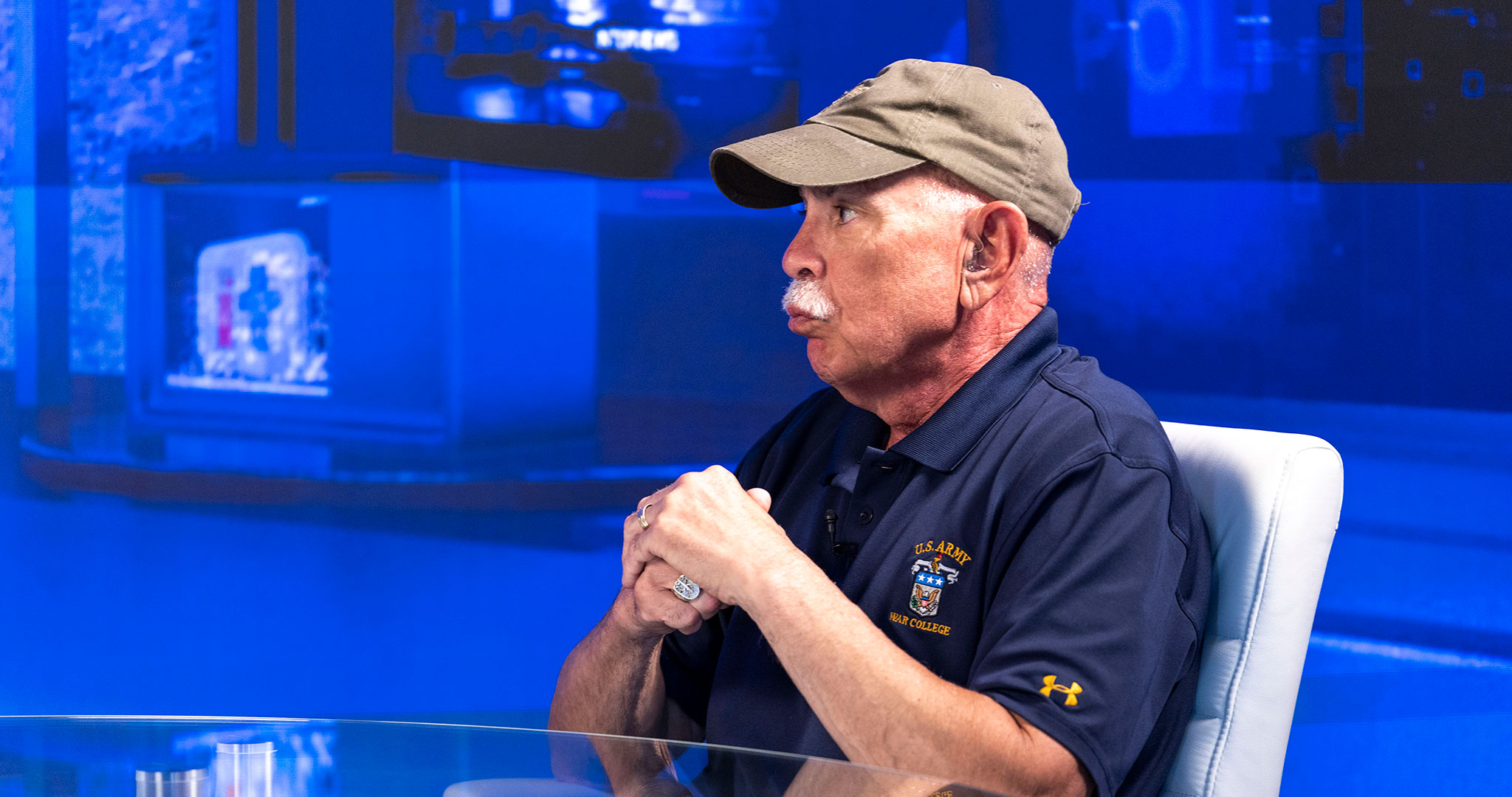
Randy Watt recounts his journey from Special Forces Colonel to Ogden Police Chief, revealing how battlefield strategy and street-level leadership intersect. With firsthand insight on Iran’s nuclear threat, domestic unrest, and the erosion of free speech, Watt warns of ideological warfare at home and abroad—and calls for courage, clarity, and classical principles to preserve the Republic.



Foreword:
Note: This episode was recorded on Friday, prior to the weekend’s developments in Iran.
While the conversation does not address the latest events, it offers essential context on the principles, tensions, and strategic considerations shaping U.S. policy in the region. We encourage listeners to view this discussion as a foundation for understanding the deeper stakes now playing out on the world stage.
A Lifetime of Service: Randy Watt’s Journey Through War, Peace, and Politics
In an illuminating discussion hosted by Utah State Senator John D. Johnson, retired Special Forces Colonel and former Ogden Police Chief Randy Watt shares his remarkable journey through decades of public service. Watt’s career spans over 36 years in law enforcement and 34 years in the Utah Army National Guard, culminating in leadership roles that bridged military strategy and civilian policing. His insights delve deep into the complexities of national security, tactical leadership, law enforcement challenges, and the evolving political landscape of the United States.


This article explores Randy Watt’s unique perspective on leadership, service, and the pressing issues facing America today, from international security threats to domestic unrest and political polarization. With a blend of battlefield experience and community policing, Watt offers a rare lens on how leadership, preparation, and integrity define a career dedicated to protecting and serving both locally and globally.
PoliticIt Radio – Steel in His Spine (The Ballad of Randy Watt)
From Ogden Police Department to National Guard: A Dual Path of Service
Randy Watt’s career is distinguished by a rare combination of leadership in both law enforcement and military service. He devoted 36 years to the Ogden Police Department, including four years as chief, retiring in January 2021. Concurrently, Watt dedicated 34 years to the Utah Army National Guard, rising from a private to a colonel commanding the 19th Special Forces Group—a unit consisting of approximately 2,500 Green Berets across nine states.
His military service included three combat deployments: two in Afghanistan early in the war and two in Iraq during critical phases of counterinsurgency and counterterrorism operations. Watt’s role was not only tactical but strategic; after graduating from the US Army War College in 2010—a prestigious institution focused on developing strategic thinking for future generals—he returned to Iraq as the strategic plans chief for counterterrorism efforts in the region.
Watt’s academic achievements complement his practical experience. He holds a master’s degree in business from the University of Phoenix and a master’s degree in strategic studies from the Army War College. This combination of education and frontline experience shaped his approach to leadership, emphasizing critical thinking, problem-solving, and strategic foresight.
BIO: Randy L. Watt is a retired Special Forces Colonel and former Ogden Police Chief with over four decades of combined military and law enforcement experience. He served 34 years in the Utah Army National Guard, rising from Private to Colonel and ultimately commanding the elite 19th Special Forces Group, which spans nine states. His military career included multiple combat deployments to Afghanistan and Iraq, where he held key leadership roles in both tactical operations and strategic planning. He is a graduate of the U.S. Army War College, where he earned a Master’s in Strategic Studies.
In parallel with his military service, Watt devoted 36 years to the Ogden Police Department, including four years as Chief. He led SWAT operations, served as the department’s lead defensive tactics and firearms trainer, and advised law enforcement agencies nationwide on tactical readiness. As a contributor to the National Tactical Officers Association, Watt helped shape national standards in police training and response strategy.
Watt is a nationally recognized voice on public safety, national security, and the ideological challenges facing American institutions. He speaks frequently on topics including Iran’s geopolitical threats, domestic unrest, Second Amendment protections, and the erosion of free speech. With a rare blend of battlefield experience and community leadership, Watt offers a powerful perspective on preserving liberty and upholding the rule of law in an increasingly polarized world.


Leadership Lessons from the Military and Law Enforcement
Watt’s dual careers highlight the importance of preparation over rank. In both military and policing contexts, leadership is not defined solely by title but by the ability to anticipate challenges, train rigorously, and adapt to dynamic situations. His experience commanding Special Forces units tasked with high-stakes missions informs his views on law enforcement leadership and tactical training.
During his tenure in Ogden, Watt was deeply involved in SWAT operations and served as the lead firearms and defensive tactics trainer for over 15 years. He also advised police departments nationwide and contributed to national tactical standards through the National Tactical Officers Association. These roles underscored the critical interplay between discipline, integrity, and effective training in law enforcement success.

Understanding the Iranian Threat: Historical Context and Current Challenges
One of the central themes of Watt’s discussion is the persistent and growing threat posed by Iran to regional stability and global security. He traces Iran’s trajectory back to the 1979 Islamic Revolution, which dramatically shifted the country’s political landscape from a relatively open society to a repressive regime with aggressive ideological goals.
Before 1979, Iran was a hub of scholarship and international trade, with strong ties to European nations. Geographically located along historic trade routes such as the Silk Road, Persia (modern-day Iran) played a significant role in shaping the Middle East, the Far East, and Europe. However, the revolution ushered in a regime hostile to democratic values and openly hostile to Israel, with rhetoric calling for the elimination of the Jewish state.
Watt highlights the decades of appeasement that followed, with multiple U.S. administrations attempting to manage Iran’s ambitions through diplomacy and sanctions, often constrained by geopolitical complexities. Israel, however, has consistently maintained a “red line” stance, warning that certain actions by Iran would provoke decisive responses.
The Impact of Regional Conflicts and U.S. Policy
Watt acknowledges that the destabilization of Iraq, particularly following the fall of Saddam Hussein, inadvertently empowered Iranian influence in the region. The Iran-Iraq War (1980–1988) was devastating for both countries, but Iraq under Saddam acted as a counterbalance to Iranian ambitions.
He critiques mixed signals from Western powers, which at times undermined efforts to contain Iran’s nuclear program and regional interference. The lifting of sanctions and financial incentives provided Iran with substantial revenue, estimated at $40 to $60 billion, which the regime used to fund oppressive domestic policies and expand military capabilities, including nuclear development.

Iran’s Nuclear Program and Global Security Risks
The International Atomic Energy Agency (IAEA) has reported that Iran has surpassed the thresholds for civilian nuclear projects, edging closer to the capability to develop atomic weapons. Watt expresses grave concerns about recent intelligence suggesting that Iran may be attempting to mount a nuclear device on a ballistic missile—a development that would significantly escalate regional and global risks.
He underscores Israel’s preparedness and decisive actions to counter Iran’s advances, citing the extensive planning and intelligence operations that precede such military interventions. The strategic partnership and communication between President Trump and Israeli Prime Minister Netanyahu played a crucial role in framing the U.S. response to Iran’s provocations during Trump’s administration.
Domestic Challenges: Protests, Violence, and Law Enforcement Response
Shifting focus to domestic issues, Watt discusses the recent shootings and unrest in the United States, including incidents in Minnesota and Salt Lake City. He frames these events within a broader context of organized efforts by extreme left-wing groups to foment ideological change and undermine traditional institutions.
Watt describes how significant funding and logistics from national and global sources enable protests that challenge the capacity of local and state governments to maintain order. He highlights the role of groups like “5501,” which provide support to demonstrations, sometimes including the controversial presence of armed “peacekeepers.”

The Salt Lake City Incident: Legal and Tactical Considerations
Watt provides a detailed analysis of the shooting incident that occurred during a protest in Salt Lake City. Despite the presence of local law enforcement and efforts to maintain peace, a confrontation led to the tragic death of an innocent bystander. He explains that under Utah law, individuals may use deadly force in self-defense if they reasonably believe they or others face imminent serious bodily harm or death.
He clarifies the legal nuances, including Utah’s self-defense hearing process, which allows suspects to demonstrate lawful use of force before a trial, potentially preventing unnecessary prosecutions. Watt emphasizes the importance of thorough investigations and the role of district attorneys in evaluating probable cause before filing charges.
Balancing Rights and Responsibilities in Public Demonstrations
Utah’s strong Second Amendment protections allow for firearms at public events, which Watt acknowledges as a legitimate right but warns can increase the risk of misunderstandings and violence. He stresses that these dynamics often play into broader ideological narratives aimed at sowing discord and portraying government as ineffective in protecting its citizens.
Despite the tragic incident, Watt insists the overall protest remained mostly peaceful, commending the Salt Lake Police Department’s improved handling compared to previous events. He attributes this to new leadership and a renewed philosophical approach to law enforcement in the city.
Political Polarization and the Erosion of Free Speech
Watt offers a historical and sociopolitical perspective on the extreme polarization gripping the United States today. Drawing parallels with periods of intense division in Germany, Italy, Greece, and during the Vietnam era, he warns that the current climate mirrors conditions that often precede significant societal upheaval.
He reflects on a recent case in Minnesota involving a left-wing legislator who distanced herself from her party’s stance, resulting in backlash within a political culture intolerant of dissent. Watt highlights the chilling effect this has on free speech, particularly for elected officials and citizens who fear retaliation for expressing contrary views.

Coercion and the Threat to Democratic Discourse
Beyond overt violence, Watt identifies implied and suggested coercion as powerful tools used by leftist movements to suppress freedoms. He notes that protests outside the homes of public officials and threats of doxing create an environment where individuals feel compelled to conform or remain silent, undermining the democratic process.
Watt stresses that this coercive atmosphere not only restricts individual liberties but also jeopardizes the collective freedom essential to a functioning republic. Historical examples demonstrate that such tactics often pave the way for governments to centralize power by eroding civil rights.
The Path Forward: Political Landscape and Leadership
Despite the challenges, Watt expresses cautious optimism about the direction of the nation. He credits the 2020 presidential election’s outcome with exposing the intentions of the Democratic Party and global elites, galvanizing committed Americans across the political spectrum to resist radical progressive agendas.
Watt notes that President Trump’s coalition extended beyond traditional Republican voters, including significant support from Democrats, labor unions, and diverse demographic groups. This shift represents a realignment toward a party focused on Main Street America rather than Wall Street interests.

Economic Recovery and Fiscal Responsibility
Watt points to signs of economic recovery since the change in administration, such as the rebound of investment portfolios and the reduction in certain living costs like eggs. However, he warns of a looming debt crisis exacerbated by the absence of a formal federal budget for decades, relying instead on continuing resolutions.
He critiques recent legislative efforts, including reconciliation bills, for their limitations in addressing the debt problem comprehensively. Watt urges bipartisan cooperation focused on fiscal responsibility, emphasizing that controlling the national debt should be the top priority for both parties.
Reviving Classical Liberalism and Political Moderation
Watt distinguishes between classical liberalism—characterized by small government, individual freedoms, and the rule of law—and the current progressive movement dominating the Democratic Party. He advocates for a return to teaching Western civilization and liberal arts, underscoring their foundational role in American society.
Highlighting recent educational reforms, Watt sees value in re-centering curricula around these principles, fostering informed citizenship and balanced political discourse. He expresses hope for a future political leader emerging from the ashes of the current Democratic establishment, akin to a Kennedy-style moderate who could bridge divides and restore sanity to governance.

Concluding Thoughts: Leadership, Responsibility, and the Future
As the conversation closes, Watt reaffirms his belief in America’s resilience and the positive trajectory of national policies emphasizing law enforcement effectiveness and public safety. He highlights the essential role of government in protecting its people and warns against complacency within the Republican Party, which must remain vigilant and forward-thinking ahead of upcoming elections.
Watt emphasizes the importance of preparing for the next presidential election cycle to prevent a return to progressive policies that he views as detrimental. His message is one of cautious hope grounded in a call for responsibility, unity, and the preservation of fundamental American values.
Randy Watt’s lifetime of tactical leadership and service offers invaluable lessons on courage, strategy, and integrity—qualities that remain vital as the nation navigates complex domestic and international challenges.
#RandyWatt #SpecialForces #LawEnforcement #NationalSecurity #IranThreat #DomesticUnrest #SecondAmendment #FreeSpeech #PoliticalPolarization #Leadership #ClassicalLiberalism #CivicEducation #PoliceChief #UtahPolitics #GreenBeret #PublicSafety #TacticalLeadership #PoliticItPodcast