Candidates for Public Office
Scott Fletcher for Davis County Commission Seat A | Data-Driven Leadership for Davis County


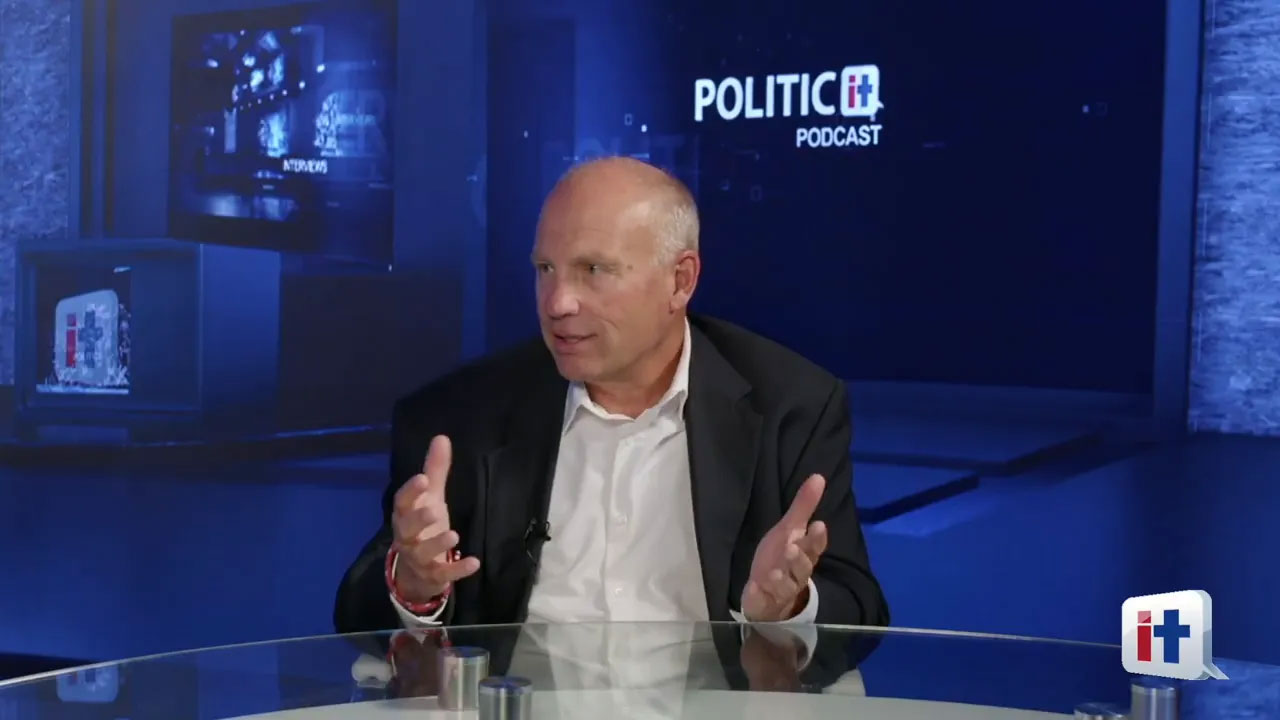

Davis County does not need more political slogans. It needs clear thinking, disciplined budgeting, and leaders willing to treat public money with the same seriousness they would demand in private industry.
That is the core of Scott Fletcher’s message in his run for Davis County Commission Seat A. His argument is straightforward: county government has drifted away from transparency, away from strategic planning, and away from the kind of hard data analysis that should guide major decisions. The result, in his view, is a county government that has become too comfortable with recurring costs, too responsive to special interests, and too willing to send the bill to taxpayers.
Fletcher’s campaign centers on three themes: fiscal responsibility, public involvement, and data-driven leadership. Those ideas are not abstract for him. They are tied to a long career in systems engineering, major contract management, and high-stakes decision-making where mistakes carry consequences.
His pitch is not that government should do nothing. It is that government should do the right things, do them well, and be honest about what they cost.
PoliticIt Radio – Bring the Truth into the Light
A lifelong Davis County perspective
Fletcher speaks about Davis County less like a political territory and more like home. He has lived there for more than six decades, grew up in Centerville and Bountiful, and describes a county that has changed dramatically over time.
His roots in the area run deep. Family history, local landmarks, schools, and generations of relatives all tie him to the county. He talks about growing up before major transportation corridors fully reshaped the region, riding tractors with family, and experiencing Davis County when it still had more of a small town feel.
That matters because his candidacy is framed around stewardship. He is not presenting himself as someone passing through public office on the way to something else. He is presenting himself as someone with children, grandchildren, and long-term stakes in what Davis County becomes next.


Not a career politician, but a business and systems leader
Fletcher has been involved in party and civic processes as a state delegate, county delegate, and former vice chair of the Davis County Republican Party. Even so, he makes a distinction between being active in politics and being a politician by trade.
His identity, as he tells it, was built in business and technical leadership. Trained as a physicist, he spent decades working in aerospace and defense related systems, including missile systems and shuttle work. He describes being involved in the recovery effort following the space shuttle disaster, a period that required intense work schedules and disciplined execution.
From there, his career expanded into executive leadership, profit and loss responsibility, and oversight of major contracts ranging from multimillion dollar work to multibillion dollar programs. He also spent years working with federal appropriations stakeholders and defense leadership, not as a lobbyist in the usual sense, but as a technical representative helping decision-makers understand complex issues.
Why does any of that matter in a county commission race? Because Fletcher’s entire case rests on transferability. He believes county government needs the same habits that serious organizations depend on:
- clear scope
- defined responsibilities
- budget discipline
- risk assessment
- performance tracking
- course correction when results are off track
His view is that those habits are often missing in local government, and taxpayers are the ones who pay for the gap.
Why he decided to run
Fletcher says the turning point came when he started looking closely at county decisions, especially around taxes and long-term spending. What disturbed him was not just a single vote or one bad budget line. It was a pattern.
He points to a significant tax increase as a major catalyst. From there, he started digging more deeply into how county decisions were being made and what those decisions would cost over time. What he says he found was a lack of transparency, too much influence from special interests, and too little strategic discipline.
That combination pushed him into the race. He argues that citizens are supposed to come first, yet too often they are brought in at the end of a process rather than at the beginning. To him, that is backward.
The recurring cost problem
One of Fletcher’s biggest concerns is that county leaders focus too much on acquisition and not enough on operations.
In plain terms, it is easy to talk about building something, buying something, or launching something. It is harder, and more important, to ask what it will cost every year after the ribbon cutting.
That is the lens he wants applied to county projects. He argues that every major initiative should be judged not only by the upfront cost, but by the long-term burden placed on taxpayers.
He raises several examples that he believes illustrate the problem:
- Western Sports Park, which he says carries operating costs that far exceed the revenue it brings in.
- The county convention center, which he says regularly loses money each year.
- A proposed pet health care facility, which he describes as having a large upfront price tag plus millions more in annual operating expenses.
His criticism is not only that these projects are expensive. It is that officials have not been candid enough about the full financial picture. In his view, once recurring losses become part of the county budget, they become a permanent draw on taxpayer money.

Can private industry do it better?
Fletcher applies a simple test to county functions. Before government takes on a new service or expands an existing one, he says leaders should ask whether private industry can do it better.
If the answer is yes, he believes the county should step back rather than compete with private enterprise.
This is one of the clearest philosophical lines in his campaign. He is not arguing against public services across the board. He is arguing for restraint. Government, in his view, should focus on functions it is uniquely responsible for and avoid drifting into roles where businesses can operate more efficiently.
The reason is practical, not ideological. When government enters areas that the market can already serve, inefficiency often follows. And when inefficiency follows, taxes rise.
Transparency has to be more than a talking point
Fletcher repeatedly returns to transparency, but not in a vague, feel-good way. He ties transparency to access, timing, and usable information.
For example, he objects to county meetings being held during typical working hours when many residents cannot attend. A public meeting may technically be open, but if it happens when ordinary working people are unavailable, the practical result is low participation.
He wants those meetings moved to the evening. He also wants the county to provide advance communication explaining what will be discussed, what the budget impact will be, and what questions the public should be asking.
That approach would turn public engagement from a passive exercise into an active one. Instead of people arriving in the dark, they could come prepared.
His proposed tools include:
- evening commission meetings
- regular public newsletters
- clear summaries of agenda items
- budget impact explanations
- email and text-based opt-in updates
The message behind all of this is simple: citizens cannot meaningfully participate if they are not informed early enough to matter.

Citizen committees as a governing model
One of Fletcher’s more interesting ideas is the use of citizen committees built around actual subject matter expertise.
He is skeptical of top-down decision-making where elected officials make complex calls in areas they do not fully understand. His answer is to create structured committees that include both technical experts and ordinary citizens.
He uses water policy as an example. Rather than relying only on internal discussion, he imagines bringing together civil engineers, water experts, university specialists, agricultural stakeholders, utility leaders, and residents. The goal would be to trace the issue from beginning to end, understand the facts, and develop real options.
That model reflects a larger belief: commissioners are not experts in everything, and pretending otherwise is dangerous. Better decisions come from good data, broad input, and a process that allows knowledgeable people to challenge assumptions before money is spent.
He also believes this kind of participation can reduce public apathy. When people are invited into serious problem-solving rather than just public comment after decisions are mostly made, they become invested.
The importance of process, not just promises
Fletcher makes a distinction that often gets lost in campaigns. Candidates are usually full of intentions. Much fewer can explain the process they will use when hard choices land on the desk.
His background leads him to think in decision frameworks. He talks about evaluating major choices through a business case lens that includes:
- schedule
- cost
- performance
- risk
- quality of life
That last category matters because not every county asset should be judged only by direct financial return. Fletcher brings up the Davis Park golf course as an example of something that affects local quality of life and, in his telling, should not be casually discarded. In other words, he is not reducing every public decision to dollars alone. He is arguing for disciplined evaluation that includes both financial and community value.
He also emphasizes progress tracking after a decision is made. It is not enough to approve a project and hope for the best. County leaders should monitor milestones, compare costs over time, and report clearly on whether execution matches the original promise.

What his first 100 days would focus on
Asked what he would do first, Fletcher offers a practical answer rather than a ceremonial one.
His first priority would be to examine county operations from the inside out. He wants each department and director to return with a clear charter describing what they do, how they do it, and what budget is required to do it.
That kind of review, in his view, would help answer key questions:
- Where are responsibilities duplicated?
- Which functions are state-mandated and which are discretionary?
- Which services align with the county’s core mission?
- Which budget items are expanding faster than the county can justify?
- Where can tax burdens be reduced?
Alongside that review, he wants a hard reassessment of several current county decisions, particularly projects with substantial recurring costs. He argues that without first understanding the existing landscape, meaningful reform is impossible.
Budget review, line by line
Fletcher clearly wants to be seen as someone who has done his homework. He talks about going through the county budget page by page, not just scanning headlines or relying on secondhand summaries.
What stands out to him are mismatches between population growth and spending growth. He points to line items in general services that rose far faster than the county’s underlying population increase.
That does not automatically prove waste, and Fletcher acknowledges that inflation must be accounted for. But his point is that sharp increases should trigger serious scrutiny, not casual acceptance.
If a county is growing at roughly one pace while certain spending categories are growing at many times that pace, leaders should be able to explain exactly why. He believes too often that level of explanation is missing.

Housing growth and planning concerns
Fletcher also raises concerns about housing and growth policy, particularly around high-density development.
His argument is built around data rather than emotion. He notes that population growth has been relatively modest while birth rates have declined significantly. At the same time, he says the pace of high-density housing development has run ahead of what those population trends would appear to justify.
That suggests to him a risk of overbuilding, or at minimum a mismatch between planning assumptions and demographic reality.
He recognizes that cities carry much of the direct authority over housing decisions, but he still sees the county as part of the broader conversation. Once again, the theme returns: growth should be guided by evidence, not by pressure campaigns or blanket assumptions.
Taxes as sacred funds
One of Fletcher’s most telling phrases is his description of taxpayer money as something close to sacred. That framing explains much of his tone.
He is not casual about fees, line items, or temporary taxes that linger after their original purpose has been fulfilled. He cites the vehicle-related tax connected to the West Davis Corridor as an example of a revenue stream that, in his view, should have ended when the stated need had passed.
To him, that kind of extension without clear public understanding is not a technicality. It is a breach of trust.
His broader point is that bad fiscal policy often does not arrive through one giant scandal. It comes through many smaller decisions, each defended in isolation, that eventually add up to a much heavier burden.

The three things he says he brings to the job
Near the end of the conversation, Fletcher boils his candidacy down to three qualities.
First, experience. He believes his background running large technical and business operations gives him the capacity to handle complexity, budgets, collaboration, and accountability.
Second, process. He does not want to govern by instinct or impulse. He wants repeatable methods for evaluating choices, measuring results, and bringing citizens into the process in a meaningful way.
Third, tenacity. He argues that reform requires more than ideas. It requires staying power when pressure rises and interests push back.
Those three traits form the spine of his campaign. He is not asking for support based on charisma or party label alone. He is asking for support based on operational competence.
What his campaign says about the future of Davis County
At a deeper level, Fletcher’s campaign is a referendum on how local government should function.
Should county government expand into new service areas because it can, or should it show more restraint?
Should elected officials rely primarily on internal decision-making, or should they build public-facing structures that include expert input and meaningful citizen collaboration?
Should taxes be treated as a flexible answer to weak planning, or as funds that require strict stewardship and constant justification?
Fletcher lands firmly on one side of each of those questions. His model is one of limited but competent government, strong oversight, transparent communication, and spending decisions tied closely to measurable facts.
That message is likely to resonate with anyone who believes county government has become too insulated, too expensive, or too comfortable making long-term commitments without fully explaining their costs.
Final takeaway
Scott Fletcher’s case for Davis County Commission Seat A is not built around grand rhetoric. It is built around management.
He argues that Davis County needs less guesswork and more analysis. Less bureaucracy and more clarity. Less deference to special interests and more accountability to the people footing the bill.
Whether the issue is taxes, public facilities, housing, communication, or county process, his message is consistent: start with the data, tell the truth about the costs, and bring citizens in before the decision is already made.
In a local race where practical governance matters more than headline politics, that is the lane he is choosing to own.
#politicit #utahelections #utpol