Candidates for Public Office
Utah Republicans Have Spoken. Here’s What the Primary Results Revealed.
Utah’s Republican primary reshaped the state’s political landscape as voters rejected complacency and demanded accountability. In this episode of PoliticIt, Senator John D. Johnson and Jeremy Peterson analyze the biggest upsets, from Weber County surprises to the backlash over Box Elder’s proposed data center. They explore how property taxes, rapid growth, distrust in government process, and national political tensions influenced local races, while examining what the results reveal about Utah’s changing electorate and why future candidates can no longer rely on traditional political assumptions to secure victory.


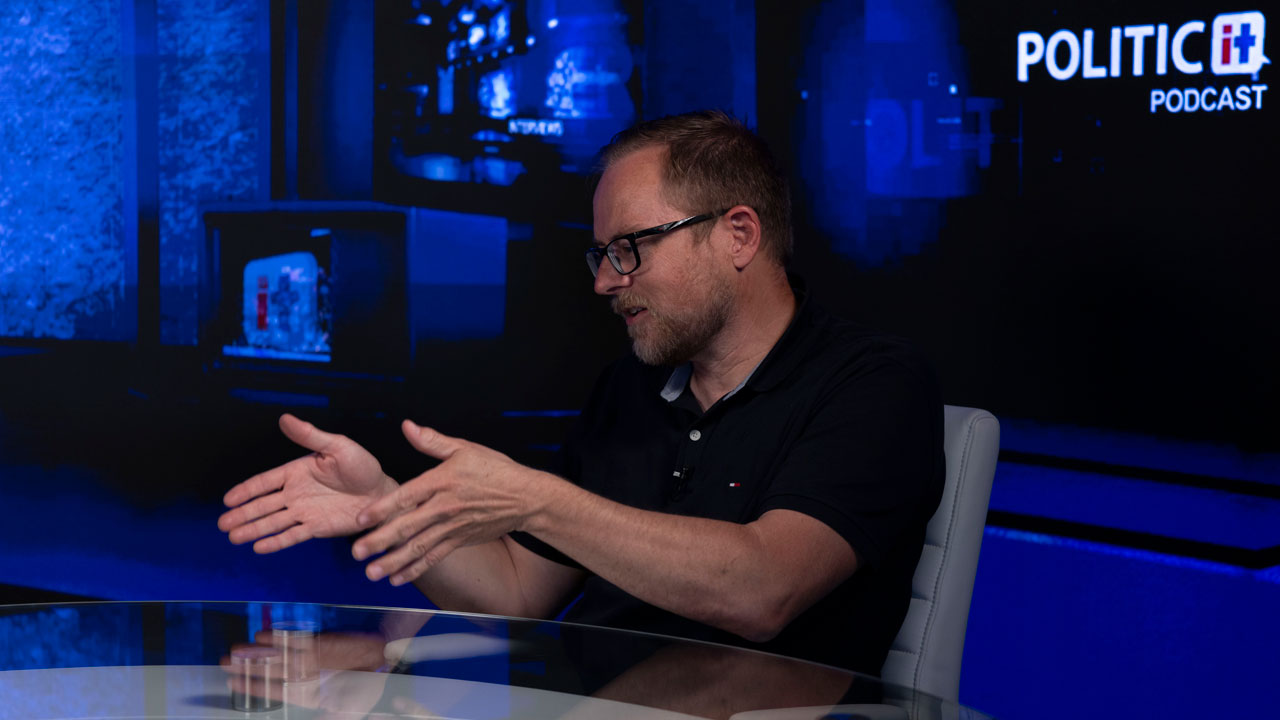

Utah’s 2026 Republican primary delivered one of the most consequential election nights in recent state history. Longtime incumbents fell, unexpected challengers emerged, and voters sent a clear message that frustration over taxes, growth, government transparency, and local decision-making is reshaping the political landscape.
In this episode of PoliticIt, Senator John D. Johnson sits down with political analyst Jeremy Peterson to break down the biggest surprises from across Utah. They examine the stunning results in Weber and Box Elder counties, the political fallout surrounding major development projects, the growing influence of national issues on local elections, and what these races reveal about the changing mood of Republican voters. Beyond the headlines, they explore the structural issues affecting Utah elections, including SB54, convention politics, plurality voting, and what candidates must understand if they hope to succeed in an increasingly volatile political environment.
PoliticIt Radio – The Voice of the Beehive
If you want to understand not just who won and lost, but why Utah Republicans voted the way they did and what it means for the future of politics in the Beehive State, this is a conversation you won’t want to miss.
A primary shaped by frustration
The broadest takeaway from the night is that many Republican voters were looking for a reset. Not everywhere, and not in exactly the same way, but enough to matter.
That anti incumbent energy showed up most clearly in local races where people tend to know the names, know the history, and hold strong opinions about taxes, development, and government decisions. The mood was especially noticeable in Weber County, where multiple results suggested voters were less interested in résumés and more interested in sending a message.
There was also Democratic energy in places like Salt Lake, where redistricting created a sense that competitive opportunities existed. But in many Republican primaries, especially in the north, the dominant force seemed to be resentment that had been building over time.
Not every race had the same trigger. Some were about property taxes. Some were about major development fights. Some were about candidate baggage. But the underlying theme was similar: the electorate looked restless.

Why the Weber County commission race shocked people
One of the biggest surprises came in the Weber County commission contest involving Sharon Bolos and Jon Beesley. On paper, Bolos looked like the kind of candidate who should be hard to beat. She had name recognition, experience, and the usual advantages that come with incumbency. There was no obvious scandal dragging her down. In many election cycles, that is enough.
It was not enough this time.
Beasley performed strongly where many would expect him to, particularly in rural parts of the county. The bigger clue, though, was what happened in more urban and suburban precincts. Even where Bolos won, she often did not win by the margin she needed. That matters in countywide races. A candidate can survive losses in one part of the map if the home turf produces big numbers. Here, that cushion never really materialized.
The result suggests that something larger than a routine challenger campaign was at work. Voters were open to change, and perhaps eager for it. When a race is that close even in an incumbent’s stronger areas, the danger is already there.


Taxes were not background noise. They were central.
If there was one issue running underneath several of these races, it was taxation, especially property taxes. For many Utah households, the cost of owning a home has become more painful, and taxes are part of that squeeze.
That frustration appears to have become politically potent. People may not be at full revolt, but they are increasingly unwilling to tolerate decisions that look like added cost or expanded government burden. In an environment like that, even a story about a sales tax increase landing at the wrong moment can shape perception fast.
Timing matters in politics, and so does association. When voters already feel financially pinched, they do not always separate a candidate from the institution they serve. A county commission headline can become a political problem for anyone attached to the commission, whether the details are fair or not.
That helps explain why some races turned more volatile than expected. Economic irritation often sits quietly until a campaign gives it a target.
| Get more Utah political analysis from PoliticIt Follow the channel for regular breakdowns of Utah elections, policy fights, and the local issues shaping the next cycle. Subscribe on YouTube |
The Box Elder County lesson: the data center became political kryptonite
Another major story from the primary was the political fallout around the proposed data center project in Box Elder County. That issue appears to have damaged multiple officeholders, including people with strong reputations and long records of public service.
Lee Perry, for example, is widely respected and looked like a natural fit for county leadership after his legislative service. Yet even a candidate with experience, relationships, and a steady temperament was not insulated from the backlash. That says something important about how hot this issue became.
At first glance, the reaction may seem surprising. Data centers can be framed as economic development, infrastructure, and technological investment. But politics rarely runs on technical explanations alone.


The public anxiety here seems to have gone beyond questions like water use or land planning, though those mattered. The project became a symbol for several fears at once:
- Rapid change arriving faster than communities can process it
- Suspicion toward very large projects negotiated through processes people do not trust
- Anxiety about AI and its effect on jobs and society
- Concern that outside power and money were driving local decisions
That combination is politically explosive.
Technology often advances before public comfort catches up. The internet unfolded gradually enough that people had time to adapt. AI does not feel gradual. It feels sudden. In that environment, a massive data center is not just a building. It becomes a stand in for uncertainty itself.
And once that symbolism takes hold, it gets very difficult to argue the issue on narrow policy terms.
Process mattered as much as substance
Another important piece of the data center backlash was process. The sheer scale of the proposal made people uneasy, but the way it unfolded may have been even more damaging.
This was not a small industrial project tucked into a familiar pattern of local approvals. It was seen as a megaproject with consequences reaching far beyond the usual scope of county development. Big projects create big reactions, especially when residents feel they are learning about key decisions after momentum is already in motion.
That helps explain why the issue was bipartisan. This was not a standard left right split. Many Republicans who would normally support economic development, job creation, and private sector growth were hesitant or openly opposed. When that happens, it is a sign that something deeper than party reflex is driving the conversation.
In practical terms, the issue became sudden death for candidates visibly tied to it. Once voters decided the project represented a threat, there was little appetite for careful review or patient persuasion. The mood was closer to stopping it first and sorting out the details later.

The other Weber County race showed how fractured the electorate has become
The second Weber County commission race may have been even more revealing. It brought together a crowded field, convention drama, a lawsuit, and a final result that did not follow an easy pattern.
The contest included Katrina Gibson, James Ebert, Rich Hyer, and Duane Kearsley. Each brought different strengths and complications.
- Katrina Gibson carried a recognizable political name connected to county government history.
- James Ebert came back for another shot with his own prior record in county politics.
- Rich Hyer entered from the Ogden City Council, offering both experience and the prospect of renewed Ogden representation on the county commission.
- Duane D Kearsley was less established politically and came across as the newest face in the field.
The convention itself was messy. Rules questions, bylaw disputes, and procedural conflict created confusion around who should advance and how. That kind of chaos does more than frustrate party activists. It can reinforce a wider public sense that the system is tangled, tribal, and increasingly hard to defend.
Then came the primary, and despite less obvious institutional strength, Kershisnik emerged on top.

Why a lesser known candidate won
There are a few plausible explanations for why this race ended the way it did.
First, voters may simply have wanted a fresh start. The better known candidates also carried more history, and history can be a burden in a volatile cycle. Experience is often an asset, but when the public mood turns against the political class, experience can start looking like entanglement.
Second, the race seems to have lacked a clear geographic logic. The precinct map did not tell a neat story where one candidate dominated one region and another candidate owned a different bloc. Instead, support looked patchy and fragmented across the county. That usually means broad dissatisfaction rather than organized coalition politics.
Third, campaign mechanics still matter. Repetition matters. Mail matters. Message saturation matters. Some candidates appeared to have more money behind their outreach than others. Yet even strong name recognition and better funded messaging could not overcome the appetite for somebody who felt less connected to the past.
That is the kind of outcome that leaves analysts scratching their heads, but it fits the broader pattern of the night. In uncertain times, voters often simplify their decision: known complication versus unknown possibility.
The plurality problem is becoming harder to ignore
This Weber race also highlighted a structural issue in Utah elections: plurality winners in crowded fields. When several candidates divide similar blocs of support, the eventual winner may be the person who simply threads through the fragmentation rather than building a broad majority.
That raises a legitimate question about whether the current system is producing the strongest possible outcomes in multi candidate races. A ranked choice system, or some other mechanism designed to reduce vote splitting, could offer a better way to measure actual consensus.
The same concern showed up elsewhere, including in the Stuart Adams race, where two challengers pulled from overlapping ideological territory. When support divides that way, a result can hinge less on broad approval and more on how efficiently the opposition is split.
This is not a theoretical complaint. It affects who survives and who does not. And as crowded primaries become more common, the pressure to revisit the rules will only grow.

What the SB54 era has done to party politics
Utah Republicans are still living with the consequences of the system created under SB54, and the tension is obvious. Signature gathering and convention politics now coexist in a way that satisfies almost no one.
Delegates are often frustrated by candidates who gather signatures while still appearing at convention. Candidates are frustrated because they need access to the primary and cannot afford to rely solely on one route. Party factions increasingly see each other not as allies in a shared process, but as competing tribes inside the same tent.
That makes conventions more confusing and less healthy.
One reform idea discussed after these races came out of Washington County, where the threshold to claim the nomination outright from convention was raised from 60 percent to 70 percent. The logic is straightforward:
- A higher threshold makes it harder for one candidate to avoid a primary
- That increases the odds that serious contenders will stay engaged in convention rather than bypassing it
- It reduces the incentive to rely on signature gathering as the safer route
It is not a perfect fix, but it addresses a real problem. If the incentive structure changes, the tone of the process may improve with it.
Other races that stood out across Utah
Weber and Box Elder were not the only places where the primary delivered surprises.
Dan McCay’s loss was one of the more striking results statewide. He is known as a disciplined conservative with a serious policy record and a reputation for sharp leadership. Yet he lost to a challenger who was also conservative and personally appealing. That race appears to have turned less on ideological difference and more on charisma and political chemistry.
That is a reminder that Republican primaries are not always decided by policy scorecards. When two candidates occupy similar ground philosophically, likability can become decisive.
Brady Brammer’s race also drew attention because it ended up closer than expected. In a strongly conservative district, that kind of tighter margin raises questions about demographic shifts, candidate mood, and the influence of newcomers moving into fast growing areas. Utah County, in particular, continues to evolve, and those changes will keep affecting local and legislative politics.

National polarization is now reaching local elections
One of the most important long term takeaways is that local politics in Utah no longer stays neatly local.
There was a time when city council races were mainly about roads, zoning, parks, and practical community decisions. Those issues still matter, but they are no longer the whole picture. National political conflict has seeped downward into county and municipal races. Outside money is more involved. Nationalized rhetoric shows up earlier. Issues that once belonged to federal debates are now being imported into local campaigns.
That changes the emotional temperature of everything.
Candidates now have to operate in a more toxic, more suspicious environment. A local controversy can suddenly absorb national themes. A project dispute can become a referendum on globalization, AI, immigration, or elite influence. Even when those connections are loose, the political effect is real.
This makes campaigning harder, governing harder, and consensus harder.
What candidates should learn from this election
For anyone considering a run for office in Utah, the lesson is not subtle. Do the homework before jumping in.
That means more than building a donor list or securing endorsements. It means understanding the actual electorate, not the version of it that existed one or two cycles ago. The mood is changing. The pressure points are shifting. Voters are reacting more quickly and sometimes more emotionally to issues that symbolize deeper concerns.
Strong candidates should be asking:
- What issue is really driving people in this district right now?
- Where is the hidden resentment that insiders may be underestimating?
- What project, vote, or association could suddenly become a liability?
- How nationalized has this local race become?
The safest assumption is that the political map is less stable than it looks.
The bigger message from Utah Republicans
What Utah Republicans said in this primary was not always ideologically tidy, but it was clear in spirit. They want to be heard on costs. They want more trust in process. They are wary of oversized projects and outside influence. And they are perfectly willing to replace familiar names if they feel ignored or boxed in.
Some of these results may look like one off upsets. That would be the easy interpretation. A better reading is that Utah politics is entering a more volatile phase where old assumptions are less reliable. Incumbency is weaker when frustration is high. Conservative credentials alone may not save a candidate. And local races can turn fast when they become vehicles for larger anxieties.
The primary did not answer every question about where Utah Republicans are headed. But it did answer one: complacency is no longer a winning strategy.

#politicit #utahelections #utpol