
Utah News Dispatch
What happens to Utah taxpayers when a new data center comes to town? It depends on timing.


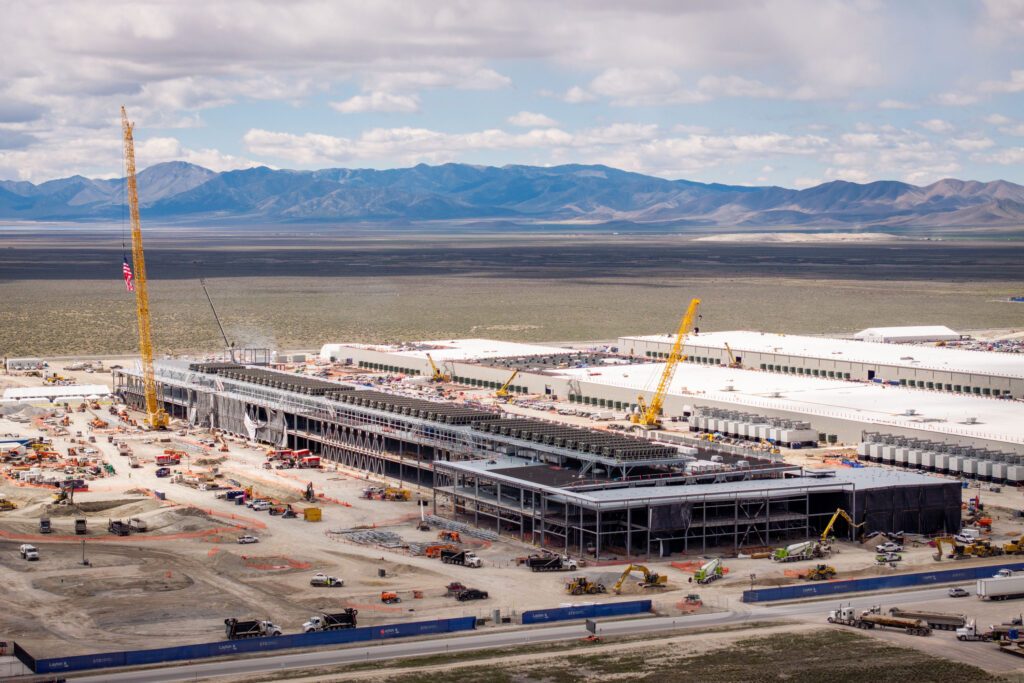


Construction continues on the new QTS data center in Eagle Mountain on Friday, April 17, 2026. (Photo by Spenser Heaps for Utah News Dispatch)
When a data center’s walls are first raised on Utah land, neighboring property owners will likely get some tax relief. That break, however, is likely to be temporary.
The enormous property values of data centers often carry complex tax questions for the municipalities that host them, a Kem C. Gardner Policy Institute brief says. What initially starts with tax relief for property owners may be followed by tax volatility in the future as the state’s truth in taxation policies take effect.
“Understanding how Utah’s Truth in Taxation system treats real and personal property is essential for evaluating the long-term fiscal impacts of individual projects,” Maddy Oritt, director of public finance research at the Gardner Institute said in a statement. “Careful, project-specific analysis can help communities maximize the benefits of data center investment while minimizing unintended tax shifts for existing taxpayers.”
SUBSCRIBE: GET THE MORNING HEADLINES DELIVERED TO YOUR INBOX.
During its first year, a hypothetical $2 billion data center with $1.5 billion worth of personal property, like computers and other equipment, can substantially reduce the tax rate of counties — especially smaller ones, where it may represent a large portion of total tax base.
But, that equipment will rapidly depreciate. And as data center managers seek to replace it, Utah’s truth in taxation system can create a boomerang effect, shifting the tax responsibility back to homeowners and other taxpayers, the Gardner Institute said in a news release.
That’s because of the state’s definition of “new growth.” A new building is considered to be new growth under Utah’s tax system. Servers and equipment are not.
Buildings like data centers are changing the status quo of how commercial property value works. Usually, real estate valuation far exceeds a site’s personal property valuation. But in data centers, the tables are turned.
“A data center’s personal property value (primarily high-value computer equipment) can amount to three to four times the value of its real property value (large warehouse-type facilities), assuming continued investment in personal property over time,” the report says.
Taxing entities may only collect the same dollar amount of tax revenue each year unless it experiences new growth, or if it follows a prescriptive and highly-advertised process to raise taxes. So, a big, new data center coming to town and generating more revenue for the taxing entity will help other property owners to pay less in taxes during the center’s first year.
However, the quick depreciation of the centers’ equipment “may increase the certified tax rate in future years to maintain revenue neutrality,” analysts from the institute said.
“These certified tax rate fluctuations affect all property owners within the taxing entity. Property owners, particularly in rural counties with smaller tax bases, will likely experience higher property tax volatility,” the brief says.
That impact may be mitigated by replacing equipment in phases, the institute said. Replacing, say, 20% of it annually would substantially reduce the boomerang effect on neighboring taxpayers. An “all-at-once replacement amplifies it.”
“Policy treatment of data centers’ real and personal property, combined with how quickly data centers materialize, will shape the magnitude of these effects,” the analysts recommended.