
Utah News Dispatch
As Flaming Gorge starts to shrink, questions — and new ideas — about its future grow


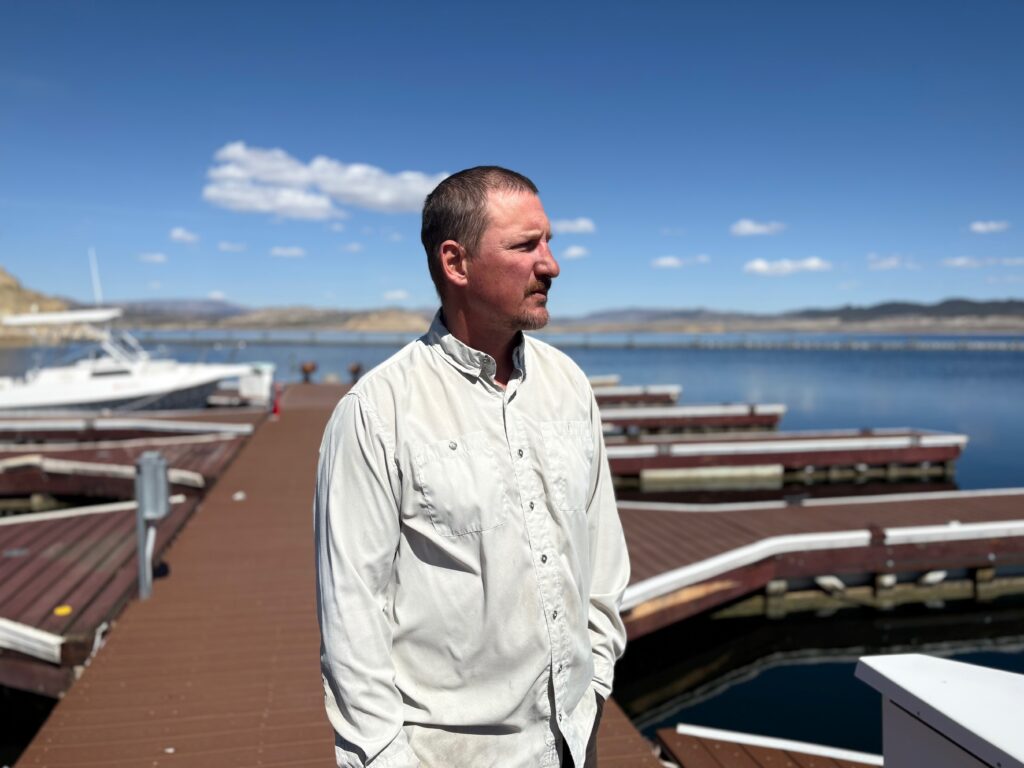


Brant Williams is pictured at the Lucerne Valley Marina he and his wife run at Flaming Gorge Reservoir on May 1, 2026. (Annie Knox/Utah News Dispatch)
As the Green River runs high out of Flaming Gorge Reservoir, so is anxiety in the tiny Utah town of Manila catering to outdoor enthusiasts coming to fish, camp or relax on a boat.
To boost a dwindling Lake Powell hundreds of miles downstream and keep its dam generating electricity for more than 350,000 homes, federal officials are planning to let out as much as ⅓ of the water in Flaming Gorge over the next year.
“You take that much water out of there, and people say, ‘Well, it’s large enough. It’ll be OK,’” Manila Mayor Kathi Knight said of the 91-mile reservoir. “Well, will it really?”
The unprecedented move could put some boat ramps out of commission this year. It’s also raising concerns about a shorter summer season, questions about when the water will rise again fears that other big drawdowns could follow in years to come.


SUBSCRIBE: GET THE MORNING HEADLINES DELIVERED TO YOUR INBOX
At their family’s Lucerne Valley Marina on the Utah-Wyoming border, Jessica and Brant Williams say business is already taking a hit. Expecting the season could end early as the water recedes, they offered refunds to perennial customers, and some opted to get their money back.

They’re trying to take one day at a time, but it’s hard not to think about the havoc another year of alarming, record-high winter temperatures and record-low snowpack could bring to the Colorado River Basin and as a result, to their business. They can only push docks and boat slips so far into the reservoir before hitting structures protecting their cove.


“We might not be operating if it’s like this two years in a row,” Brant Williams said on Friday, the same day federal officials began letting out more water before ramping up flows again this week, timing them to help endangered fish. Jessica Williams held back tears as she talked about the weight of her stress, saying it’s compounded by how high fuel prices and an uncertain economy could affect vacationers’ choices.
“Are people going to be able to travel?” she asked. “Are they going to be able to buy gas?”
In a way, it’s familiar territory. A similar effort four years ago sent big quantities of water from Flaming Gorge into the Green River, eventually reaching the Colorado River and feeding into Lake Powell. But the new plan could draw down up to double the 2022 amount.
Concerned as she is, Jessica Williams points out the reservoir was built for this – to keep hydropower churning and strengthen the Colorado River system. Yet the marina has been in her family for 61 years, and she’s worried the months ahead will bring costs to her community and still fail to sustain Lake Powell.
In April, officials representing Utah, Colorado and Wyoming approved the plan and noted the economic impact to Flaming Gorge. They said the water will be “recovered once the release concludes and as hydrologic conditions improve.”
The reservoir stands to drop more than 12 feet by the end of September and 35 feet over the next year, according to the Bureau of Reclamation. To give Lake Powell a further boost, the agency is also planning to cut back its flows to Lake Mead in Nevada.

Matt Tippets, chair of the three-member commission for Daggett County, which encompasses the Utah side of Flaming Gorge, is staying optimistic, saying the reservoir will remain vast even if it dips down to just 60% full.
“It is significant. It is new,” Tippets said. “I don’t want to sugarcoat it. If this happens two or three times, two or three years in a row, it may be dire, but I don’t believe we’re at that point yet.”
The area is known for its soaring red rock, shimmering blue water and many coves. Now the county is working to amplify other draws outside the water like its forest and trails suited for mountain biking and ATV rides, along with a shooting range that hosted a competition over the weekend.
Speaking to Utah News Dispatch at the range Friday as shots rang out and attendees sat down for plates of barbecue, Tippets said the county is hoping the coming winter will deliver lots of snow to replenish reservoir levels, just as the off-season did in 2023.
“We’re hopeful, we’re prayerful, we’re optimistic that that can happen again,” he said. “Even if it’s the status quo, we’re going to focus on what we can.”


How upstream reservoirs like Flaming Gorge should be managed has been a point of contention for seven states along the Colorado River trying to reach a deal on how to share its dwindling water supply.
The Colorado River contributes 27% of Utah’s water supply and provides water to 40 million people across the U.S. and Mexico. Drought, consumption — mostly for farming — and hotter temperatures tied to climate change have all combined to diminish its flow.
The downstream states of Arizona, California and Nevada made a new offer last week, upping how much they’re willing to conserve through 2028. But the Upper Colorado River Commission condemned the proposal as too focused on the short term and not based on the reality of the river’s shrinking flows. The commission’s executive director, Chuck Cullom, said in a statement Monday that “operations must be supply-focused, adapting to the hotter and drier future that we all face.”
Absent a deal, the U.S. Department of the Interior said it will come up with its own guidelines and aim to finalize a plan by Oct. 1. The current agreement expires at the end of the year.