
Utah News Dispatch
A Utah lawmaker says 2 cases show how adults isolate kids to hide abuse. Her effort to fix it failed


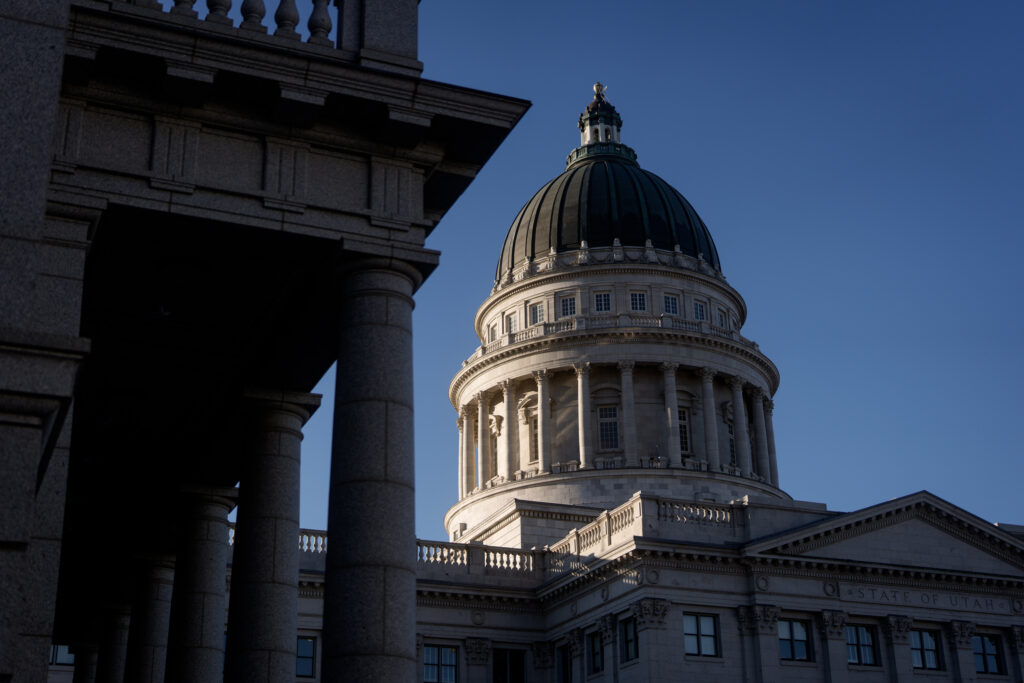


The Capitol in Salt Lake City is pictured on the first day of the legislative session, Tuesday, Jan. 20, 2026. (Photo by Spenser Heaps for Utah News Dispatch)
Sen. Luz Escamilla paused to gather herself before presenting her plan to help the state find children being severely abused or neglected in their own homes. Sitting before a committee of lawmakers last month, she fought tears and held up a photo of 12-year-old Gavin Peterson.
“There were multiple reports. There were concerns. There were red flags, and yet for a year — for the last year of his life — DCFS was unable to get eyes on him,” Escamilla said, referring to the Utah Division of Child and Family Services.
Gavin, of West Haven, arrived at an emergency room in July 2024, malnourished to the point his organs were failing. But it was too late to save him, said Escamilla, D-Salt Lake City. Now the boy’s stepmother, father and older brother are serving prison sentences for their roles in his death. Escamilla believes the state bears responsibility, too.
“This is not just a loophole. This is a failure of the state of Utah,” she said.


But what Escamilla sees as a critical step to close the gap, many of her colleagues see as an infringement on parental rights and an inadequate remedy. The proposal, SB124, sailed through the Senate but hit a dead end when the Utah House of Representatives voted it down, 43-30, during the last week of the 2026 Legislature.
“That was not the solution,” House Speaker Mike Schultz told reporters on March 6, in the final hours of the legislative session. In his view, the bill wouldn’t have helped Gavin if it were in place before his death and DCFS didn’t take an already available path to help the boy, Schultz said. The division, for its part, has said it did investigate several times.


The same day Gavin died — July 9, 2024 — Escamilla said she and other lawmakers at the Capitol listened as Kevin Franke pleaded with them to change the law.
With the help of her business partner, he said his former wife, a parenting influencer, dodged caseworkers’ efforts to check on their children by ignoring calls and knocks at the door, and by keeping the kids isolated. The abuse wasn’t discovered until a malnourished 12-year-old escaped the home and ran to a neighbor for help. Ruby Franke and Jodi Hildebrandt were both convicted of aggravated child abuse and sentenced to prison in 2024 in a case that made headlines worldwide.
After more than a year of study and with the backing of DCFS, Escamilla said the solution is to make clear that judges can grant the agency access to enter a home when caseworkers have failed to see a child despite diligent efforts. For a judge to sign the warrant giving DCFS that power, she said, the facts must support a credible threat to a child’s health, safety or welfare.
SUBSCRIBE: GET THE MORNING HEADLINES DELIVERED TO YOUR INBOX
Escamilla said the standard of proof would be probable cause — or reasonable grounds to believe something occurred — which is the same standard police use in making an arrest. She emphasized her proposal wouldn’t give the state any more power than it already has to remove a child from a home and doesn’t pertain to that type of warrant.
The bill had the support of the Utah Office of Families, the Utah PTA, and the five members of the bipartisan Child Legislative Oversight Panel.
After it failed, Kevin Franke told KSL NewsRadio that Franke and Hildebrandt “would be thrilled with our state Legislature. Because essentially the Legislature said it’s more important that they maintain their right to hide child abuse than it is to actually protect our children.”
Critics at the Capitol said the proposal went too far. Stephanie Gricius, R-Eagle Mountain, said she saw the legislation as allowing DCFS to enter into Utah homes based on allegations rather than evidence.
“It is tragic, it is absolutely tragic, but I don’t believe the mishandling of some cases is enough to open the door on parental rights for everyone else,” Gricius told colleagues on the House floor.

Rep. Karianne Lisonbee, R-Clearfield, noted a recent audit of DCFS found it failed to meet its own standards for investigations. She encouraged her colleagues to press pause before taking a step that could give the agency greater authority.
The conservative Utah Eagle Forum has argued DCFS already has too much power, with one of its representatives, Olivia Dawn, telling the House panel that a false report ended in months of agony for her family as they faced losing custody of a child, only for a judge to dismiss the case.
Another bill related to child welfare failed this year. HB434 would have sought to limit how much information can be blacked out in fatality reviews given to the Child Welfare Legislative Oversight Panel, a response to the audit’s finding that the Office of Service Review within the Department of Health and Human Services redacted more information than necessary.
A proposal focused on Utah’s family court system, HB303, passed with broad support. The bill follows up on legislation passed two years ago requiring judges to prioritize child safety in decisions about child custody. This year’s measure defines coercive control so judges may better recognize any patterns of abusive behavior in child custody cases. It awaits a signature from the governor.
Correction: An earlier version incorrectly stated the Division of Child and Family Services redacted information from fatality reviews. An agency under the umbrella of the Utah Department of Health And Human Services — the Office of Service Review — composes and redacts the reports.