Utah News Dispatch
Treating opioid misuse with mindfulness therapy could save thousands of dollars, new study says

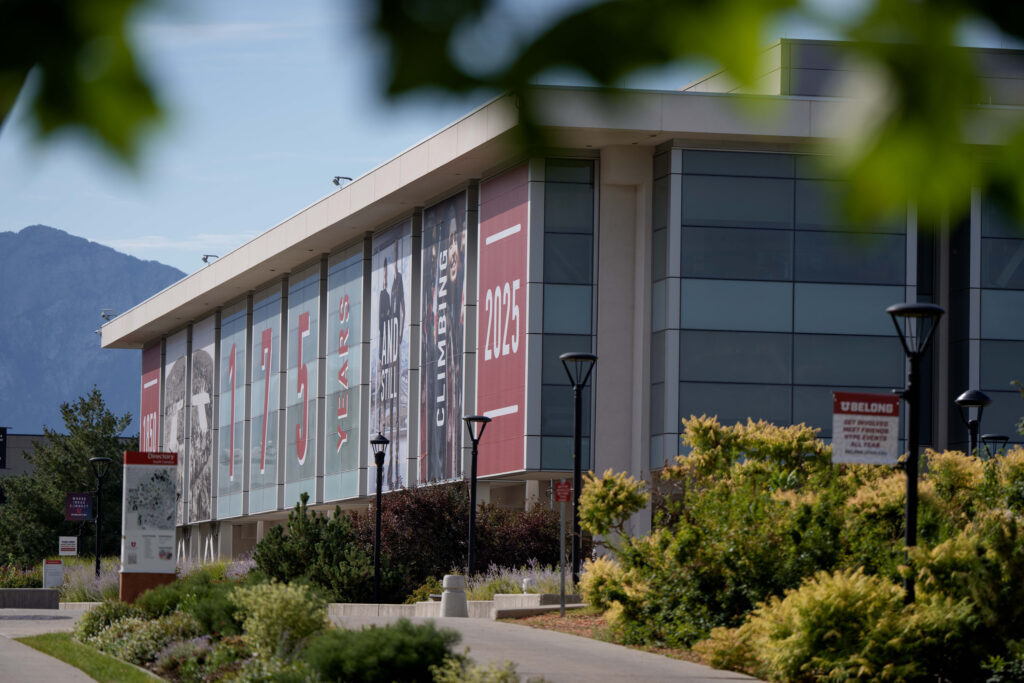

The J. Willard Marriott Library on the University of Utah campus in Salt Lake City is pictured on Saturday, Aug. 23, 2025. (Photo by Spenser Heaps for Utah News Dispatch)
A mindfulness treatment created at the University of Utah in recent years has proved to be effective at decreasing opioid misuse. Now, a new economic study found it could also save hundreds of thousands of dollars per patient.
That’s if healthcare, criminal justice and lost productivity costs are taken into account.
An opioid addiction epidemic can cost the United States as much as $4 trillion per year, according to a study by the firm Avalere Health. However, a form of therapy called Mindfulness-Oriented Recovery Enhancement, or MORE, can save $12 for every dollar spent in those costs, according to a University of Utah health economist’s evaluation.
SUBSCRIBE: GET THE MORNING HEADLINES DELIVERED TO YOUR INBOX.
The treatment, according to the analysis, is two to six times more cost-effective than other addiction treatments and can save more than $324,000 throughout a patient’s life.
University of Utah economics professor Fernando Wilson, who conducted the economic analysis, said in a news release the results suggest that a wide implementation of the MORE therapy could be a potent and cost-effective solution for the opioid crisis.
“At a relatively low cost, MORE has strong potential to reduce opioid misuse and generate substantial economic benefits for patients, health systems and society,” Wilson said. “The cost of implementing MORE is small, and its potential payoff in averting misuse and risk of opioid use disorder is very large.”
The therapy was developed by former University of Utah professor Eric Garland, who also co-wrote the economic evaluation. It aims to teach mindfulness skills to regulate cravings and pain, as well as other tools to manage stress and negative emotions and to “savor pleasant, healthful and life-affirming experiences,” according to a past release about the therapy.
“Rather than getting caught up in the pain or craving, we teach people how to step back and observe that experience from the perspective of an objective witness,” Garland said then. “When they can do that, people begin to recognize that who they truly are is bigger than any one thought or sensation. They are not defined by their experiences of pain or craving; their true nature is something more.”
Opioid overdose deaths have decreased this year in the state, according to data from the Utah Department of Health and Human Services, but remain an issue. This year there have been 172 deaths linked to opioid overdoses in Utah, 10% fewer than in 2025. And, there have been almost 700,000 opioid prescriptions dispensed, also a 10% decrease from last year.
A clinical trial on the therapy following 250 adults with chronic pain on long-term opioid therapy who misused opioids found that the treatment “reduced opioid misuse by 45%, led to improvements in pain symptoms and opioid dosing and strengthened the brain’s responses to positive experiences to reduce cravings,” the university said this month.
“Opioid misuse is a major driver of overdose deaths, hospitalizations, homelessness and economic loss, so substantially reducing opioid misuse could have huge positive consequences for society,” Garland said. “Our study suggests that MORE could be part of a scalable solution that improves outcomes for patients while also reducing burdens on the health care system and society at large.”