Candidates for Public Office
Bringing Utah to Washington: Congressman Mike Kennedy on Elections, Energy & Finding Common Ground

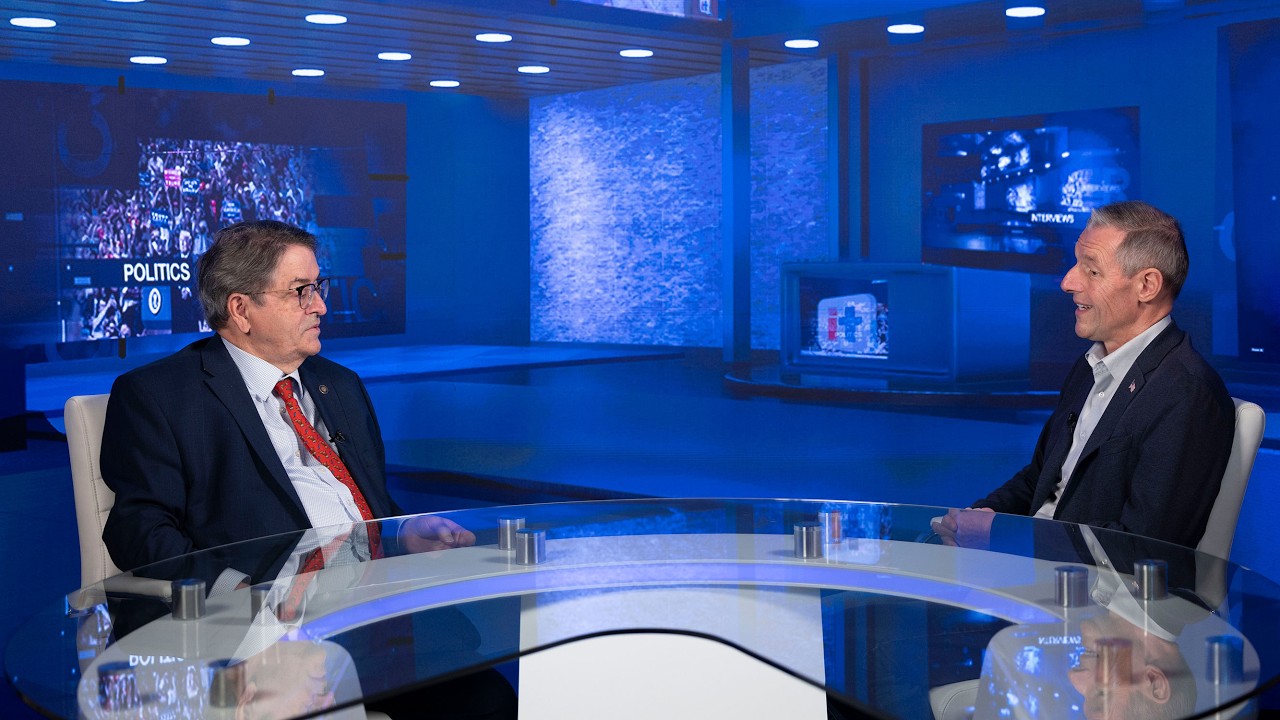
Can Republicans hold their House majority, and can Congress find common ground amid political division? Congressman Mike Kennedy joins Sen. John Johnson on the PoliticIt Podcast to discuss the upcoming elections, Utah’s congressional races, and his approach to getting things done in Washington.
Washington ought to spend more time solving problems and less time putting on a show. Families are concerned about fuel prices. Farmers are concerned about fertilizer costs. People want affordable electricity, dependable health care, and some confidence that new technology will not put their children at risk. Those are real responsibilities, and they deserve more than another round of political shouting.
My approach to Congress comes down to a straightforward idea: bring Utah’s practical approach to Washington, rather than bringing Washington’s habits back to Utah. That means standing up for limited government, empowering states, and letting people keep more of their own money. It also means working with a Democrat when we agree on a sensible solution.
Those commitments are not contradictory. I can disagree strongly with someone’s political agenda and still work with that person to protect children or fix a health care deadline that is hurting patients.
With an election a week away, there is plenty of uncertainty about what comes next. But the responsibility to get useful work done does not disappear during campaign season. The question is whether we can keep our principles, recognize opportunities for agreement, and deliver results that matter outside the Capitol.
Can Republicans Hold the House? There Is Still a Path
I am cautiously optimistic about Republicans’ chances of holding a slim House majority. Cautiously is the important word. We face real adversity, and losing the majority is a possibility. Anyone pretending otherwise is not being honest about the political environment.
Some of the frustration comes from concerns I share. Gasoline and diesel are expensive. Farmers are worried about what they have to pay for fertilizer. Constituents are upset about international conflict and its consequences here at home. I understand that anger because I feel some of it myself.
A Republican cannot simply tell people that everything is fine when their experience says otherwise. We have to acknowledge what is difficult, explain what we are trying to do about it, and give people a reason to support our agenda.
At the same time, a difficult environment does not make an election result inevitable. Three things give me reason to believe Republicans still have a path:
- Polls contain uncertainty. They provide information, but they are not the election itself.
- Candidate quality matters. Voters are choosing actual people, not just national party labels.
- There is a substantive choice about government. Republicans need to make that choice clear rather than allowing the campaign to become only a referendum on personalities.
Poll numbers deserve scrutiny, not blind acceptance
When someone tells me the House majority is already lost, my first question is where that certainty comes from. Often, it comes from media coverage and polling. Those sources deserve examination, just as any other source of information does.
My medical background makes me interested in how numbers are gathered and interpreted. A number can look precise while still leaving important questions unanswered. Who participated? Who did not? How were the responses analyzed? What assumptions sit behind the conclusion?
Personally, I do not answer calls from unknown numbers, and I am not interested in giving information to someone who may be collecting my data. I suspect many other Republicans feel similarly. That does not prove a particular poll is wrong, but it is one reason I question whether every poll fully captures the electorate.
My concern about a political slant in much of the media is also part of how I evaluate election coverage. That is my assessment of the environment, not a substitute for examining an individual survey. Skepticism should lead us to ask better questions, not to declare that every unfavorable number must be false.
The honest position is that polls may be accurate, and they may miss something important. The American people will settle the question by voting.
Strong candidates still make a difference
I recently spent time supporting Republican candidates and colleagues in Michigan, Ohio, Pennsylvania, and Iowa. Among the people I met with were Tom Barrett and Bill Huizenga in Michigan, Rob Bresnahan in Pennsylvania, and Derek Merrin in Ohio.
Those experiences reinforced my belief that Republicans have capable people making their case in competitive places. National commentary can make an election sound like one giant contest. On the ground, candidates still have to earn trust, explain their records, and connect their priorities to the concerns of their communities.
Republicans also have an agenda worth defending: reducing Washington’s reach, strengthening states, lowering taxes, and trusting Americans to make more decisions with their own money.
In my judgment, opposition to President Trump is not enough of a governing program for Democrats. Voters deserve to know what the alternative would actually do for them. When that alternative includes Medicare for All, I have serious objections as a physician to putting that much control over medical care in government hands.
I also believe proposals from parts of the left to dramatically change institutions such as the Senate or Supreme Court deserve close scrutiny. Those are consequential choices about how the country operates, not just campaign talking points.
The Texas Senate discussion illustrates why I remain skeptical of confident national predictions. John Johnson and I both questioned how James Talarico’s politics would fit a conservative state, while also discussing Ken Paxton and the considerable money flowing into politics. My expectation is that Texas will choose a Republican, but an expectation is not a result. Candidates still have to earn the votes.
Utah’s Congressional Races and the Importance of Local Trust
I am proud of Utah. I am proud of the people who live here, the strength of our economy, and the practical work of our state government. Utah’s recognition by U.S. News & World Report as the nation’s top state is something I take pride in, but what matters most to me is the everyday character behind that reputation.
People want to build businesses, raise families, care for loved ones, and help their neighbors. Government ought to support that work rather than make it harder.
In the election we are approaching, neither of Utah’s U.S. senators is on the ballot, while all four congressional seats are. My expectation is that Republicans will hold at least three of those seats, and my hope is that we win all four.
The Salt Lake area contest involving Ben McAdams and Riley Owen is competitive. I have strong objections to the redistricting process and the resulting maps. Those changes have created uncertainty for candidates and constituents alike.
Still, a candidate’s responsibility is to make the case to the people in the district as it exists. Frustration with a map cannot replace the work of meeting voters and earning their confidence.
A campaign can build a foundation beyond one election
I have been impressed by Riley. He is smart, capable, and making an impression. Name recognition matters in politics, but it is not simply a matter of getting a name onto a sign. People need some understanding of who a candidate is and what that person would bring to public service.
If he wins, I would welcome the opportunity to work with him. If he does not, the relationships and recognition he is building can still create opportunities for future service.
That is worth remembering in any competitive campaign. One result matters, but it does not necessarily tell the whole story of someone’s ability to contribute.
Redistricting affects my own service as well. I have loved representing District 3. Under the changes I described, the district I would serve contains only about 30 percent of my current district. That means new relationships to build, alongside gratitude for the people I have already had the privilege to represent.
Looking Toward the 2028 Presidential Race
The next presidential election will be a major moment for Utah and the country. It will also bring Senator Mike Lee’s seat up for election. I am grateful for his work, but whether he runs again is a decision he will have to make. I have not received an indication from him one way or the other.
On the presidential side, I expect tremendous motivation in both parties. The election immediately in front of us will help inform that conversation, but it will not settle everything about 2028.
I have a very critical view of Gavin Newsom and Kamala Harris as potential Democratic candidates. I do not find their political records or their case for leadership compelling. Republicans, in my view, have several strong possibilities.
- J.D. Vance: I have been impressed by his intelligence and the work he is doing.
- Marco Rubio: He is another capable Republican whose work has earned my respect.
- Ron DeSantis: As his service as Florida governor concludes, he will have time to consider what comes next.
Of course, other people may emerge. Politics has a way of changing expectations, and two years is a very long time in this business.
It is interesting to consider the possible field. It is more important, right now, to do the work voters have already sent us to Washington to do. Future campaigns should not become an excuse for neglecting present responsibilities.
What Bringing Utah to Washington Actually Means
My ten years in the Utah Legislature were valuable preparation for Congress. I learned how to work legislation, listen to concerns, and move an idea toward passage. I also learned that a good intention is not enough. You have to understand the process and work with the people around you.
That is the Utah approach I want to carry into Congress: practical problem-solving rather than constant grandstanding.
I do not want my public service to be measured by whether I can produce an attention-grabbing social media clip. I want it measured by whether my team and I can identify something that is not working and help fix it.
At the time of this discussion, our team had advanced eight bills off the House floor. We were told that represented an unusually productive start for a Utah freshman member of Congress. I am proud of that work, but the more important detail is how those bills moved: with bipartisan support and unanimous consent.
That means they advanced without objection. It reflects the work done before a bill reaches the floor, when colleagues have a chance to raise concerns and help shape a workable proposal.
You can try to run over people with legislation, or you can try to address their concerns while preserving the purpose of the bill. We have chosen to look for that second path whenever possible.
It does not mean every disagreement disappears. It means there are issues where Republicans and Democrats can recognize the same problem and support a reasonable correction.
The loudest moments are not the whole Congress
There are more sensible people in Congress than the public picture sometimes suggests. That is true on both sides of the aisle. Plenty of members want the country to succeed and want the institution to function.
The challenge is that ordinary, productive work is not always what attracts attention.
Think about driving down I-15. If everyone is traveling safely and obeying the speed limit, there is not much to draw your attention. A speeding driver, a motorcycle doing a wheelie, or a burning car beside the road is different. You notice the unusual thing immediately.
Political coverage often works the same way. The shouting, insults, and dysfunction draw attention. Quiet cooperation does not compete as easily.
I understand why conflict receives coverage. There is genuine conflict, and people are interested in it. But a picture made up entirely of congressional arguments leaves out the people working together on useful legislation.
That distinction matters because it changes what we expect from our representatives. If we assume nothing constructive is possible, we may stop asking for it. I would rather be held accountable for finding the places where progress is possible and doing the work to get there.
AI Child Safety Is a Place to Find Common Ground
One example is legislation I am sponsoring with Democratic Congressman George Whitesides. Our proposal would prohibit AI chatbots from being developed in ways that enable romantic or otherwise inappropriate relationships with children.
To me, that is a sensible protection. Artificial intelligence presents opportunities, but those opportunities do not remove our responsibility to protect children.
George and I disagree on plenty of issues. We often vote differently. That does not prevent us from recognizing a shared concern and working on a bill together.
The question should not be whether we agree on everything else. The question should be whether this particular proposal addresses a real problem in a reasonable way.
That is an important distinction in a polarized environment. If complete ideological agreement becomes a condition for cooperation, very little will happen. If we evaluate each proposal on its merits, there are opportunities to accomplish something useful without abandoning our principles.
New technology does not have to become another permanent partisan fight
Artificial intelligence and data centers are generating substantial public interest. They also offer an opportunity to have practical conversations before every issue becomes locked into a rigid partisan position.
On some subjects, the parties have spent years building opposing positions and treating any movement as a defeat. With emerging technology, there may still be room to start with the actual problem rather than a familiar political script.
For me, the child safety proposal is an example of that approach:
- Identify a specific concern that people can understand.
- Define the protection the legislation is intended to provide.
- Work with colleagues who share that goal, even when they disagree on unrelated issues.
- Keep the focus on the substance rather than turning cooperation into a political liability.
As someone with a scientific background, I am interested in the good AI can make possible. I am also interested in establishing sensible protections. We ought to be capable of pursuing both.
Oil and Gas Permitting: A Practical Step Toward Affordable Energy
One of our bills reached the president’s desk and was signed into law shortly before this conversation. It addresses a practical obstacle in oil and natural gas development: getting permits processed.
The mechanism is straightforward. Energy producers pay a small fee to the Department of the Interior to help support the permitting process. Those resources help pay the employees doing the work, with the goal of getting permits handled more quickly.
In effect, the industry helps fund the processing capacity it needs. It is a targeted administrative fix rather than an attempt to rewrite every part of American energy policy.
The bill moved through both the House and Senate without opposition. That is something I am proud of because it demonstrates that a useful energy measure can attract support across party lines.
Why permitting matters to the larger energy picture
I support developing American energy resources in a clean, effective way that respects the environment. I also want the country to make use of a broad range of energy options.
That includes oil, natural gas, coal, nuclear, solar, wind, and geothermal. My goal is not to insist that only one resource has a role. My goal is to see resources developed and deployed so Americans have access to dependable, affordable energy.
The permitting law specifically concerns oil and gas. My broader energy priorities extend beyond that particular bill. It is important to keep those two things distinct: a targeted law can contribute to a larger goal without accomplishing that entire goal on its own.
Here is how I think about that larger objective:
- Develop resources responsibly. Energy production and respect for the environment should both be part of the discussion.
- Make the process function. A permitting system needs the ability to carry out the work it requires.
- Keep affordability in focus. Energy policy should ultimately serve the people and businesses that depend on energy every day.
Affordable electricity matters to virtually every part of the country’s economic life. It matters to industry, and it matters to households. When I talk about energy development, lowering costs for Americans is a central concern.
I do not claim that one permitting bill will suddenly resolve every energy price problem. It is a small step intended to make the system work better and support domestic development.
Take the three-yard gain
My description of this bill is a football analogy: it is a three-yard gain, not a spectacular touchdown pass.
That does not make it unimportant. Moving forward matters. A modest improvement that becomes law can be more useful than an enormous proposal that never gets enough agreement to pass.
If every legislative effort has to be a grand, comprehensive solution, we make progress unnecessarily difficult. Some problems can be addressed through a narrower change that people understand and support.
I will take a practical win that helps the country, even if it does not produce a dramatic headline. That is not a lack of ambition. It is a willingness to do the work that is achievable while continuing to pursue larger goals.
Indian Health Service: Fixing a Deadline That Can Hurt Patients
Another bill we have worked on addresses the time patients have to notify the Indian Health Service after receiving care outside its system.
As a physician, this issue matters to me. If the federal government operates a health service for tribal communities, the people relying on that service ought to receive good care and have a reasonable opportunity to navigate its requirements.
The problem we sought to address was a notification window of only a few days. Someone might be out of town, need an urgent care visit or emergency treatment, and then face a substantial bill because the required notification did not happen quickly enough.
That is the kind of rule Congress should be willing to examine. The issue is not an abstract argument about the entire health care system. It is a specific administrative requirement with potentially serious consequences for a patient.
Our proposal extends the notification period, giving people more time to contact the Indian Health Service about qualifying outside care.
One day can still require another legislative step
The House version provided 14 days. The Senate version provided 15 days.
That difference may sound almost comically small, but it still has to be resolved. The House and Senate need to agree on the same legislative text before a bill can go to the president.
At the point we discussed it, the measure had advanced through both chambers in those differing forms, but it had not finished the process. My hope was that we could coordinate the language and complete the work by the end of the year.
This is a useful reminder that legislative status matters. A bill passing the House is an achievement. A related version passing the Senate is further progress. Neither should be confused with the final step of a measure becoming law.
For the patient who might benefit, though, the purpose remains simple: provide a more reasonable amount of time to complete a notification requirement after necessary care.
Passing the House Is Not the Finish Line
The Indian Health Service bill also illustrates a broader frustration. At the time of our conversation, I put the House’s legislative output at roughly 900 bills, with the Senate having passed about 150 of those measures.
There are reasons the chambers operate differently, and Senators John Curtis and Mike Lee can explain the Senate’s work and constraints from their perspective. My concern as a House member is getting more of the useful legislation we have advanced through the rest of the process.
Much of that work does not receive the attention given to a major package. Yet targeted bills can address problems that people reasonably expect their representatives to fix.
That is why I care about both productivity and completion. Introducing an idea is not enough. Getting it through one chamber is not always enough. The work includes the follow-up, coordination, and adjustments necessary to reach the president’s desk.
A one-day difference in a notification period is not a reason to give up. It is a reason to finish the job.
Keep Utah Strong and Washington Small
I remain optimistic about the people of this country, even when I am frustrated with its politics. Serving Utah has reinforced that optimism. Our communities are full of people doing worthwhile things without needing Washington to direct every decision.
They are caring for their families, building their businesses, helping neighbors, and giving back. That is the strength I want public policy to respect.
Keeping Washington small does not mean ignoring the responsibilities government already has. If a federal permitting process is not functioning well, improve it. If a federal health program has an unreasonable deadline, fix it. If a new technology raises a clear concern about children’s safety, look for a sensible protection.
It also means remembering where authority comes from. Elections are an opportunity for the American people to tell their representatives what they want the country to do. I cannot think of a better way to resolve our political disagreements than going back to the people themselves.
I hope people are motivated to vote, and I would be honored to earn their support. My case rests not only on campaign promises, but on the work my team and I have been doing: advancing practical legislation, finding common ground where it exists, and standing for a stronger Utah with a smaller Washington.
We do not have to agree on everything to accomplish something worthwhile. We do have to keep working, keep our commitments, and remember that public service is supposed to serve the public.
#politicit #utahelections #utpol