Candidates for Public Office
The Other Side of the Story: Joseph Grenny Responds to the Salt Lake Tribune
The Other Side Academy argues that lasting recovery requires far more than sobriety. For people with long histories of addiction, crime, incarceration, and failed treatment, rebuilding a life means learning honesty, discipline, work, responsibility, and accountability. Its demanding, long-term model uses social enterprises, peer feedback, and real-world consequences to develop those habits. With participants averaging roughly 25 prior arrests, the Academy says outcomes must drive the recovery debate. The standard should be clear: Are people drug-free, crime-free, employed, accountable, and building lives worth sustaining long after treatment ends?

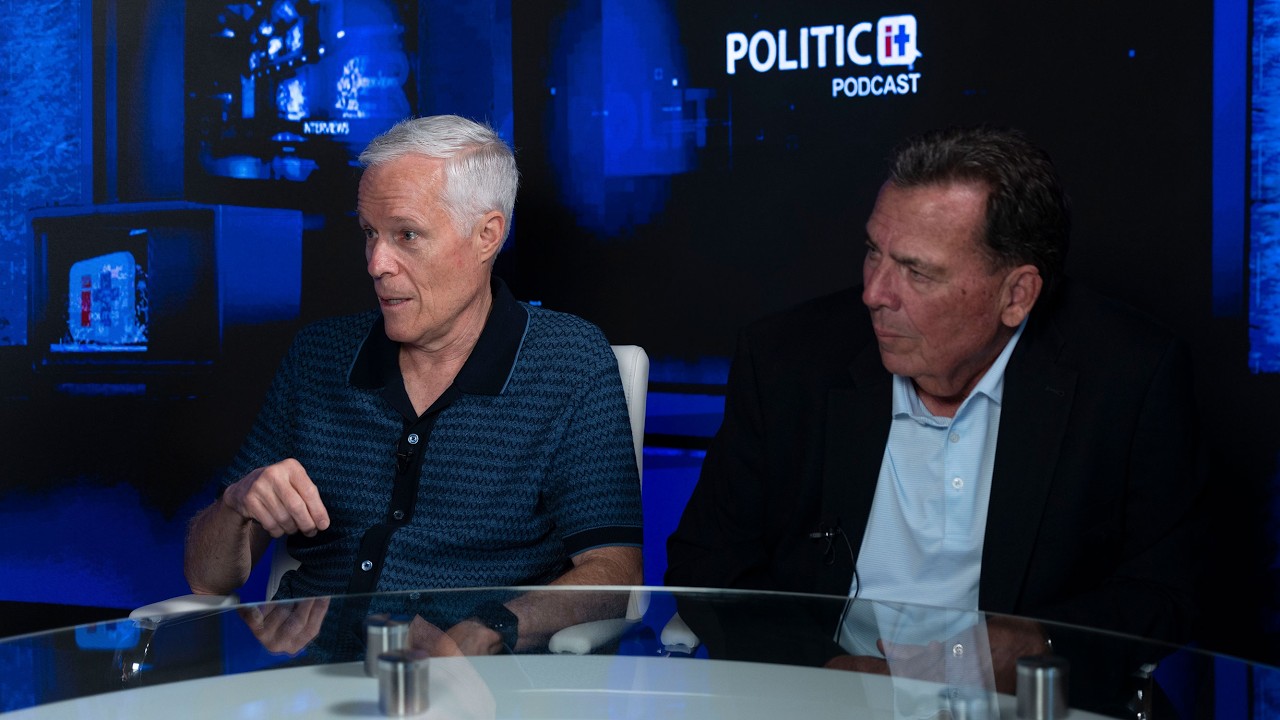
The Salt Lake Tribune recently published a critical article featuring allegations from former participants of The Other Side Academy. Joseph Grenny, CEO of The Other Side Academy, joins Sen. John Johnson on the PoliticIt Podcast to respond.
Together, they examine what the article reported, discuss what they believe it left out, and consider how the story might have been written with greater context—including the Academy’s methods, outcomes, and the experiences of those who credit the program with changing their lives.
This is The Other Side Academy’s opportunity to tell the other side of the story.
There is a tendency to talk about addiction recovery as if sobriety is the finish line. It is not. For the people we serve at The Other Side Academy, sobriety is essential, but it is only the beginning.
The real challenge is learning how to live differently after years, sometimes decades, of crime, addiction, incarceration, deception, and chaos. It means learning to get up on time, take a shower, work a job, keep commitments, resolve conflict without violence, tell the truth when it hurts, and contribute to a community rather than taking from it.
That is hard work. It takes time. It takes structure. It takes people around you who care enough to tell you the truth.
Recent criticism of The Other Side Academy has focused on the fact that we run social enterprises, that we expect people to work, that we are demanding, that peers confront one another directly, and that we disclose relapses to employers or supervision officers when safety and trust require it. Those are serious subjects and fair subjects for scrutiny. But they need to be examined with full context, not with a narrow lens that treats the features of our model as evidence against it.
The question is not whether recovery should be comfortable. The question is whether it works.
The Population We Serve Is Not Starting From a Blank Slate
The Other Side Academy does not primarily serve people in the early stages of substance use or people seeking a brief intervention before their lives have unraveled. We work with men and women who often come to us after repeated failures in other programs and after long histories of arrest, incarceration, addiction, and homelessness.
The average participant has been arrested roughly 25 times before arriving. Many have attended six to eight programs already and failed to complete them. Many have spent substantial parts of their lives in jail, prison, or on the streets. Drug use may have been part of their daily reality for 10, 20, or 30 years.
That context matters.
It is easy to demand a gentle, brief, low-expectation process in theory. It is harder to explain why that model should be expected to transform someone whose entire adult life has been shaped by compulsive behavior, criminality, manipulation, untreated trauma, unemployment, and isolation.
People have often been sober before they arrive here. Some have been sober for a month, six months, even a year. Sobriety alone did not solve the underlying problem because the underlying problem was bigger than the substance.
Someone can stop using drugs temporarily and still remain unable to hold a job, take feedback, manage anger, honor commitments, rebuild trust, or live in a healthy community. If those patterns stay intact, relapse and reoffending remain very real risks.
Recovery Is About Rebuilding a Life, Not Just Avoiding Drugs
For a person who has used fentanyl, heroin, cocaine, or another drug for 25 years, the drug is no longer the whole problem. The person has learned to live around it. Addiction has often trained habits that become part of daily life: lying, stealing, blaming others, manipulating, hiding, acting on impulse, and pursuing short-term relief at the expense of every long-term relationship.
That is why a 30-, 60-, or 90-day program is rarely enough for this population.
The physical craving is real, but it is only one part of the challenge. The far larger challenge can be ordinary life:
- Getting up at the same time every day.
- Showing up for work even when it is inconvenient.
- Keeping clean and maintaining basic routines.
- Working through frustration instead of starting a fight.
- Taking correction without collapsing into shame or rage.
- Learning how to be dependable.
- Making decisions based on long-term consequences.
- Living honestly with other people.
Those abilities do not grow because someone attended a class. They grow through practice, repetition, feedback, responsibility, and real consequences. They grow in community.
That is the core of The Other Side Academy model. We are not trying merely to interrupt drug use. We are trying to help people become the kind of person who can build and sustain a different life.
Why the Program Is Long Term
The Academy has a minimum stay of about two and a half years, though people may remain for three or four years. That length can sound startling in a treatment world accustomed to short stays. But it is entirely consistent with the magnitude of the change required.
You do not undo decades of destructive patterns with a few weeks of programming. You do not rebuild character, work habits, relationships, and self-respect on an insurance timetable.
That last point is important. Much of the treatment system is organized around how long Medicaid or private insurance will pay, not around how long a person with a severe addiction and criminal history may need to become stable and self-reliant. A two-and-a-half-year program does not fit easily into that payment structure.
Our answer is not to force a person’s recovery into a billing cycle. Our answer is to make the Academy self-sustaining.
When participants complete their minimum commitment, they can leave and return to court to seek relief from outstanding sentences under the terms that brought them to the Academy. Yet about half choose to stay another year. They stay because they have found structure, purpose, belonging, and a chance to contribute to people around them.
For many, it is the first time they have begun to become someone they genuinely admire. That is not a small thing. It is one of the strongest foundations for lasting change.
Social Enterprises Are Not Exploitation. They Are the Engine of Self-Reliance.
We do not charge people to come to The Other Side Academy. The program supports itself through social enterprises, including moving, thrift stores, and construction work. Participants work in those enterprises, learn marketable skills, develop a work ethic, and help fund the community they are rebuilding their lives within.
This model is sometimes criticized as though meaningful work and recovery are opposing ideas. They are not. Work is one of the primary ways people learn the habits recovery requires.
Work creates a daily rhythm. It teaches punctuality, care, teamwork, accountability, and the importance of doing a job well even when nobody is standing over you. It gives people a chance to experience themselves as contributors. It replaces the identity of someone who has long been defined by failure, dependency, or criminality with the identity of someone who can provide real value.
It also makes long-term recovery possible without forcing taxpayers, insurers, or families to carry the entire financial burden for years.
That does not make the work incidental. The work is part of the treatment. It is not busywork. It is a real enterprise serving real customers with real standards.
The first social enterprise, Other Side Movers, has been the top-rated moving company in Utah for years, with thousands of five-star reviews. Think about what that means. Customers are trusting people with felony records to enter their homes and handle their most valuable possessions. They do so because the service is excellent.
That performance does not happen by accident. It comes from a culture where people are expected to take responsibility, where carelessness is confronted, and where peers insist that the standard matters.
What Work Teaches That Lectures Cannot
In a healthy recovery community, work turns abstract lessons into daily practice.
- Reliability: People learn that other people depend on them.
- Integrity: A mistake must be acknowledged and repaired, not hidden.
- Cooperation: A team cannot function if every disagreement becomes a personal war.
- Delayed gratification: The reward comes from sustained effort, not an immediate escape.
- Self-respect: People see that they can earn trust through action.
Calling that exploitation misses the point entirely. The goal is not simply to keep people busy. The goal is to prepare them to live independently and successfully after they leave.
Radical Honesty Is the Opposite of Addiction
Addiction is built on secrecy. It requires deception, manipulation, rationalization, and isolation. People lie to families, employers, probation officers, friends, and themselves. They hide the evidence. They create stories. They protect the addiction at all costs.
Our culture is designed to move in the opposite direction.
At The Other Side Academy, people are expected to be radically honest with one another. That can include direct and sometimes loud conversations. Nobody pretends that this is easy. Honest feedback can sting, particularly for a person who has spent years responding to correction with denial, anger, or escape.
But the alternative is to leave destructive behavior unchallenged until it causes another crisis.
Before anyone is formally accepted, they spend two weeks in the environment. They learn what will be expected of them. They see the structure. They learn that peers will be candid about behavior that harms the community. They learn that accountability is not optional.
That orientation matters because people should understand the culture before they make a longer commitment. The Academy is not pretending to be a place where no one will challenge them. It is explicitly a place built on the idea that people help one another see what they may not be able to see alone.
The results of that culture are meaningful. In 11 years, adult probation and parole has not administered a single dirty drug test to an Academy participant. We are talking about a community of roughly 150 people with histories of addiction and felony convictions. That does not happen because the people were never vulnerable. It happens because honesty is expected early, before drug use becomes hidden and entrenched.
Radical honesty is difficult. It is also protective.
Why Employers and Supervision Officers Must Be Told About a Relapse
Another criticism is that the Academy may disclose a relapse to an employer or to adult probation and parole. The relevant question is not whether that feels pleasant to the person who relapsed. Of course it does not. The question is whether trust can survive if we conceal a risk from people who depend on our word.
Employers hire Academy graduates because we have spent years building credibility with them. They know that a person has undergone a lengthy process, has developed work skills, and has been held to demanding standards. They also know we will not put their workplace at risk by hiding a serious lapse.
That trust opens doors that would otherwise be closed.
It is extremely difficult for a person with six or seven felonies to secure a job. Employers have understandable concerns. They have seen people steal, show up late, disappear, endanger coworkers, or exploit second chances. In the general population of people leaving incarceration, those risks are not imaginary.
The Academy’s relationships with employers give graduates a genuine opportunity to overcome that skepticism. But those relationships only work if our word means something.
The same is true of adult probation and parole. Long-term working relationships depend on accurate reporting. If an organization withholds information to avoid an uncomfortable consequence, supervision officers lose confidence, and the people coming behind lose access to opportunities and alternatives to incarceration.
Participants know this expectation in advance. Disclosure is not a surprise rule applied after the fact. It is part of the honest community they agree to enter.
We should be clear about the moral issue here. If someone relapses and may put a workplace at risk, keeping quiet does not protect recovery. It protects secrecy. And secrecy is the environment where addiction thrives.
Every Day Can Be a Matter of Life and Death
There is no pleasure in saying this, but it needs to be said plainly: addiction can be fatal.
More than 40 former Academy participants have died after leaving unsuccessfully over the past decade. These losses are devastating. They are not proof that recovery is unimportant or that accountability does not work. They are a painful reminder of the disease we are fighting and the stakes involved when someone returns to drug use.
When a person is about to leave treatment impulsively, return to a destructive relationship, or run toward another relapse, a calm and polite response is not always adequate. Sometimes somebody needs to speak with urgency. Sometimes people need to hear that leaving could cost them their life.
That is not cruelty. It is a refusal to sentimentalize a deadly situation.
No one should celebrate a person’s failure. No one should enjoy confrontation. The people who leave unsuccessfully are not enemies. They are precisely the people we exist to serve. But compassion does not require dishonesty about consequences.
A 40 Percent Success Rate Is Not a Victory Lap
The Academy publicly reports that about 40 percent of people who enter achieve lasting change defined by being drug-free, crime-free, and employed. That number is not good enough for us. The other 60 percent are not statistics to dismiss. They represent people whose lives still matter, families still affected, and work still left to do.
But a number is meaningless without context.
For a population with an average of 25 arrests, long addiction histories, multiple program failures, and deep disconnection from work and community, the proper question is not whether 40 percent is perfection. It is whether it represents stronger results than available alternatives and whether the organization is transparent enough to improve.
The best evidence cited in this discussion suggests that more traditional providers may have success rates around 5 percent for comparable long-term outcomes. If that comparison is accurate, then a 40 percent outcome would be dramatically better. But we should not have to rely on rough estimates or isolated studies because providers ought to publish their results.
Our position is simple: if another program can demonstrate that it produces better long-term results for people like ours, we will change what we do. Immediately.
We are not attached to a technique for the sake of defending it. We are attached to outcomes:
- Are people drug-free?
- Are people crime-free?
- Are people employed?
- Are they still living that way two or three years later?
If a provider is achieving stronger results, the responsible reaction is not territorial defensiveness. It is to learn from them.
The Treatment Sector Should Be Paid for Results, Not Activity
The larger issue is not one organization. The larger issue is the way much of the recovery and treatment sector is financed and measured.
Too often, programs are paid for activity rather than outcomes. They bill for classes, therapy hours, appointments, beds, paperwork, and services delivered. Those things may all be valuable. But none of them, by themselves, proves that someone’s life has changed.
Imagine if a technology company were paid based on how many hours it spent building a phone, regardless of whether the phone actually worked. The incentive would be badly misaligned. The company could be paid whether the product succeeded or failed.
That is the risk when treatment providers are not required to report meaningful, long-term outcomes.
There are many compassionate, hardworking people in the recovery field. This is not an accusation that everyone working in the sector has bad motives. It is a criticism of a system that can reward effort and billing while failing to ask the only question that ultimately matters: did the person get better?
Utah could transform this conversation with one basic expectation. Every publicly funded provider should report:
- How many people entered the program.
- How many completed it.
- How many are drug-free after a meaningful period of time.
- How many are crime-free.
- How many are employed and self-supporting.
Those figures should be reported consistently enough to permit real comparison. No selective storytelling. No counting a person as a success merely because they attended a few sessions or left a facility sober for a day. Track meaningful results.
Transparency would do two things at once. It would expose programs that are failing, and it would reveal programs worth studying and expanding. Most importantly, it would shift the conversation from ideological preferences to evidence.
Criticism Is Welcome When It Helps People Get Better
There is nothing wrong with asking difficult questions about a program that serves vulnerable people. In fact, those questions should be asked. Organizations doing serious work should expect scrutiny. They should be able to explain their methods, their safeguards, their outcomes, and their failures.
What is frustrating is criticism that reduces an entire model to its most emotionally charged moments while leaving out the population being served, the long-term structure of the program, the consent and orientation process, the work training, the employer partnerships, the transparency around results, and the daily reality of addiction.
It is easy to find people who left a program unsuccessfully and feel angry about their experience. It would be surprising if you could not. Any program that openly reports that many participants do not achieve lasting recovery will have people with difficult stories to tell.
Those stories deserve compassion. They may also reveal ways to improve. But they are not, by themselves, a complete analysis of whether a program works.
A complete story asks harder questions:
- Who is the program serving?
- What alternatives did participants try before arriving?
- What expectations were clearly explained at entry?
- What is the long-term outcome for graduates?
- What do employers say about the people they hire?
- How does the program prevent drugs, criminal activity, and exploitation inside the community?
- What does it cost, and who pays for it?
- What happens to those who leave unsuccessfully?
Those are the questions that can lead to better policy and better recovery outcomes.
A Culture of Accountability Creates Second Chances Worth Trusting
Second chances are important. But second chances cannot rest on wishful thinking. Employers, courts, families, and communities need reason to trust that someone has changed.
That trust is built slowly, through behavior repeated over time. It is built when someone shows up, works hard, tells the truth, accepts feedback, repairs harm, and does what they said they would do. It is built when a recovery community refuses to tolerate the secrecy and manipulation that once kept addiction alive.
That is why The Other Side Academy is demanding. It is why it is long-term. It is why people work. It is why peers confront one another. It is why relationships with employers and supervision officers are protected through honesty.
None of this is easy. It should not be easy. The people who come here deserve more than a brief interruption in their addiction. They deserve a real chance to build a life they can respect.
We will continue to publish our results. We will continue to look for better ways to help the people who do not make it. We will continue to welcome ideas from anyone producing stronger outcomes. And we will continue to insist on a recovery system that measures what matters.
Drug-free. Crime-free. Employed. Alive. Accountable. Part of a community.
Those are outcomes worth demanding.
#politicit #utahelections #utpol