Candidates for Public Office
Inside Utah Politics: Senator Kirk Cullimore Jr. on Collective Bargaining and Education Policy
In this exclusive profile, Senator Kirk Cullimore Jr. discusses Utah’s most controversial bills—HB 267 on public-sector unions and the Utah Fits All scholarship program—offering clarity on misunderstood reforms. With his recent election as Senate Majority Leader, Cullimore reflects on collaborative governance, transparent policy, and his personal mission to empower parents and protect taxpayers. As partisan rhetoric rises, Cullimore’s message is clear: thoughtful reform, not reactionary politics, should shape Utah’s future.


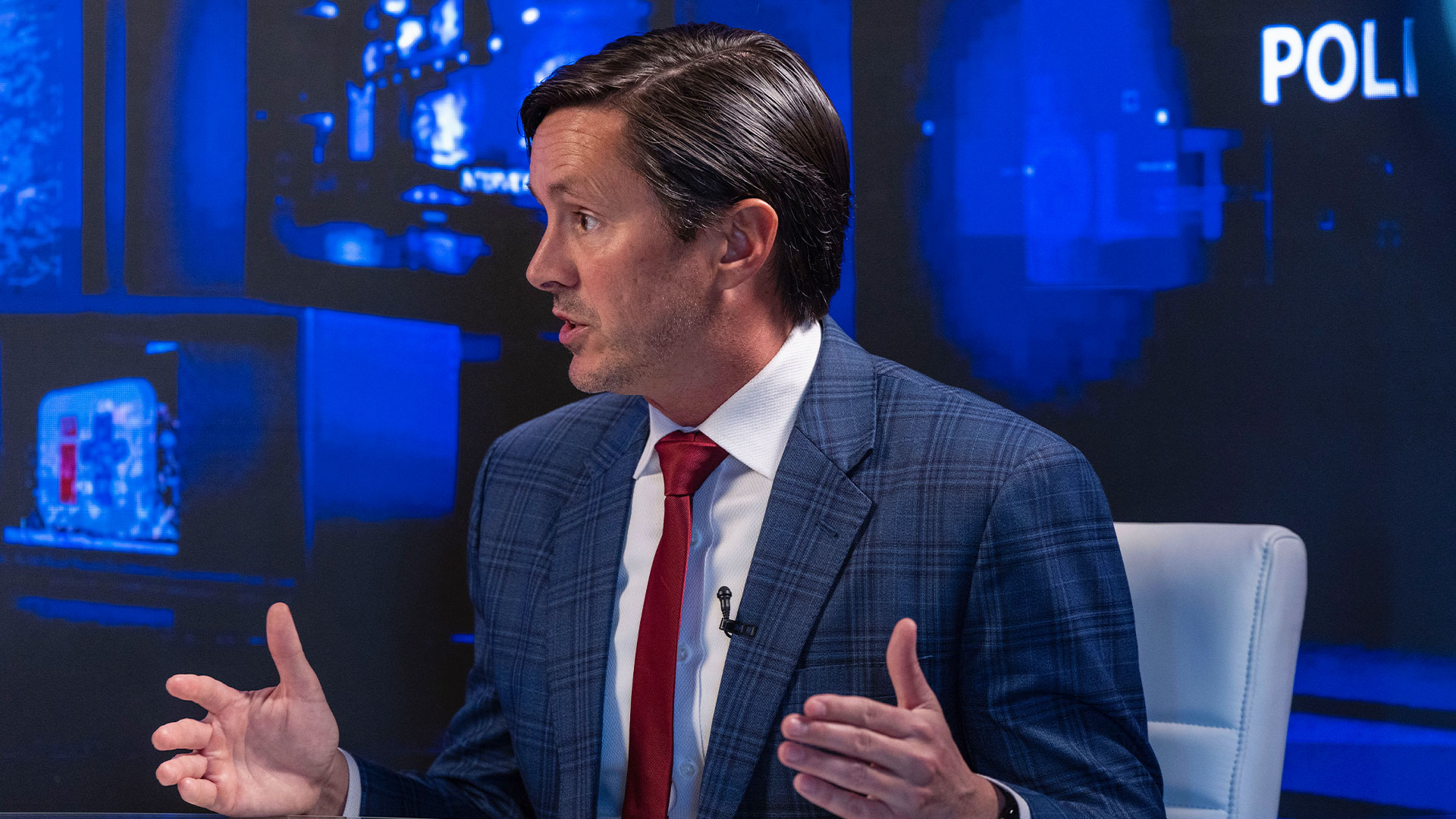

Senator Kirk A. Cullimore Jr. has been a prominent figure in Utah’s political landscape since his election to represent the 19th Senate District in 2018. With a rich background that spans music, law, and dedicated public service, Senator Cullimore offers a thoughtful perspective on key legislative issues affecting Utahns today.
In this comprehensive article, we delve into Senator Cullimore’s insights on some of the most talked-about legislative matters, including the recent union bill affecting public employees, the Utah Fits All scholarship program, and his vision for education policy in Utah. We also explore his experiences as the newly elected Senate Majority Leader and his approach to leadership within the Senate caucus.
The Union Bill: Clarifying Collective Bargaining in Utah’s Public Sector
One of the most contentious legislative topics recently has been the union bill, particularly the prohibition of collective bargaining for public-sector employees across all levels of government. Senator Cullimore, a key player in the bill’s progression, sheds light on its true intent and works to dispel misconceptions that it is a broad anti-union measure.


Understanding the Bill’s Background and Intent
Representative Jordan Teuscher has been working on this policy for about three years. Contrary to the criticism that it is a “union-busting” bill, Senator Cullimore emphasizes that the legislation does not ban unions or union membership. Instead, it prohibits collective bargaining specifically for public employees—those paid with taxpayer funds—while preserving their right to organize and affiliate.
Collective bargaining, as defined by Senator Cullimore, is when a union negotiates on behalf of an entire employee class. In Utah, this practice has been rare but impactful. Only a few government unions—such as one firefighter union and one police department—have formally engaged in collective bargaining. Education unions also vary in their participation. The bill seeks to prohibit the practice of exclusive bargaining representation, which Senator Cullimore says can undermine transparency and fairness for non-union members.

Negotiations and Compromises on the Bill
During the legislative process, a substitute bill was proposed that would have allowed collective bargaining if 50% plus one of the teachers agreed. However, this compromise was widely rejected, especially by teachers’ unions. Senator Cullimore was involved in these negotiations in the Senate and notes that while there was initial agreement on some compromises, no firm commitment was secured from the unions, leading to the failure of those negotiations.
Despite the opposition, Senator Cullimore reports that after discussing the bill’s actual provisions with constituents, there is broad support. The public appreciates that public employees still benefit from a transparent public process to negotiate wages and working conditions. Elected officials—whether city council members, school board members, or legislators—are entrusted to act on behalf of public employees and the public interest.
PoliticIt Radio – Shadow Bargains
Balancing Public Interests and Transparency
Senator Cullimore stresses the importance of balancing the needs of public employees with the broader public policy and budget considerations. Collective bargaining behind closed doors can lead to deals that disrupt public budgets, forcing difficult decisions such as cutting essential services or raising taxes without public input.
“If you negotiate wages in a backroom deal with union bosses, and it throws everything else out of whack, now you have to make public policy decisions that are not all transparent, not all in the public,” Cullimore explains. This lack of transparency undermines democratic accountability and the public’s ability to have a say in how their tax dollars are spent.
He also highlights the dual role legislators play, representing both public employees and taxpayers. While teachers and other public employees deserve fair compensation and working conditions, the legislature must also consider the interests of taxpayers who fund these services.

Why Collective Bargaining Is Different for Public Employees
Senator Cullimore draws attention to the fundamental differences between collective bargaining in the private and public sectors. Historically, collective bargaining was necessary in the private sector to protect workers’ rights, but it was always subject to market forces. If unions pushed too hard, businesses could fail, resulting in job losses for everyone.
“That tension doesn’t exist in the public sector,” he says. Public employees negotiate wages and conditions funded by taxpayers, who have no direct input in collective bargaining agreements. Even President Franklin D. Roosevelt, a strong labor union advocate, believed collective bargaining should not apply to public employees because it pits unions against taxpayers without taxpayer representation.
BIO: Senator Kirk A. Cullimore Jr. has served as the representative for Utah’s 19th Senate District since his election in 2018.
He began his education at Utah Valley University, earning an Associate’s Degree in music. He then spent two years in the Philippines as a missionary for the Church of Jesus Christ of Latter-day Saints. Upon returning, he continued his studies at Brigham Young University, where he completed a Bachelor’s Degree in music. Afterward, he spent six years teaching music and managing a music instruction studio. Seeking a new direction, he pursued a Juris Doctor at the University of Oklahoma.
Senator Cullimore began his legal career in Oklahoma, focusing primarily on Federal Indian Law. His work included tribal business transactions, gaming law, development of tribal policies and procedures, and administrative law. He also practiced in areas such as general business and contract law, property management, fair housing, homeowners’ associations, and collections.


In contrast, private businesses must answer to shareholders, who represent owners’ interests. Public institutions are accountable to taxpayers through elected officials, and Senator Cullimore advocates for maintaining that accountability through transparent public negotiations rather than exclusive union bargaining.
Challenges with Union Relationships and Legislative Collaboration
Despite the legislature’s efforts to support public education and employee welfare, Senator Cullimore notes a persistent adversarial relationship with unions, particularly the Utah Education Association (UEA). He suggests the unions may feel the need to create a “boogeyman” to justify their value and membership, often casting legislators as opponents.
“Even though we’re sitting there trying to represent parents, represent teachers, represent students,” Cullimore reflects, “it’s always adversarial.”
This dynamic is puzzling to him, especially given the legislature’s commitment to increasing teacher pay and improving education. Over recent years, the legislature has more than doubled public education spending—over $2.5 billion in the last decade—with about 60% increase in the education budget during his seven years in office.
However, teacher salaries have only risen by about 15%, prompting direct legislative actions to allocate raises specifically to teachers to ensure the funds reach the classroom rather than being absorbed elsewhere.
Despite these efforts, unions have consistently opposed direct legislative raises to teachers, which further complicates collaboration.

Seeking Partnership Instead of Opposition
Senator Cullimore expresses a desire to flip the adversarial script and partner with unions to improve education outcomes. His own motivation for entering politics stemmed from concern for his children’s education through active involvement in school community councils and parent oversight boards.
He stresses that legislators want to support teachers, students, and parents alike, and questions why the unions do not see legislators as allies rather than opponents.
“We need to demonstrate that we’re actually here to support teachers, students, and parents in their educational decisions,” he says. “Why is it that we’re fighting with the union? Why are we not on the same page?”
Public Perception and Polling on HB 267: Clarity Matters
Polling data on HB 267—the bill reforming collective bargaining for government unions—initially appears to show a divided public. A Deseret/Hinckley Institute poll reports that 34% of Utahns support the law while 38% oppose it, essentially a statistical tie within the margin of error.
However, there are two serious issues with how that poll was constructed, both of which may have skewed public understanding.
First, the poll asked whether respondents supported a law that “bans employee unions from collective bargaining.” That phrasing is misleading. The term “employee unions” is vague and fails to make a crucial distinction: HB 267 affects only government unions that represent public employees—those whose salaries are funded by taxpayers. The bill has no effect whatsoever on private-sector unions or workers. That omission could easily confuse respondents unfamiliar with the bill’s limited scope.
Second, the poll zeroed in on the most contentious feature—the collective bargaining ban—while ignoring the broader reforms within HB 267. By reducing a multifaceted bill to a single polarizing phrase, the poll failed to capture informed public sentiment.
This matters, because when Utah voters are given the full picture, public support rises dramatically. An independent, nonpartisan poll conducted by the Center for Excellence in Polling offered respondents a detailed explanation of HB 267, noting its exclusive application to government unions and outlining other key provisions. That poll found 59% of Utah voters support the bill, including 67% of Republicans, 52% of Democrats, and 53% of independents.
The discrepancy between the two polls underscores a broader issue: the public debate around HB 267 has been clouded by vague rhetoric and inadequate communication. Many referendum signature gatherers used broad slogans like “protect our Utah workers,” without clarifying that the bill pertains solely to government workers and their government unions—not the private sector.
As Senator Cullimore has acknowledged, the legislature must do more to communicate the nuances of complex legislation. HB 267 does not eliminate unions; it reforms how taxpayer-funded entities negotiate, with the goal of preserving transparency, fairness, and fiscal responsibility.
Utahns deserve to know what the law actually says—and when they do, a clear majority supports it.
Critics of HB 267, including representatives from the Utah Education Association, argue that banning collective bargaining may limit teachers’ ability to advocate for improved working conditions. They contend that the bill could weaken organized efforts to secure classroom resources and fair wages. Senator Cullimore disagrees, maintaining that direct legislative action and local transparency better serve public interest than backroom negotiations.

Utah Fits All Scholarships: Expanding Educational Opportunities
Another major topic discussed by Senator Cullimore is the Utah Fits All scholarship program, a legislative initiative aimed at providing more educational options for families.
This program, which passed overwhelmingly with bipartisan support over two legislative sessions ago, has already benefited around 10,000 students in its first year, with projections of serving 18,000 students next year.
Despite its success and broad legislative backing, the program recently faced a legal challenge when a judge ruled it unconstitutional. Senator Cullimore describes this ruling as based on “legal and mental gymnastics” and expresses confidence that the Utah Supreme Court will overturn it.
Utah Fits All Scholarships: Expanding Educational Opportunities
Another major topic discussed by Senator Cullimore is the Utah Fits All Scholarship Program, a legislative initiative aimed at expanding access to alternative education for families—particularly those in low-income brackets.
The program passed with bipartisan support over two sessions and currently benefits around 10,000 students, with projections to serve 18,000 next year. Although it faced a legal setback in a recent district court ruling, the program continues to operate during the appeals process.
Senator Cullimore describes the ruling—which argues that income tax revenues cannot fund programs outside the public education system—as based on “legal gymnastics.” He believes the Utah Supreme Court will ultimately uphold the program’s constitutionality, noting that Utah’s constitution gives the legislature broad authority to establish education systems.
“If you’re a poor, minority student or come from a disadvantaged family, you have no right to opt out of the public school system,”
Senator Cullimo
The program prioritizes low-income students, with nearly all current recipients falling below an income cap set at 200% of the federal poverty line. Cullimore argues that denying these families access to educational alternatives entrenches inequality and strips parents of their right to choose what’s best for their children.
Senator Cullimore sees the scholarship program as a way to empower parents as the primary decision-makers in their children’s education, a principle enshrined in Utah code.

The Importance of Competition in Education
Competition, Senator Cullimore argues, benefits all education providers—public, charter, and private—by making them more responsive to parents’ needs rather than institutional agendas.
Utah already has an exceptionally high public school participation rate, with 96.7% of K-12 students enrolled in public schools, compared to a national average of about 85%. Even with the expansion of scholarship programs, the impact on public school enrollment is expected to be minimal, under 1%.
This competitive environment encourages innovation and improvement across all educational settings, ultimately lifting the quality of education for every child.
Senator Cullimore highlights the diverse needs within families, where one child might thrive in public school while another benefits from specialized assistance available through alternative programs. He envisions a future of “à la carte” education, where students can mix and match in-person, online, charter, and concurrent enrollment classes to best suit their learning styles and goals.
“This is about expanding access, not limiting it,” he says.
Leadership as Senate Majority Leader: A New Perspective
Recently elected as the Senate Majority Leader, Senator Cullimore shares his reflections on this new role and the dynamics within the Utah Senate.
He describes the experience as fun and enlightening, offering a broader perspective on the caucus and the legislative process. Despite rumors of disarray or internal conflict, Cullimore affirms that the Senate caucus is united and productive.
“I enjoy showing up to the caucus meeting and interacting with people in the Senate. I think you guys have done an outstanding job,” he says.

He acknowledges the talents and diverse perspectives within the caucus, emphasizing that their strength lies in collaboration and deliberative policy discussions. This inclusive approach often leads to well-rounded legislation that reflects input from many voices.
While the role comes with added responsibilities and meetings, Cullimore sees it as an opportunity to further the work of the state effectively by leveraging the abilities of all caucus members.
Conclusion: A Vision for Transparent, Responsive Governance
Senator Kirk Cullimore Jr.’s legislative work and leadership reflect a commitment to transparency, fairness, and responsiveness in Utah’s governance, especially in education policy. Whether addressing union collective bargaining, expanding educational choices through scholarship programs, or fostering unity within the Senate, his focus remains on serving the best interests of Utah’s families and taxpayers.
His approach underscores the importance of clear communication, public accountability, and partnership among stakeholders to create lasting positive outcomes for the state’s children and communities.
As Utah continues to navigate complex policy challenges, leaders like Senator Cullimore play a crucial role in balancing diverse interests while striving for a better future for all residents.

#politicit #utahelections #utpol #UtahPolitics, #KirkCullimoreJr., #CollectiveBargaining, #EducationPolicy, #PublicEmployees