
Utah News Dispatch
Hiking in August? Keep an eye out for mountain goats — and keep your distance, DWR says

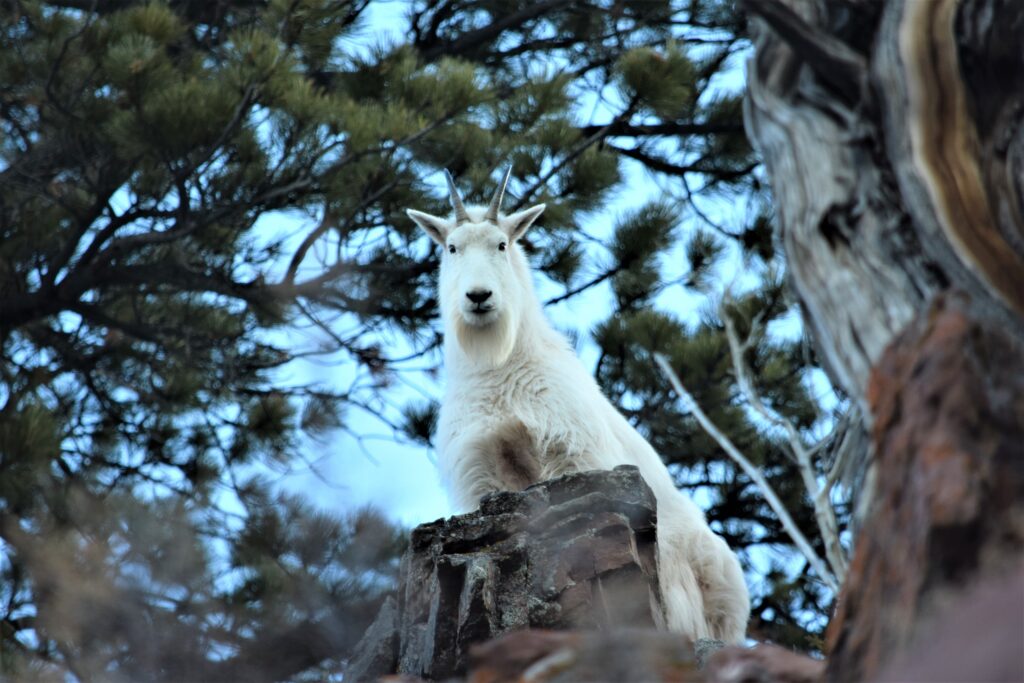

Utah wildlife managers say it’s better to lose the staring contest and back away from mountain goats. (Utah Division of Wildlife Resources)
Coming face to face with a mountain goat in a meadow of wildflowers may sound like a dream, but wildlife managers are reminding Utahns to keep their distance to avoid a nightmare scenario.
After giving birth late in May, nanny mountain goats team up to form nursery herds in the summer, grazing in alpine meadows and nursing their kids. They tend to be territorial during this time, especially when they’re with their young, and may charge at humans and dogs, said Rusty Robinson with Utah Division of Wildlife Resources.
SUBSCRIBE: GET THE MORNING HEADLINES DELIVERED TO YOUR INBOX.
Unlike many other species of big game, female goats have horns, too, so it can be difficult to tell them apart from the males, said Robinson, the division’s coordinator for once-in-a-lifetime species (for which hunting permits are restricted to just one time ever per hunter).
The division is urging hikers who spot a mountain goat to keep a distance of at least 150 feet, even if it means heading back down the trail.
“If you get too close, they can come at you with those sharp horns, and it can be dangerous,” Robinson said.
Robinson emphasized mountain goats can be especially aggressive toward dogs. In 2023, mountain goats killed three dogs in the span of a month at Mount Timpanogos, about 50 miles southeast of Salt Lake City.

Utah is home to roughly 1,500 mountain goats, Robinson said, with the largest herds in eastern Utah’s Uinta Mountains and the Tushar Mountains, where the massive Cottonwood Fire burned more than 97,000 acres this summer.
Although the fire spread to high elevations, the division doesn’t know of any goats who died as a result, Robinson said. And it often does know when a goat has died. It tracks many with GPS collars.
“Those animals are really good at avoiding fire,” Robinson said. If anything, the charred trees may open up more habitat for them, given that they like terrain with less tree cover.
Other herds live in the Wasatch Range in northern Utah, like those on Mount Timpanogos, Cascade Mountain, Provo Peak and in Little Cottonwood Canyon. They’re more active in the mornings and evenings during the hottest days of summer.
Robinson and the division reminded Utahns to stay alert and use these safety tips:
- If a mountain goat approaches you, slowly back away. If it keeps getting closer, wave your arms and make loud noises to scare it away.
- Keep dogs leashed and under control.
- Consult the agency managing the land — usually the U.S. Forest Service — and look for signs at trailheads warning of aggressive mountain goats.
- When nature calls, go away from the trail. Mountain goats craving salt will go find it in urine. Best if it doesn’t lead them to a path with hikers.
- Never feed a mountain goat or allow it to lick you.