
Utah News Dispatch
Save the Great Salt Lake, without federalizing it

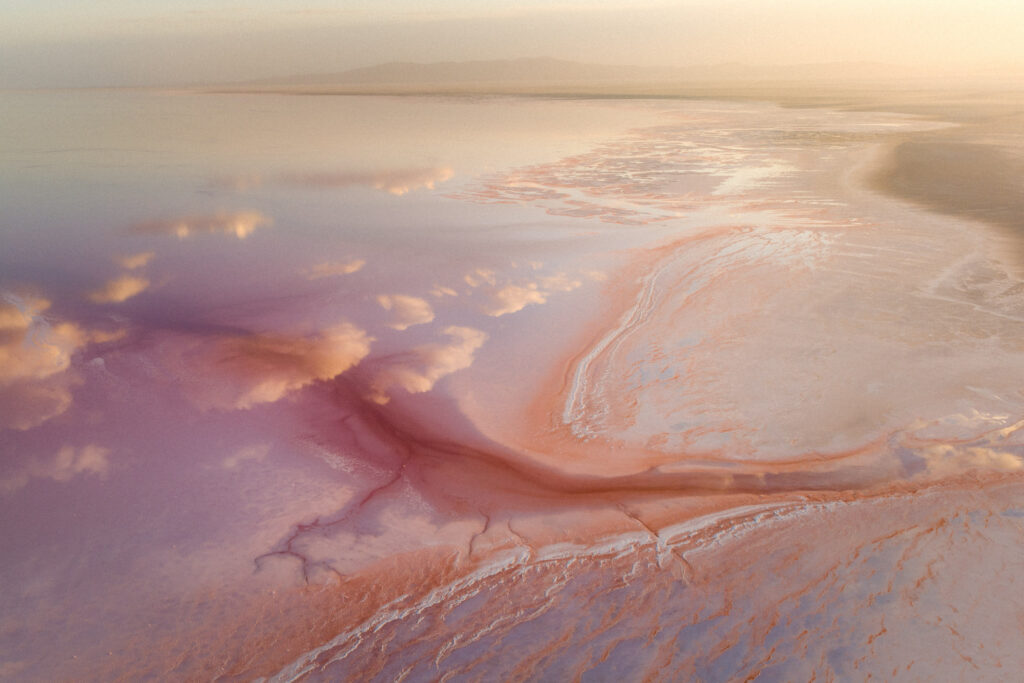

The northern shores of the Great Salt Lake, at the southern end of Hansel Valley, in Box Elder County, are pictured on Wednesday, May 27, 2026.(Photo by Spenser Heaps for Utah News Dispatch)
Earlier this year, the Trump administration asked Congress for something unusual: $1 billion to save a lake. The president’s budget request proposes a major federal investment to restore the Great Salt Lake, which it calls “a critical economic and ecological asset” for the nation. It comes after Utah’s legislature passed a resolution calling on Washington to partner with the state in the lake’s recovery.
The timing is right. After another dry winter, the Great Salt Lake is once again in decline. Utah has spent the past several years building the foundation for recovery. The challenge now is to put this foundation to work at scale.
A new report by the American Conservation Coalition outlines how Congress and the administration can assist. It stresses a simple point: Washington can do plenty, but the best way to help is by supporting Utah’s state-led strategy, not by federalizing it.
The federal government has good reason to partner with the state. More than 2.5 million people live downwind of the lake’s exposed bed, which sends dust laced with arsenic and other heavy metals toward one of the country’s most flourishing regions. The lake generates nearly half the area’s precipitation. It feeds the snowpack that supplies Utah’s farms, cities, and ski resorts. It also produces roughly 40 percent of the world’s brine shrimp eggs, and it hosts more than 10 million migratory birds each year.
Yet no country has ever restored a declining saline lake. The Aral Sea, Iran’s Lake Urmia, and California’s Owens Lake all turned into public-health disasters after upstream users drained the rivers that fed them.
Utah intends to be the exception, and it is trying to do so in a distinctly Utah way: through voluntary market mechanisms and innovation rather than regulatory mandates. After the lake hit a record low in 2022, the state overhauled its water laws, created a commissioner’s office and a water trust to facilitate voluntary water transactions, and committed more than $1 billion in public funds. Private and philanthropic partners have also now pledged $200 million to lake recovery.
The state’s strategy depends on working with farmers, municipalities, industry, and other water users, not against them. Voluntary agricultural leases allow farmers to conserve water, send it downstream, and receive compensation while retaining their underlying water rights. The state is also working with cities and industrial users to reduce consumption and dedicate conserved water to the lake. Together, these efforts are already delivering tens of thousands of additional acre-feet to the Great Salt Lake.
The state has made real progress, but the problem exceeds what Utah can address alone. The Bear River, the lake’s largest tributary, runs through Wyoming and Idaho before reaching Utah, and more than a third of the basin’s irrigated farmland lies outside the state. Federal agencies also manage key lands, including the Bear River Migratory Bird Refuge, where invasive phragmites consume water that could otherwise support the lake.
Washington does not need a new bureaucracy to save the lake. Our report outlines how it can best prioritize its investments in ways that deliver measurable water to the lake, improve the state’s ability to measure water savings, and strengthen Utah’s voluntary approach rather than supplant it.
By those standards, voluntary water conservation should be at the top of the list. Better measurement is also essential, because conservation on paper means little unless the water can be tracked to the lake. Funding should also support invasive-species removal, supply augmentation, and advanced cloud seeding.
Federal investment should flow through the institutions Utah has already built. Federal agencies can provide funding, technical support, and help with interstate coordination and federal land management. But implementation should remain state-led.
Utah has already built an effective strategy for Great Salt Lake recovery. Washington can now help it work at scale. If federal support reinforces the state’s approach instead of replacing it, America could become the first country to save a drying saline lake, the Utah way.