Utah News Dispatch
Hefty prizes, but mostly heritage, keeps Utah’s Days of ‘47 rodeo thriving

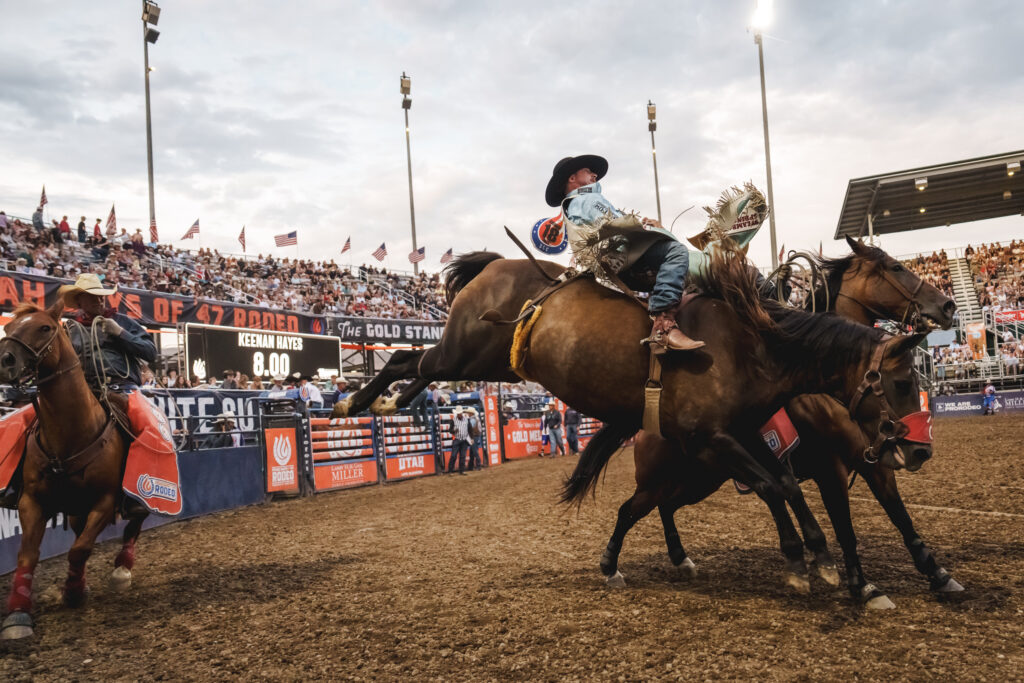

Keenan Hayes competes in bareback riding at the Days of ’47 rodeo at the Utah State Fairpark in Salt Lake City on Wednesday, July 22, 2026. (Photo by Spenser Heaps for Utah News Dispatch)
A century-old Utah tradition gathering Latter-day Saints, cattle, bucking horses and blinding belt buckles has evolved from a Wild West show into a high-stakes event for rodeo fans — one that awards Olympic-quality medals and fills thousands of seats in a relatively new stadium.
The Days of ’47 Rodeo, which celebrates the arrival of Mormon pioneers to the Salt Lake Valley on July 24, 1847, keeps building its momentum, and keeps people coming despite other pressures, like inflation, weighing into Utahns’ wallets. What keeps the event thriving, said Tommy Joe Lucia, executive director of the Utah Days of ’47 Rodeo, is simple: it’s the heritage of it.
“The essence of the rodeo is to acknowledge and remember the pioneer heritage of our state,” Lucia said.
SUBSCRIBE: GET THE MORNING HEADLINES DELIVERED TO YOUR INBOX.
When this rodeo ends on Saturday after a week of festivities, Lucia expects at least 48,000 fans will have filled seats at the Days of ’47 arena at the Utah State Fairpark, and over 60,000 people, including volunteers and contractors, to have been involved with the event.
Organizers expect to generate over $1 million in tax impacts for the state, according to an economic impact report Days of ’47 commissions every year, Lucia said. That report is, however, internal, he added.


It has been nine years since the rodeo received one of its largest makeovers with the inauguration of a $17 million, 10,000-seat permanent arena funded by a combination of public and private funds. Now, Lucia says, the Days of ’47 rodeo has become a destination event and organizers have “supercharged the rodeo and brought it back.”
“We grew it from selling 20,000 seats to selling 50,000 seats in six years. That’s incredible growth for an event and now we’re at a sold-out capacity crowd every night, and it’s in demand for people to come here and compete,” Lucia said. “And it represents the state well. It’s one of the greatest rodeo events in the country, and we’re proud of that.”
Still, ticket proceeds aren’t able to sustain the event. Especially, he added, with bucking horses being valued at about $150,000 each, and rising inflation of everyday necessities.
“Breakfast today costs $25 and it used to cost $10. And that same expense impact has happened to all the rodeos across the country,” Lucia said. “Diesel fuel for all the competitors is $5 a gallon. It costs us over $30,000 just to truck the livestock in here, just in fuel and trucking. So it’s a major ordeal.”


Lucia didn’t specify how much it costs to pull together such an event every year. But, he said, “there’s a lot of money spent,” counting the over $1 million in prizes to different contestants. According to the Days of ’47 publicly accessible tax documents, the nonprofit expenses added up to $3.2 million in 2024, while the organization made about $1 million on ticket sales, and almost $143,000 in food and beverage sales.
Sponsorships and sales of VIP packages for mid-sized businesses are key to keeping the event running. But also, the help of volunteers, which Utah has in abundance, scoring some of the top spots in the country’s volunteerism rankings for years.
“Utah has an amazing volunteer base. People are more willing to volunteer in the state of Utah than anywhere in the nation,” Lucia said. “So if it wasn’t for our volunteers, we probably economically couldn’t do the rodeo.”

But, Lucia said, as a nonprofit, the Days of ’47 activities go beyond the victory laps cowboys make while listening to the public roar, and the gold metals coined by O.C. Tanner, the medal provider of the 2002 Salt Lake City Winter Olympics.
The organization selects a Utah Cowgirl Collective, a scholarship and community service program for women. It also makes donations to all college rodeo teams that participate in the Pioneer Day event.
“Our give back to the state is strong, and we want to continue to grow that,” he said. “We want Utah to look good to the world. We want people to come experience it, and we want to generate revenues that we can put back into strategic areas in the state that need it.”