
Utah News Dispatch
Utah Supreme Court approves alternative licensing path for attorneys, joining Oregon and Washington


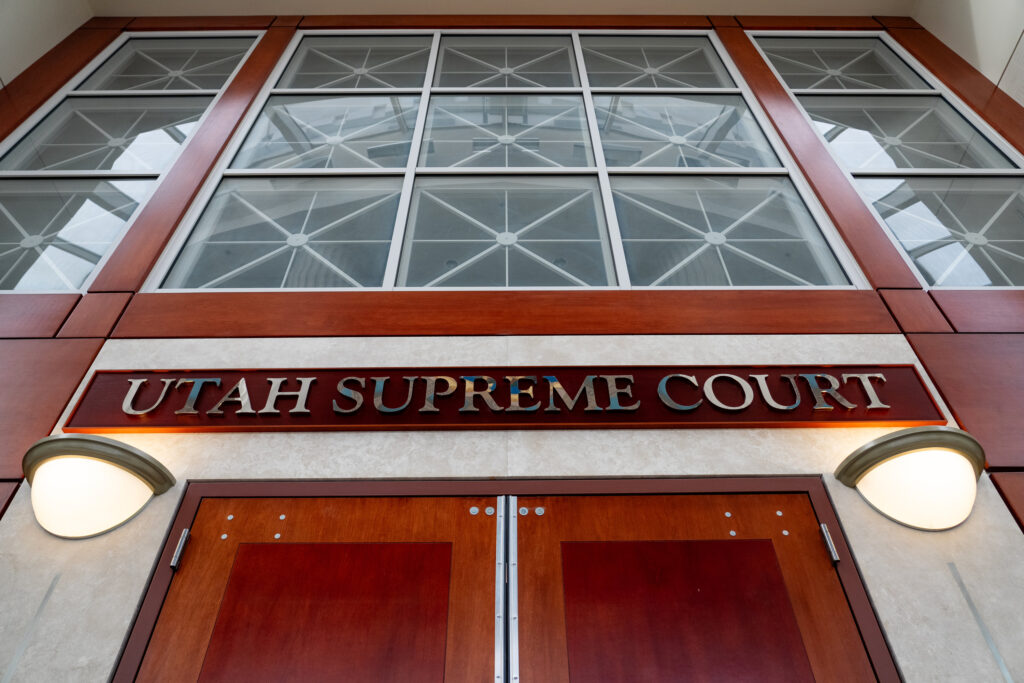


The entrance to the Utah Supreme Court inside the Matheson Courthouse in Salt Lake City is pictured on Wednesday, January 3, 2024. (Photo by Spenser Heaps for Utah News Dispatch)
The Utah Supreme Court has approved a rule providing an alternative path to license attorneys — a “groundbreaking” move, the Utah State Bar said in a news release.
The new method that was green lit last week would require applicants to accrue 240 hours of supervised legal practice under a qualified attorney, complete law school-required coursework, and a written performance exam administered by the Utah State Bar.
SUBSCRIBE: GET THE MORNING HEADLINES DELIVERED TO YOUR INBOX
Applications for the new model open on Jan. 1, 2026.
“We are pleased to offer an alternate path for licensure,” Utah State Bar Executive Director Elizabeth Wright said in a statement. “We were keenly aware that one size doesn’t fit all, and providing an option equips those who excel outside of a traditional exam with practical skills for a successful career in the legal profession.”
States like Oregon and Washington have already implemented the alternative, and multiple other states are exploring similar approaches to licensure. Citing evolving needs of both the profession and the public, the Utah State Bar said the new method is meant to complement the existing bar exam format, a two-day test that Utah administers twice a year.
The Utah Supreme Court’s approval came after a Bar Admissions Working Group explored alternatives to the traditional bar exam “in response to growing national and local calls for a licensure model that better reflects real-world skills, reduces economic barriers, and supports workforce readiness,” according to the release.
The group was composed of 15 members from the state’s legal community, including judges, practitioners and academics. The method is also backed by research that demonstrates skill-based assessments can be more effective than a standard test alone.
The group emphasized the pathway doesn’t lower the current licensure standards, but modifies how competence is demonstrated.
“This is not about making it easier to become a lawyer,” Utah Supreme Court Associate Chief Justice, and working group chair, John Pearce said in a statement. “It’s about making it smarter. This option gives graduates a financially viable way to begin practicing law without months of unpaid studying and the potential of thousands of dollars in prep costs. The Utah Supreme Court is convinced that this path will produce attorneys who are better prepared to immediately practice law.”