Utah News Dispatch
Utah looks to fill 20% to 25% of U.S. critical minerals demand

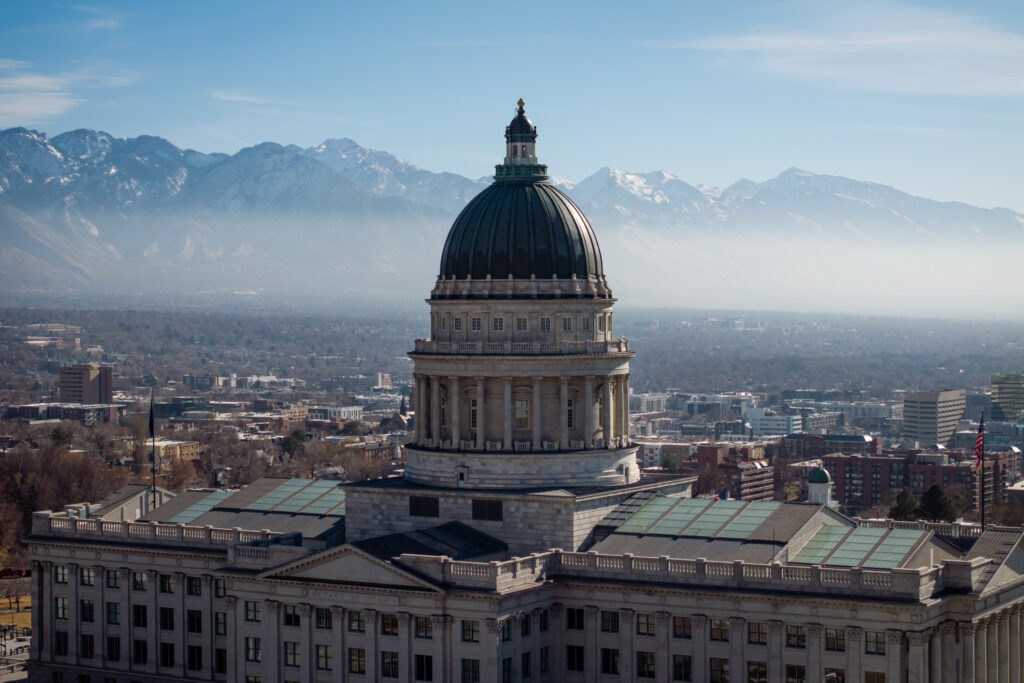

The Capitol in Salt Lake City is pictured on the first day of the legislative session, Tuesday, Jan. 20, 2026. (Photo by Spenser Heaps for Utah News Dispatch)
As the Trump administration emphasizes its efforts to enhance the country’s critical mineral production, Utah lawmakers are setting up a regulatory framework they hope will drive the state to the forefront of domestic mining operations — with a “Minerals for Industrial, National, and Economic Security (MINES) Center” building and a brand new governing council.
Ogden Republican Sen. Ann Millner is running a bill proposing the new structures and making a strategy to develop so-called “critical minerals zones” to expand mining in the state. She said developing the MINES facility and buying the equipment the mining industry needs is essential for innovation and product testing advancement.
SUBSCRIBE: GET THE MORNING HEADLINES DELIVERED TO YOUR INBOX
Those in the mining industry who are part of deciding on the equipment included in the facility would help pay for it by leasing space in the building, Millner told the Senate Natural Resources, Agriculture, and Environment Committee this week. However, a cost estimate for the proposal wasn’t available.
The committee voted 4-1 to advance the bill to the Senate floor.
“We’re trying to put our university expertise, our state expertise, and then the expertise brought by our mining industry in the state to the table,” Millner told the committee. “And then our trade folks who can help us work through how we make sure we have the markets that we need over time to make this a viable project.”
The legislation would codify Utah’s long-term goals related to critical minerals and would create a council dedicated to planning for the exploration, production and processing of the minerals on faster time frames.
“Our cheap source of these minerals, from China, has now been threatened significantly,” Millner said. “And as a nation, I think the government has discovered that we need to make sure that we make critical minerals, mining and marketing and pricing something that works, that we can become more critical mineral independent in this nation.”
Millner described the council’s collaboration as “a pretty unique partnership,” including officials from the Utah Department of Natural Resources’ Oil, Gas and Mining division and the Utah Geological Survey, alongside representatives from the University of Utah and the Governor’s Office of Economic Opportunity.
However, Millcreek Democratic Sen. Nate Blouin, who opposed the bill, said he had concerns about who the governing body that could be in charge of mining decisions wasn’t including, like representatives from the Utah Department of Environmental Quality.
While Millner said the department had been part of the conversation and will be working with the Oil, Gas and Mining Division in this process, Blouin said he had a hard time wrapping his head around that.
“It seems like a bit of a race to the bottom in a state … that is really already seemingly as kind of far in that direction as we could be,” Blouin said. “In a state where we have seen continued toxic releases in the Salt Lake County area as a result of the mining industry, this seems like a dangerous direction to go in.”
The bill establishes an objective to capture 20% to 25% of the country’s domestic critical minerals demand. It also directs the state to process 50% of the critical minerals extracted within its boundaries and to reduce average permitting timelines to less than 18 months.
And, it creates the Critical Minerals Development Account, which would be fed with tax revenue from the potential critical minerals zones, state and federal money, and donations. Each year, the Division of Finance would also transfer up to $20 million from the general fund into the account.
Being a big item on state leaders’ priority list, the bill was praised by Republicans in the committee, including some who made public comments.
Andrew Sandstrom, representing Unleash Utah, an energy abundance advocacy group, said the bill isn’t decreasing environmental standards, but increasing competitiveness by bringing industry to Utah, which would have to align with the state’s environmental regulations.
“If we block domestic supply, we don’t reduce demand, we just outsource extraction to countries with weaker environmental standards, which is what’s happened over the last several decades,” Sandstrom said.
However, some living near the Kennecott tailings ponds, like Mackenzie Miller, a Magna resident, worry about environmental impacts with faster permitting.
“I’m for less dependency on other places, but we also have to do due diligence of where people eat and live,” Miller told the committee.