Utah News Dispatch
Utah lawmakers say Congress’ proposed pause in AI regulation would undo the state’s progress

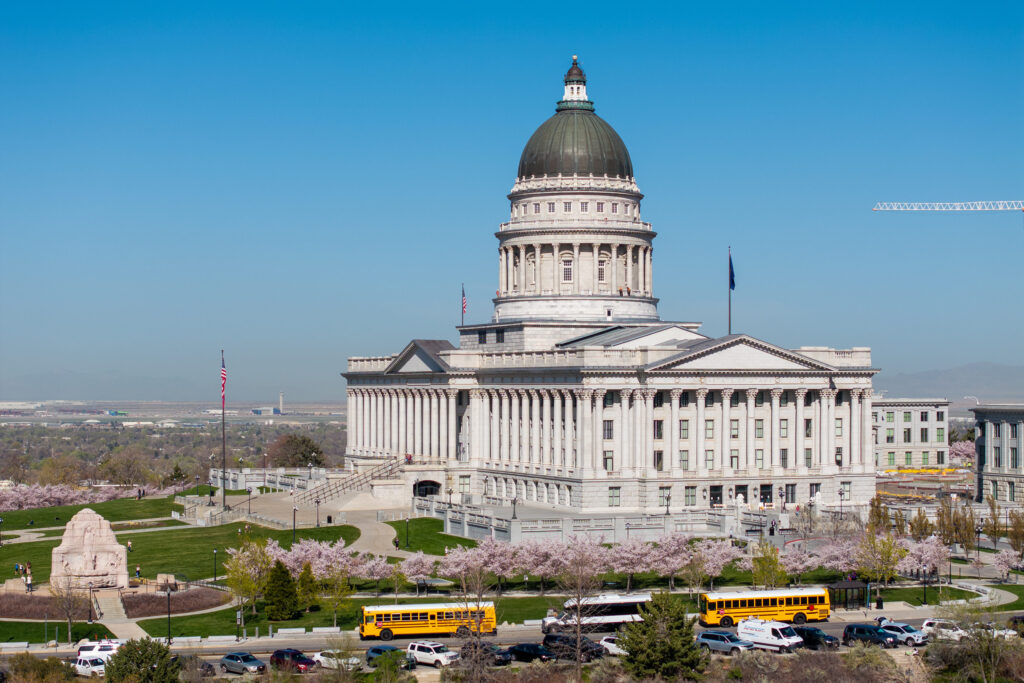

The Capitol in Salt Lake City is pictured on Thursday, April 10, 2025. (Photo by Spenser Heaps for Utah News Dispatch)
Utah lawmakers worry Congress’ proposed moratorium on state-level artificial intelligence regulations would undo much of the legislation they’ve passed in the last two years.
Proposed by Texas Republican Sen. Ted Cruz, who chairs the Senate’s Commerce Committee, the moratorium is part of Congress’ budget bill, nicknamed the “big, beautiful bill.” Cruz’s bill would allocate $500 million to fund a nationwide deployment of AI models and infrastructure through the country’s broadband program.
States that choose to receive these funds would be required to pause enforcement of any laws or regulations related to AI models or systems. The enforcement ban would last 10 years.
SUBSCRIBE: GET THE MORNING HEADLINES DELIVERED TO YOUR INBOX
According to the committee, the moratorium will prevent states from “hindering AI deployment through needless” regulation.
Utah has passed a number of AI-related laws in the last two years, perhaps the most significant being SB149. Passed in 2024, the bill created the Office of Artificial Intelligence Policy, intended to be a regulatory sandbox where the private sector works with the state’s Department of Consumer Protection to identify ways in which AI can be used for good, and bad.
In 2025, lawmakers built on that initial law and passed HB452, which regulates mental health chatbots that use AI. Lawmakers also passed bills that regulate how police departments use AI in writing police reports; require upfront disclosure for AI chatbots that offer financial and legal advice; and target the use of AI in creating deepfakes or edited images that use a person’s name or image without their consent for commercial purposes.
Utah lawmakers say the moratorium would effectively make these bills obsolete.
“This federal moratorium would freeze this kind of forethinking work. It would prevent Utah and other states from responding to new developments, refining guardrails and learning through hands-on policy innovation,” said Rep. Doug Fiefia, R-Herriman.
Deepfakes, policing, mental health and more: Lawmakers look to further regulate AI
Fiefia, a freshman lawmaker and former Google employee, worked on a number of tech-related bills during his first legislative session. Speaking during a press conference with other state lawmakers on Thursday, Fiefia said a 10-year moratorium could permanently handicap states’ ability to regulate AI.
“That’s a lifetime in technology and would really hurt not only states and states’ rights to act, but at the end of the day, I think would hurt consumers,” he said.
Fiefia is one of many Utah lawmakers and public officials who oppose the moratorium. Earlier this month, the Herriman representative penned a letter to Utah GOP Sens. Mike Lee and John Curtis, asking them to oppose the provision in the budget bill. The letter was signed by most of the state House, including Speaker Mike Schultz, R-Hooper.
Utah Attorney General Derek Brown also signed on to a letter in May with dozens of other state attorneys general opposing the moratorium, calling the policy “wholly destructive.”
Utah Gov. Spencer Cox acknowledged the intent of the moratorium during his PBS news conference earlier this month, telling reporters that different regulatory approaches across 50 states could stifle the technology. But Utah’s laws, he said, are different.
SUPPORT: YOU MAKE OUR WORK POSSIBLE
“There’s this misunderstanding, I think, of what the Utah law does,” he said. “Our law does not impact the development of AI … this is just normal consumer protection.”
Cox said he has concerns about the moratorium — he’s hoping Utah’s congressional delegation will create some kind of a carveout for laws that take a lighter touch to AI regulation.
“Our hope is that the last version of this bill that passes, whatever that looks like, will allow for the kind of regulation that we’re doing in Utah and prevent the bad type of regulation that would stop AI from reaching its fullest potential,” he said.
Sen. Heidi Balderree, R-Saratoga Springs, who also spoke during Thursday’s news conference, said the proposal goes against the idea of federalism.
“I’m baffled how this even made it into the big, beautiful bill,” she said, noting that Utah’s AI bills mostly received unanimous approval. “In the state of Utah, this is a nonpartisan issue.”
Balderree likened AI to a dam that’s about to burst — “a moratorium isn’t a reinforcement, it’s turning your back on the water and hoping it holds,” she said.