Utah News Dispatch
Thousands of doctors urge Congress to exclude Medicaid cuts from ‘big, beautiful bill’


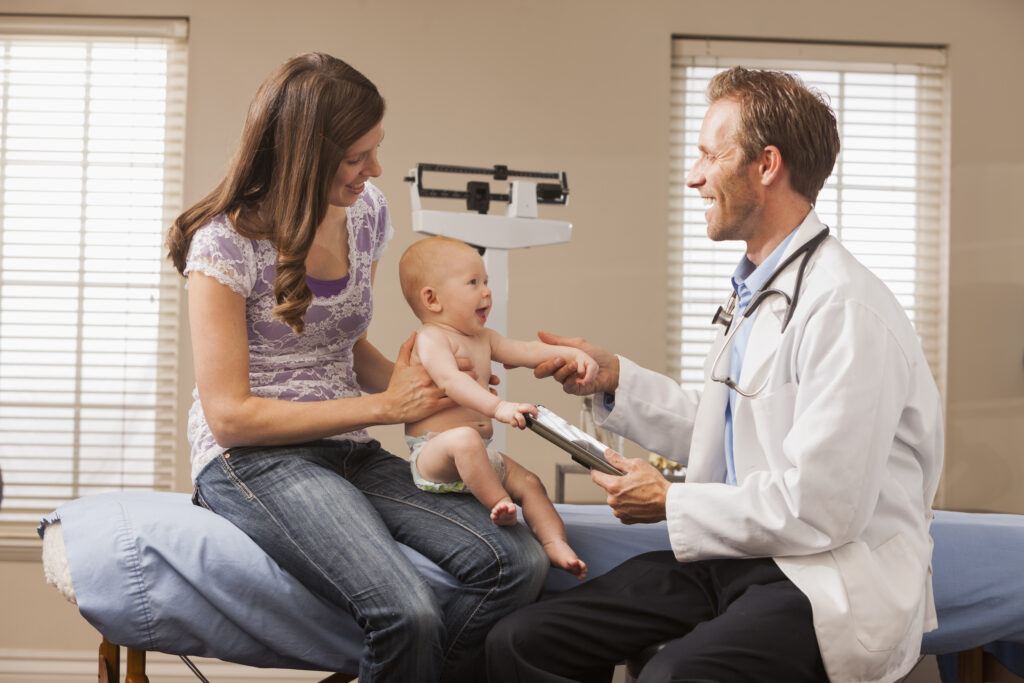


A mother and her son meet with a doctor in Provo, Utah. (Photo by Mike Kemp/Getty Images)
As lawmakers debate the Trump administration’s massive tax and spending package, thousands of doctors throughout the country worry its approval could mean more health crises and fewer resources to care for vulnerable populations.
About 4,000 physicians signed a letter from the Committee to Protect Health Care, an advocacy group, urging the U.S. Congress to stop cuts to Medicaid included in the “big, beautiful bill,” saying slashing the initially proposed hundreds of billions of dollars would mean taking health care away from millions of Americans who need it the most.
“Whether by simply slashing funding, or by imposing block grants, per capita caps, work requirements, or other arduous rules that make it harder for eligible patients to maintain coverage, your efforts will have the same result: fewer Americans with access to the care they need all so that billionaires and big corporations receive a tax cut,” the doctors wrote.
SUBSCRIBE: GET THE MORNING HEADLINES DELIVERED TO YOUR INBOX
As the U.S. Senate reviews it, the bill will change, especially now after the Senate parliamentarian’s Thursday ruling establishing that the proposed Medicaid changes don’t comply with the rules to advance a reconciliation package.
That means that the Finance Committee leadership must rework or completely eliminate nine changes to health care programs it included in the bill. Republicans won’t be allowed to reduce federal matches to state funding for Medicaid coverage for immigrants lacking proper documentation, among other proposals.
US Senate GOP mega-bill suffers major blow with ruling on Medicaid cuts
It’s still uncertain how the final plans will look like after the Senate-mandated adjustments. However, on a Wednesday virtual call, physicians from North Carolina, Louisiana, Maine and Utah were bracing for the original Medicaid cuts, which they said would be devastating and affect at least 8.6 million Americans and raise health care costs for millions more.
Dr. Addison Alley, an OB-GYN in Salt Lake City, said that Medicaid is often the only way some of his patients have access to prenatal, postpartum, preventative and lifelong care.
“Thanks to Medicaid I’ve been able to catch life-threatening complications early during people’s pregnancies. My patients have been able to get mental health support while suffering from postpartum depression because of Medicaid,” Alley said. “And women (with) chronic conditions like high blood pressure or diabetes can safely carry their pregnancies to term and deliver healthy babies.”
Alley can’t count the number of times Medicaid has made a difference in his practice, he said. One of his patients discovered issues with her baby early in her pregnancy and was able to receive specialized care. Another, also on Medicaid, found out during a routine visit that she had started developing high blood pressure in the third trimester.
“We were able to safely monitor both her and her baby, and deliver her before she developed complications such as a stroke or kidney injury, and were able to prevent negative impacts to her child, including loss of a pregnancy,” Alley said.
Under the initial proposal, about 80,000 Utahns were at risk of losing health care coverage with the state losing an estimated $381 million.
Analysis: Upwards of 80K Utahns could lose health insurance under ‘big, beautiful’ bill’
That scenario, Alley said, doesn’t just mean fewer doctor visits, but more medical crises because when people don’t have health care, they often skip or delay care.
“Women will skip prenatal appointments and miss warning signs. They’ll give birth without ever having seen an obstetrician. Postpartum depression will go undiagnosed, untreated. Cancer screening will not be performed,” Alley said. “And also, the children of these women will suffer as well.”
“We’re talking about real people, coworkers, neighbors, loved ones, who will face the consequences of legislation that treats health care as optional,” he said.
Some of the most vulnerable to the cuts are in rural areas. In Utah, Alley said, 1 in 5 Medicaid enrollees live in rural parts of the state where access is limited and some hospitals, which are already at risk of closing, could completely shut down.
“That’s why I’m asking Senators Mike Lee and John Curtis on behalf of my patients and their families to protect their health care and reject this dangerous attack on Medicaid,” he said. “I’m hoping our senators will do the right thing, protect Medicaid, protect women, protect babies and protect the communities that rely on this care every day.”
The Senate Parliamentarian is still reviewing whether other health care provisions meet the reconciliation rules. That includes a proposal that would ban using Medicaid funding for Planned Parenthood services.
However, other Planned Parenthood-related prohibitions were also unveiled Thursday when the U.S. Supreme Court ruled in a case out of South Carolina that Medicaid recipients won’t have a right to sue to visit the doctor of their choice. That means states may remove clinics from their lists of approved Medicaid providers, including abortion clinics.