
Utah News Dispatch
This wildfire season could be hotter, drier and pricer, Utah officials say

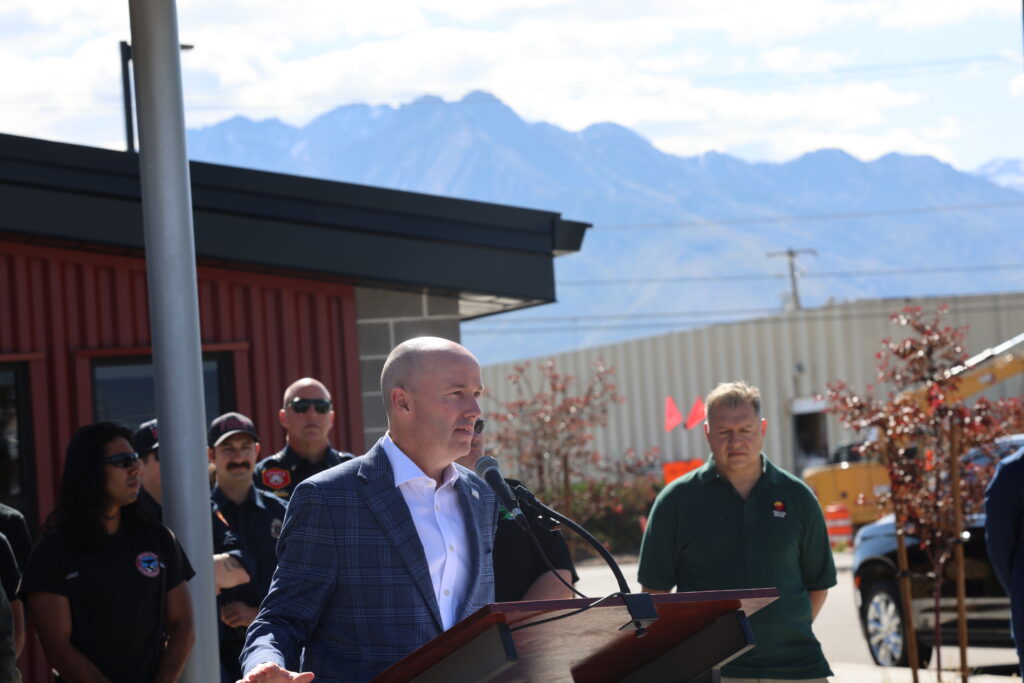

Utah Gov. Spencer Cox speaks at a news conference at the state’s wildland fire operations center in South Salt Lake on May, 20, 2026. (Utah Division of Fire, Forestry and State Lands)
The 2026 wildfire season is shaping up to be not just hotter and drier but also more expensive after the cost of gasoline soared in the three months since the Iran war began.
Usually, when state officials refer to “fuel” in wildland firefighting, they’re talking about grass, brush and trees at risk of burning in dry winds. And they warned about that too, on Wednesday, emphasizing that vegetation across the state dried out a month or more ahead of schedule.
But Gov. Spencer Cox also called attention to the kind of fuel powering wildland firefighting engines.
“We routinely have fires that are at least a million dollars a day, and with fuel prices, that’s going to cost even more this year as we try to fight these fires,” Cox told reporters at a news conference at a new state wildfire response center in South Salt Lake.
SUBSCRIBE: GET THE MORNING HEADLINES DELIVERED TO YOUR INBOX.
The 2025 wildfire season was the state’s most expensive on record, State Forester Jamie Barnes confirmed Wednesday after the event. The overall cost topped $191 million, with the federal government picking up most of the tab and Utah covering roughly $30 million.
The governor said the state’s been working to get ahead and lawmakers have socked away money each year to build up a wildfire fund “for years like this.” He said there’s currently more than $120 million in the account.
But come fall, there may be less cash coming to Utah from Washington, D.C. President Donald Trump’s proposed budget for the federal budget year starting in October contains billions of dollars in budget cuts for the U.S. Forest Service as the administration moves to create a centralized wildland fire agency under the Department of the Interior. Trump’s budget seeks to eliminate funding for state forestry programs that provided $3 million to $4 million to Utah.
US House Dems condemn Forest Service cuts as Republicans cheer agency’s move West
Asked by Utah News Dispatch about the impacts of federal cuts, Cox said the state’s getting the support it needs.
“We’ve never been more in sync with our federal partners on the firefighting side,” the governor said. “Now, there have been some structural changes that I know they’re working through right now. That hasn’t impacted our relationships at all, and there’s more work being done.”
He praised a federal proposal from Utah Sen. John Curtis that proponents say will cut red tape out of wildfire prevention efforts.
“We hope that that can get through so we can get some additional funding for these projects that really matter, but we haven’t seen major problems with the cuts on top of what we’re doing,” Cox said. “We feel like we’re getting the support that we need.”
So far this year, 158 fires have torched more than 8,000 acres across the state. Of those, 84% were sparked by humans — mainly from their cars — the governor said, urging Utahns to “use extreme caution” when driving, target shooting and camping this summer.

“Normally, we start thinking about this stuff around Fourth of July,” Cox said. “I need you thinking about this stuff around the 20th of May this year. That’s where we are.”
In a troubling sign of what this season could hold, a fire in the Uinta mountains east of Salt Lake City burned dozens of acres at 7,000 feet in March, an unusually early time for wildfires at an elevation usually still covered in snow.
Meteorologist Basil Newmerzhycky with the Great Basin Coordination Center called that fire the “canary in the coal mine.”
“That’s when we knew that all the concerns that we have for the middle- to higher elevations in this drought situation are going to be realized this coming fire season,” he said.
Newmerzhycky told reporters that next month could bring more fire activity in June than Utah’s seen in many years. If a strong El Niño weather pattern intensifies, monsoons could be delayed several weeks, intensifying fire fuel conditions already set to hit record dryness in June.
State officials also celebrated the opening of the state’s new wildland fire operations center in South Salt Lake, smiling as they cut through a fire hose with chain saws instead of snipping a ribbon with scissors.