
Utah News Dispatch
The lasting impact of Utah’s airport ICE arrest

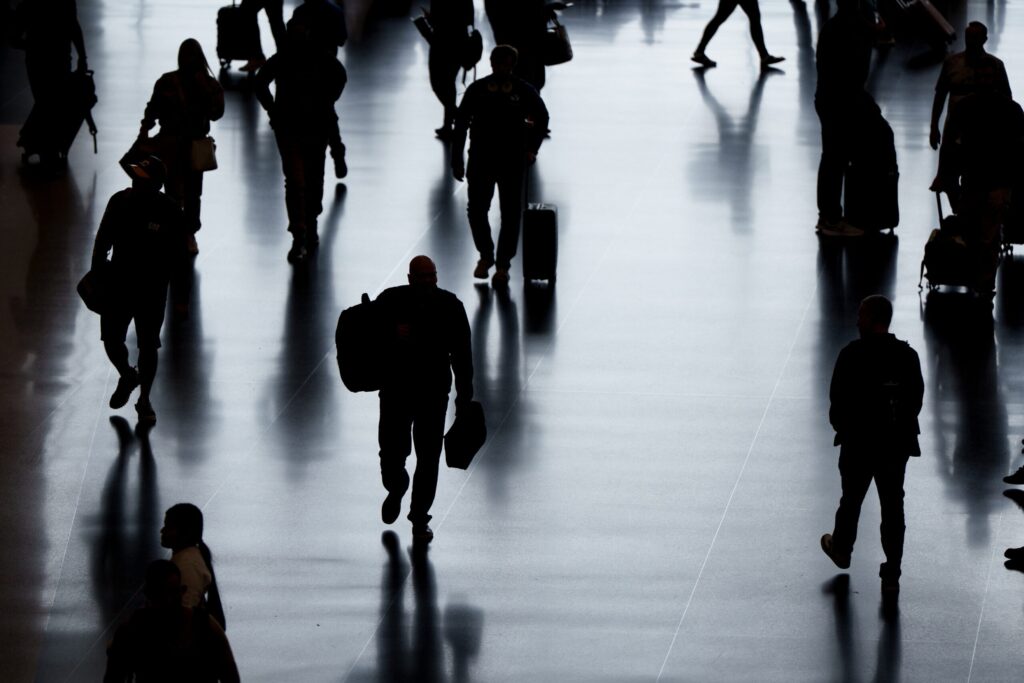

Travelers move through Salt Lake International Airport in Salt Lake City on Thursday, Oct. 16, 2025. (Photo by Spenser Heaps for Utah News Dispatch)
The commotion at the security checkpoint was unusual for a weekday in October. Travelers heading to their gates stopped in their tracks as a woman cried out for help, yelling “No!” and “I have my papers” at Salt Lake City International Airport.
Video quickly spread of four immigration officers pulling her to the ground and taking her away as she tried to break free, jumping in her stocking feet. Since then, immigration attorneys say the emotional and widely viewed arrest has marked a turning point in Utah.
The viral airport arrest has ratcheted up fear for Utahns without permanent legal status. And it changed the advice Utah attorneys give many of their clients about booking any flights as the Trump administration continues to intensify immigration enforcement.
SUBSCRIBE: GET THE MORNING HEADLINES DELIVERED TO YOUR INBOX
Two months later, would-be travelers continue to ask South Jordan attorney Carlos Trujillo if it’s unwise to buy plane tickets out of state to visit family or take their children to a Disney theme park. He now advises those with pending applications for green cards or asylum to stay home.
“The best answer you can tell them is, honestly, if it’s not a necessary flight, if somebody’s not dying, it’s not recommended,” Trujillo said. “It’s not, because that’s where they’re grabbing people.”
He also tells naturalized citizens and permanent residents to bring their documents with them, saying several clients have been stopped for further questioning.
“They’ve been taken to secondary screening for the first time in all their life here, and that seems to be picking up more and more,” Trujillo said.
Few interactions involving immigration enforcers in Utah have been as visible as the airport arrest. Before this year, authorities didn’t typically arrest flyers in the busy, public setting unless they were wanted in criminal cases. The woman they detained on Oct. 29, originally from El Salvador, had a prior deportation order but no criminal record.

The dramatic video reinforced how immigration operations are increasingly being carried out in public, at businesses, near schools and in public places across the country. Trujillo said he anticipates immigration enforcement will intensify in 2026 after a cash infusion from Republicans’ “big, beautiful bill.”
Congress set aside $30 billion for ICE hiring, transportation and other costs as part of the legislation. ICE did not respond to a request for comment from Utah News Dispatch about the arrest at the airport or the new funding’s impact in the state.
Kimberly Tobar, a therapist with Jacky’s Recovery Support Services who works with members of Utah’s Latino communities, noted the significant change to daily life for many immigrants who haven’t left their homes in months and aren’t going to work or school because they’re worried about being stopped by authorities.
“Even people who have documentation here feel that fear, because they feel that they’re going to get racially profiled and just be accused of not having documentation,” Tobar said.

She said that worry has left many in a state of isolation and constant anxiety “that they feel very powerless over, because they’re like, ‘What can I do?’”
Tobar said teenagers her organization works with report they’re worried about ICE coming to their school or job and detaining them, or that they’ll come home at the end of the day to find their parents aren’t there anymore. Others have brought up that they aren’t traveling to see loved ones.
“A lot of the youth have also been the ones that are learning about their rights and teaching their family members,” Tobar said.
Attorneys representing the woman detained at the airport emphasize that she has a current work permit and no criminal history.
“What it demonstrates is that ICE is actively using everything in its means to try to identify individuals who have outstanding deportation orders,” said one of her attorneys, Andrew Armstrong.
He said his client applied for asylum in the U.S. years ago with the help of someone she hired to assist with the paperwork. But that person never provided her with correspondence from the government demanding her further participation in the process, Armstrong said.
Her subsequent lack of response triggered the deportation proceeding, Armstrong told Utah News Dispatch. She didn’t receive notice of that case either, and didn’t know it ended in a deportation order until she was carried out of the airport, he said.
“I don’t want to criticize the ICE agents having to do their job,” Armstrong said. “But they were large men who forcefully removed her from the airport who did not speak Spanish and were not able to explain to her what was going on.”
She is being held in a detention center in Louisiana, Armstrong said, as she waits to hear whether a judge will withdraw the deportation order. Such arrests “create fear so that they inspire certain immigrants to leave on their own because they are so afraid of what might happen to them if they stay here,” Armstrong said.
His client came on the radar of ICE via a list of passengers that airlines provide the federal government, Armstrong said. The Transportation Security Administration has begun sharing more data with ICE to deport more people, including in her case, The New York Times reported in December, citing internal documents the newspaper obtained.
TSA and ICE are both under the umbrella of the U.S. Department of Homeland Security.
Ysabel Lonazco, an immigration attorney in West Valley City, agrees the dramatic scene near the baggage claim was a turning point.
She now counsels those living in Utah without documents to avoid traveling.
“There’s an Ysabel before the airport — and after the airport,” Lonazco said. “The attorney before the airport event would tell you, ‘OK, you can fly with your passport, you’ll be fine. Keep on with your life.’ But after, it’s like, ‘Don’t go anywhere. Don’t fly out of state.’”
She also advises clients at risk of deportation to avoid driving to Zion National Park, because the sheriff’s office in neighboring Washington County has a formal partnership with U.S. Immigration and Customs Enforcement known as a 287(g) agreement.
Lonazco said she tries to avoid instilling more fear in clients, but has new advice for those whose travel plans cause her concern: “just try to find joy within home.”