Community Leaders
The Charlie Kirk Cake Controversy: Rylie Barnes & Riley Beesley Speak Out | PoliticIt
A cake, a photograph, and a social media post ignited a campus controversy that quickly became a larger fight over free speech and due process. University of Utah College Republicans Riley Beesley and Rylie Barnes faced university inquiries after sharing a photo of a student holding a “Happy Kirkversary” cake. They denied allegations of doxxing, and the university ultimately dismissed both cases and apologized. Their experience raises a fundamental question for higher education: Can universities protect students while preserving the open, sometimes uncomfortable political debate that campuses should encourage?

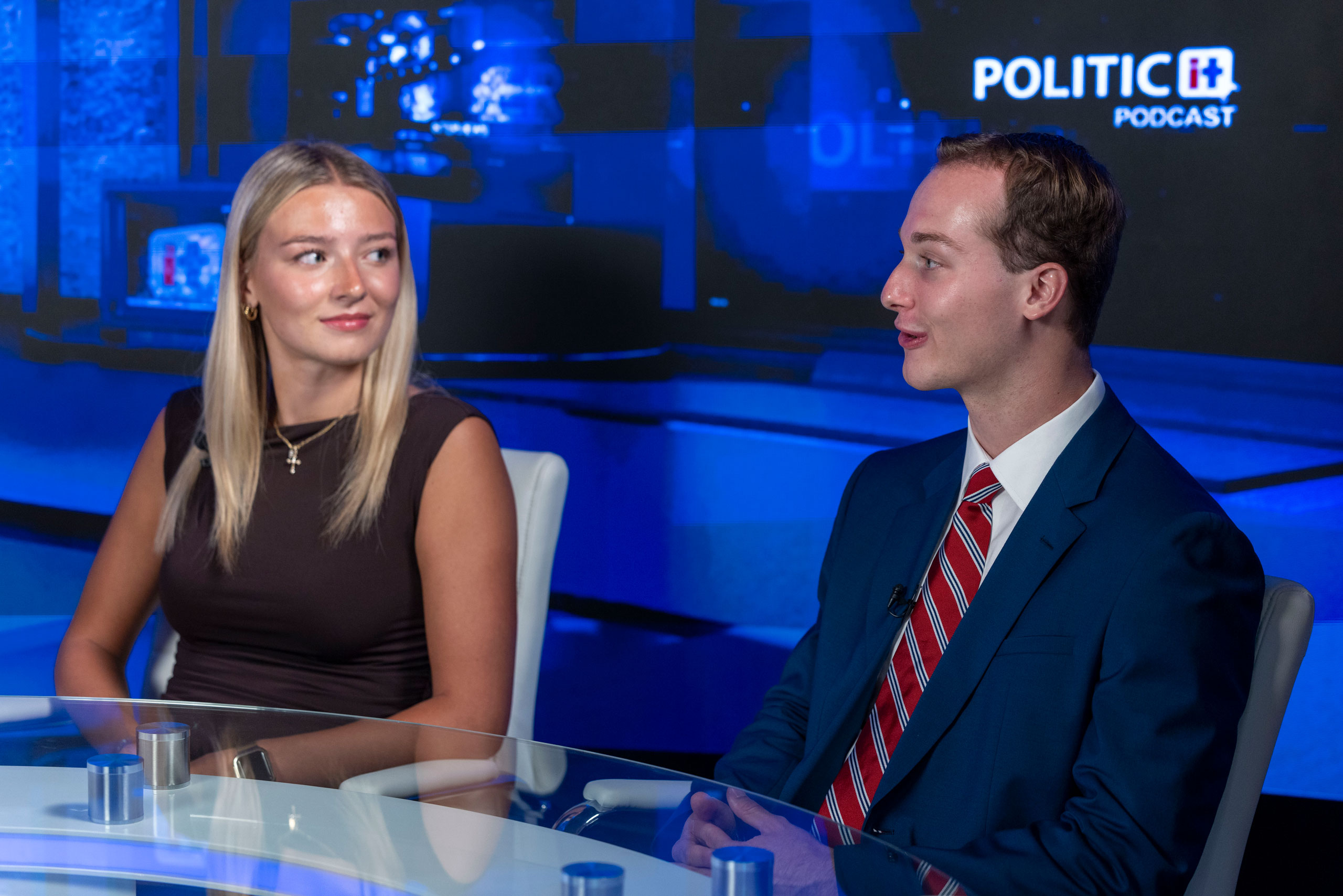
On this episode of the PoliticIt Podcast, Utah Sen. John D. Johnson welcomes Rylie Barnes, vice president of the University of Utah College Republicans, and Riley Beesley, chairman of the Utah College Republicans, to share their perspectives on the “Kirkiversary” cake controversy.
A cake at a campus table became a viral photo. The photo became an allegation of doxxing. Before long, two College Republicans were facing university inquiries over a social media post they believed they had every right to make.
That sequence is why the Charlie Kirk cake controversy matters beyond one encounter at the University of Utah. It raises questions about what happens when political expression is offensive, when a photo travels farther than anyone expected, and when a university steps into a dispute among students. It also raises a more basic question: Can we still bring difficult ideas onto campus and argue about them face to face?
We believe we can. In fact, we think we have to. We also believe universities need to apply their standards carefully and consistently, especially when a controversy involves students with opposing political views.
PoliticIt Radio – Two Rylies
How the Cake Controversy Began
We were tabling at the University of Utah to promote a Charlie Kirk memorial at Utah Valley University. Tabling is a regular part of our work: We set up in a public area, put a question on a whiteboard, and invite students to respond or debate us.
That day, the whiteboard asked whether Charlie Kirk deserved to be murdered. Students could add a tally mark under yes or no. It was a blunt question, deliberately so. We wanted to see whether people would engage with it directly rather than talk past one another.
A student approached our table with a cake. She laughed about what was written on it, and we asked to see it. When she lifted the lid, we saw a message reading “Happy Kirkversary.” We understood the wording as mocking Kirk’s death. We told her we intended to take a picture, and, by our account, she remained there and posed.
We later posted the photo on social media. It spread widely, and the response quickly moved beyond a disagreement about the cake. Some people accused us of doxxing the student. We dispute that allegation. Our position is that posting the picture did not amount to publishing private identifying information, and we have said we did not participate in any effort to dox her. We also cannot establish from what we know whether she was doxxed by anyone else.
Those distinctions matter. A person can object to a photo being posted without every objection becoming proof of doxxing. At the same time, a public post can attract attention that its subjects did not anticipate. Social media makes both realities possible. The question for a university considering disciplinary action is not simply whether a post caused anger. It is what the students under investigation actually did, and what evidence supports the allegation.

What Happened With the University Inquiry
After the photo spread, we received university communications requiring us to attend meetings about potential disciplinary action. That was the part of the backlash that concerned us most. Other students could criticize us, protest us, or challenge us at the table. We could answer them. An inquiry from the administration carried a different kind of weight.
From our perspective, we had posted a photo of a public campus interaction. We did not believe we had doxxed anyone, and we did not believe the evidence supported treating us as if we had. The University of Utah later dismissed both cases and apologized. We were glad to see the matter resolved without discipline for something we maintain we did not do.
We also had legal help. Attorneys retained with support from Erika Kirk assisted us through the process, and we are grateful for that support and for the people who spoke up for us. A social media post can grow far beyond a student organization’s normal reach. So can the pressure that follows it. Having people who understood the stakes made a real difference to us.
We do not claim to know everything about how the university reached its initial decision to inquire into the post. We would like to understand more about that. But the outcome reinforces an important principle: Before a university moves toward discipline, it must separate an unpopular or upsetting expression from conduct it can actually substantiate.

Institutional Neutrality Is Tested in Difficult Cases
Utah has had discussions about institutional neutrality in higher education, and this controversy put that idea into focus for us. A university is supposed to be a place where students learn, earn degrees, and prepare to contribute in their communities and professions. It is also a place where students will disagree, sometimes sharply, about politics and morality.
Institutional neutrality does not mean administrators ignore credible safety concerns or refuse to enforce rules. It means they should not appear to choose a political side when applying those rules. When two students from one political organization face inquiries after a contentious exchange, it is reasonable to ask whether the same standards are being applied to everyone involved.
We do not know whether the student with the cake faced any university action, and we are not insisting that she should have. That is not our point. Our concern is the decision to investigate us for an allegation we maintain was unsupported. A fair process has to examine conduct, not simply the level of outrage surrounding it.

Political Disagreement Is Not the Same as a Safety Threat
There is another part of campus life that makes these disputes feel more serious than an ordinary argument online. Earlier in the year, while we were tabling and debating, a student approached us and said he was going to “Kirk” us. As we describe the encounter, he also made a motion with his hands resembling someone aiming a rifle. Campus police intervened immediately.
We appreciate the officers who responded. They have an important job, and we are grateful for the way they handled that moment. It also illustrates a distinction we do not want to lose: An offensive message on a cake, an argument at a table, and words or gestures that appear threatening are not interchangeable. They may all be disturbing to someone, but they call for different responses.
We have also heard students yell insults at us, call us fascists or Nazis, and tell us to kill ourselves. That is difficult to experience, particularly when our reason for being outside is to have a conversation. Still, we do not want every heated exchange turned into an administrative case. We want a campus where people can argue vigorously, where genuine threats are taken seriously, and where students are not punished merely because their ideas or posts draw criticism.
Drawing those lines well is hard. That is precisely why evidence and consistency matter so much.

What Tabling Actually Looks Like
The cake incident occurred at one of our tables, but our tables are there for much more than any single controversy. At the University of Utah, Rylie Barnes, the vice president of the campus College Republicans, regularly sets up outside the library with a whiteboard and a prompt designed to start a debate.
Some prompts concern social issues; others concern economics. Rylie likes to offer more than one subject so a student who does not want to discuss one question has another way into the conversation. Prompts have ranged from abortion to taxation. The point is not to hide what we believe. It is to put an idea where someone can respond to it directly.
Rylie organizes the questions, coordinates when the debates take place, and helps ensure that the people involved remain mature and respectful. She also gathers material for social media. The regular University of Utah schedule she described is Tuesday and Thursday, from 10:30 a.m. until 2 p.m. Rain, snow, or sunshine, the table is there. A canopy helps when the weather does not cooperate.
There is no guarantee of a calm afternoon. Some students walk by and shout. Others stop because they genuinely want to explain their position and understand ours. Some disagree strongly but stay to talk. On busy days, a crowd forms, and other conservative students help with the conversations. Rylie has described occasions when more than 30 students wanted to debate and the table remained active until around 4 p.m.
That is what campus dialogue looks like in practice. It is not a perfectly moderated discussion in which everybody has prepared a polished statement. It is a public question, an unexpected answer, and the decision to keep talking even when you disagree.

Why We Keep Showing Up
Tabling helps us meet students who may never have sought out a College Republicans meeting. It gives us a way to register students to vote, tell them that our organization exists, and make our views visible on campus. It also gives students who disagree with us an opportunity to challenge us in person.
Visibility matters for conservative students who might otherwise keep their opinions to themselves. One student at a whiteboard can look isolated. A group willing to discuss its beliefs in public sends a different message: You are not alone, and you are allowed to participate. Rylie says she has seen new interest in the club, with more than 100 students getting involved during this period.
Not every person who stops will join us, of course. Many will never agree with us. That is fine. The purpose of a campus political organization is not to talk only to people who already share its views. If we believe in free speech for everyone, we have to make room for the student who challenges our prompt as well as the student who adds a tally mark beside it.

Building a Conservative Presence Across Utah Campuses
Our work at the University of Utah is part of a broader College Republicans effort across the state. Riley Beesley chairs the Utah College Republicans and stays in frequent contact with chapters at other schools. The University of Utah receives special attention because it is where Riley attends, but this is not a one-campus project.
Our goals include growing chapters, helping candidates and races, and ensuring conservative students have an active political voice. We want to make the case for Republican ideas and create opportunities for students to test those ideas against opposing arguments. Tabling is one of our most useful tools, but it is not the only one.
None of that work belongs to one chair or one campus officer. It takes students across Utah who are willing to organize, show up, and take part. The controversy brought attention to Rylie and Riley, but it also brought attention to a larger team. We are proud of the people doing that work at their own schools.
The University of Utah can be a challenging place for us politically. We see a wide range of opinions there, and we do not expect a majority of students to agree with everything we say. But a challenging campus is exactly where a political organization should be willing to make its case. If students learn to discuss difficult questions only with people who agree with them, they miss a central part of what a university can offer.

The Protest and the Debate Over the Photo
The social media post also prompted a protest directed at us. Riley estimated that roughly 20 to 25 students attended. The number is less important than the reason they gathered: They were upset about our role in sharing the cake photo and believed we had wronged the student pictured.
They had the right to express that criticism. We disagree with the allegation that we doxxed her, but disagreement cannot be a one-way privilege. If we can put a contentious question on a whiteboard, other students can organize a protest in response. We can then answer their claims and explain our actions.
The difficult part is keeping the debate attached to what is known. We say the student showed us the cake and posed after we said we would take a photo. We posted that photo. Those are the actions we can account for. Claims about whether private information was subsequently exposed, who may have exposed it, and whether posting the photo itself constituted doxxing require more care than a label shouted across campus.
We have criticized some of the rhetoric surrounding Charlie Kirk’s death and the cake. We see some of it as cruel and, in some instances, celebratory. Others may interpret the expression differently or disagree with our response. The way to address that divide is to say plainly what happened, distinguish fact from interpretation, and let people challenge the argument. Treating every disputed interpretation as an established fact makes the conversation worse.

Why Labels Can Shut Down a Conversation
We hear strong labels at the table. “Fascist” is one of them. When someone assumes that supporting the Republican Party automatically makes a student a fascist, the discussion is nearly over before it starts. There is no need to ask what that student believes about an issue, because the label has already supplied an answer.
We have strong disagreements with ideas on the left, including democratic socialism and Marxism. We also know there are Democrats whose beliefs differ considerably from those positions. Political opponents are not all the same, just as conservative students are not all the same. If our goal is to persuade anyone, we need to find out what the person in front of us actually thinks.
That does not require softening every conviction. Rylie uses pointed whiteboard prompts because direct questions can produce honest discussions. We can argue forcefully for our views while allowing another student to explain theirs. That was something we admired about Charlie Kirk’s campus debates: People with opposing opinions had a chance to speak and be challenged in public.
It is a model worth pursuing, even when an exchange goes badly. In the years ahead, elections will bring plenty of reasons for Americans to retreat into their own political groups. Campus ought to offer another possibility. Students can practice making an argument, listening to the answer, and deciding whether their own argument still holds up.

What This Controversy Should Teach Us
The Charlie Kirk cake controversy did not produce a neat, unanimous answer about good taste or social media judgment. We would not expect it to. Some people found the cake offensive. Some objected to our decision to share the photograph. We objected to the allegation of doxxing and to the prospect of discipline without sufficient evidence.
But the dismissal of the university cases gives us a clear place to begin. Disagreement and disciplinary wrongdoing are different things. A campus community needs room to criticize expression it dislikes without assuming every offensive post warrants punishment. It also needs administrators who respond to specific evidence rather than the intensity of public reaction.
For students, there is a practical lesson too. Public debate carries responsibility. If you approach a table with a provocative message, someone may challenge it or share the encounter. If you post about someone else, the post may travel farther than you expected. And if you accuse another student of misconduct, you should be ready to identify the conduct you mean.
We are pleased the University of Utah dismissed the cases and apologized. We are grateful to those who helped us through the inquiry. Now we intend to keep doing the work we were doing before the cake arrived: setting up the whiteboard, meeting students outside the library, and having the conversations a college campus is supposed to make possible.
Some of those conversations will be uncomfortable. That is not a reason to stop having them. It is a reason to get better at them.
#politicit #utahelections #utpol