Utah News Dispatch
Pornhub parent company will pay Utah $5 million settlement over rape, child sex abuse videos


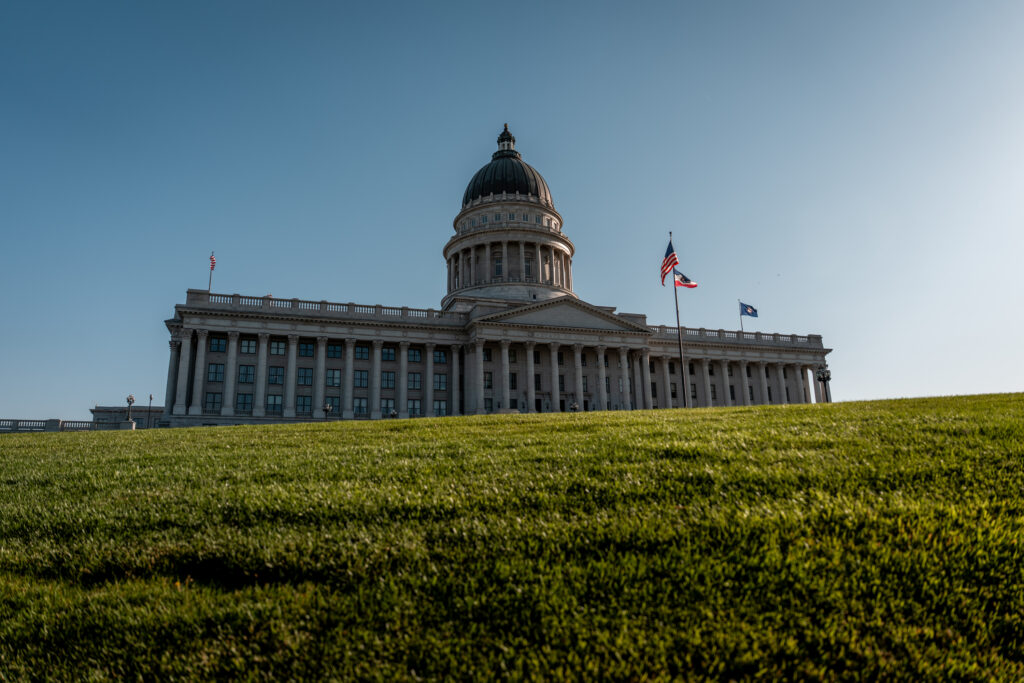


The Capitol in Salt Lake City is pictured on Thursday, July 10, 2025. (Photo by Spenser Heaps for Utah News Dispatch)
The company operating some of the most visited pornographic websites in the world has agreed to pay Utah $5 million over allegations that it didn’t do enough to remove harmful content, including videos depicting rape, child sexual abuse and secret recordings.
Officials announced a proposed consent order on Wednesday, filed in federal court in the district of Utah, in conjunction with the U.S. Federal Trade Commission. It targets Aylo, which operates websites like Pornhub, Redtube and, as Margaret Busse put it, “hundreds of other sites with names that are really too obscene to mention.”
“Aylo has openly, repeatedly and severely violated Utah’s consumer protection laws for years by allowing the unconscionable distribution of the worst of the worst,” said Busse, the executive director of the Utah Department of Commerce, during a news conference.
In addition to the $5 million, Aylo will be required to implement a more stringent review and regulatory process on its websites.
SUBSCRIBE: GET THE MORNING HEADLINES DELIVERED TO YOUR INBOX
According to court documents, since 2012 Aylo profited off of the distribution of “tens of thousands” of videos and images depicting child sexual abuse material (CSAM) and nonconsensual material (NCM), which includes things like revenge porn, rape, secretly recorded videos and “other absolutely appalling categories of content,” said Melissa Holyoak, commissioner with the FTC.
“One of Aylo’s employees referred to Pornhub as a ‘goldmine for rape content,’” Holyoak said Wednesday during the press conference.
Aylo’s websites are incredibly popular — In 2021, its sites saw a total of 800 million monthly visits from U.S. consumers, per court documents.
According to the complaint, the company falsely claimed CSAM and NCM content could be flagged by users and removed; that it would ban users that uploaded CSAM and NCM; that content previously flagged would be “fingerprinted” so it could not be re-uploaded; and that it would verify the ages of people in its videos.
Users would then view, download and further distribute these videos “millions of times, often not knowing it was CSAM or NCM,” further victimizing people in the video according to court documents.
Officials say Aylo only started to restrict CSAM and NCM after credit card processing companies began threatening the company with fines.
“All of this adds up to a portrait of a company that has no intention to comply with its own policies, even when called out by credit card companies, journalists, and just a general public outcry,” Busse said, telling reporters Aylo was not only motivated by “unprecedented profits,” but seemed to “relish spreading this kind of content for its own sake.”
The proposed consent order directs Aylo to pay the state of Utah $5 million that Busse said will go into a consumer protection education fund. The company will also be required to pay an additional $10 million if it violates the terms of the settlement.
According to court documents, Aylo will now:
- Implement a program preventing the dissemination of CSAM and NCM, which includes “policies, procedures and technical measures to ensure that such content is not published on its websites and a process to respond to reports about CSAM and NCM content.”
- Create a verification system to ensure people who appear in videos on Aylo’s websites provide their consent.
- Remove all content uploaded prior to the agreement until Aylo verifies the people in the videos were consenting adults.
- Post a notice on its websites informing users about the allegations and legal action.
- Establish a privacy and information security program.
In a statement, an Aylo spokesperson said the settlement “reaffirms and enhances Aylo’s efforts to prevent the publication of child sexual abuse material and non-consensual material on its platforms.”
The company also pointed to several safety measures it’s taken in recent years, including verification requirements for users who upload content and proof of consent and identification for performers. And, it said the allegations levied by Utah and the FTC all stem from content uploaded before 2020 — since then, Aylo has implemented a number of safety features.
“The resolution reached involved enhancements to existing measures but did not introduce any new substantive requirements that were not either already in place or in progress,” a statement from the company reads.
Holyoak said that’s why the settlement is important — it will require Aylo to review all existing materials while strengthening future protections.
“It ensures the protection of the current content on the website, but then it goes further, now we have prevention for future materials that might be uploaded. It’s such an important guardrail,” she said.
According to Utah Attorney General Derek Brown, an independent third party will audit Aylo and its websites over the next 10 years to ensure its compliance. If they violate the terms of the settlement, they could face criminal action in addition to the increased fine.
“If they don’t do these things, let me be very clear, I will take them back to court,” Brown said. “For years, Aylo ignored hundreds of thousands of flags on its videos, including those flagged by its consumers as potentially CSAM or NCM. As of today, they can no longer do that.”