
Community Leaders
The Renaissance of American Art: Sabin Howard and the Grand Liberty Arch, A Monument for Our Time
Sculptor Sabin Howard shares how a childhood steeped in the beauty of Italy shaped his calling to create monumental art. From carving the 60-foot World War I Memorial to envisioning the Grand Liberty Arch, he tells a story of sacrifice, symbolism, and a national rebirth—where bronze and stone become vessels for liberty, memory, and the sacred soul of America.

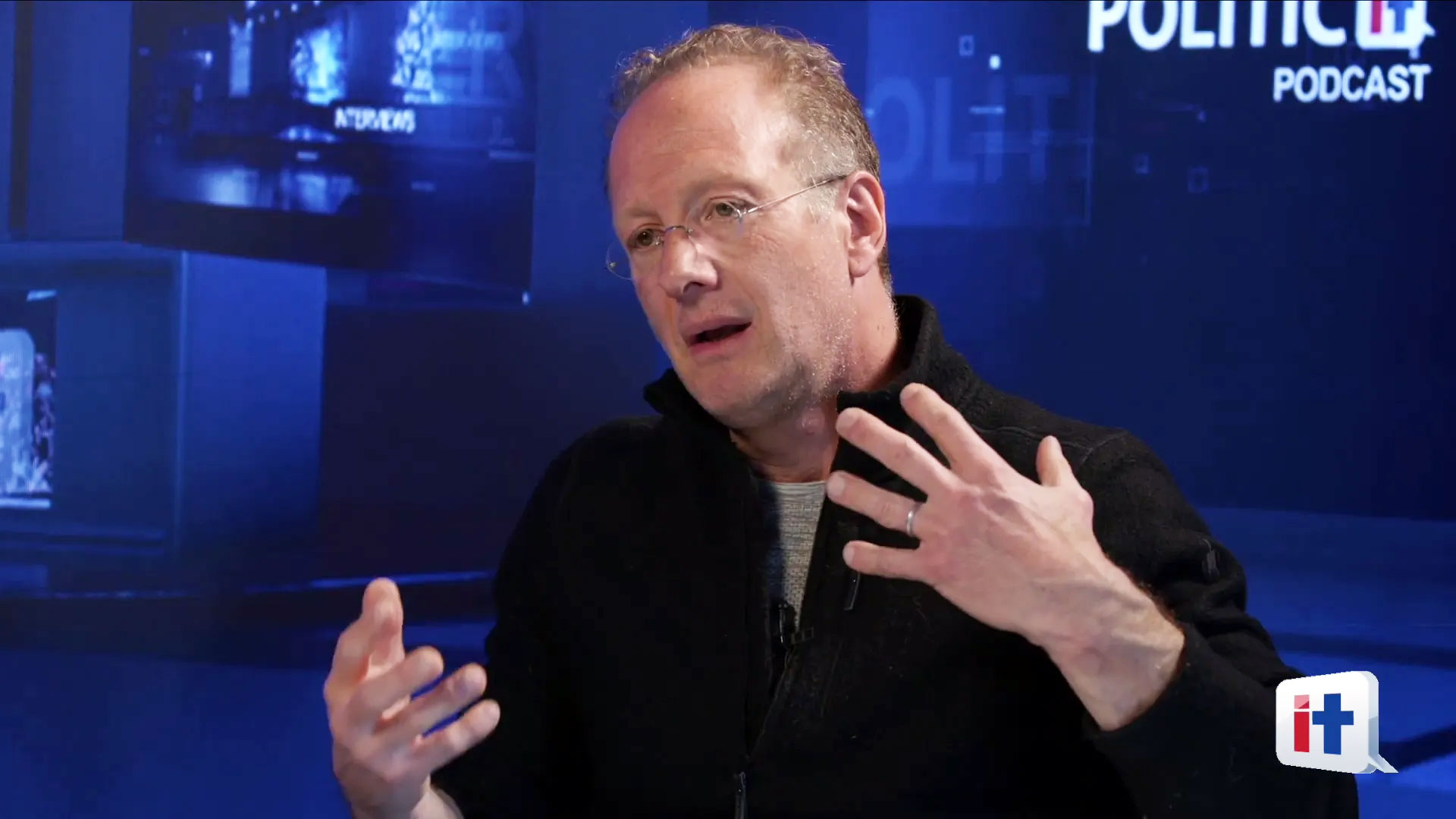
In this episode of the PoliticIt Podcast, sculptor Sabin Howard shares his journey from a young artist in New York to becoming a modern-day Michelangelo, capturing the spirit of humanity through monumental art. Join us as we explore his groundbreaking project, the Grand Liberty Arch, and his vision for a new cultural renaissance in America.
Aristotle
“The aim of art is to represent not the outward appearance of things, but their inward significance.”
Introduction to Sabin Howard
Sabin Howard stands as a remarkable figure in contemporary sculpture, blending traditional techniques with modern storytelling. His work is rooted in a deep appreciation for the Italian Renaissance and Greco-Roman art, which greatly influences his approach. Over 42 years, Howard has honed his craft, and his dedication culminated in the creation of monumental pieces that resonate with the human experience.
The World War I Memorial
The World War I Memorial is a testament to Howard’s vision and skill. After winning a global competition that included 360 teams, he embarked on a 9.5-year journey to create a 60-foot-long bronze wall, adorned with 38 figures and weighing an impressive 25 tons. Located just 150 yards from the White House, this memorial captures the essence of sacrifice and transformation, depicting the journey of a soldier returning home.

The Hero’s Journey
At the heart of the memorial lies the concept of the hero’s journey, a narrative framework popularized by Joseph Campbell. This journey encapsulates the transformation of a soldier, who leaves his family to face the horrors of battle, only to return changed, symbolically passing on his helmet to the next generation. This allegory for the United States weaves together personal and collective histories, embodying resilience and hope.
The Creative Process
Howard’s creative process was both rigorous and deeply reflective. Following his win, he engaged in nine months of intensive iterations, capturing 12,000 images of models in authentic uniforms. This meticulous attention to detail ensured that each figure on the wall authentically represented those who served. The final composition emerged from a blend of artistic vision and real-life experiences, transforming into a monumental narrative that resonates with viewers.
PoliticIt Radio – The Arch we’re Building Now
Humanity and the Faces of Veterans
The memorial is not just a representation of history; it is an homage to humanity itself. By working with real veterans, some of whom have faced tremendous struggles, Howard captured the raw emotions and stories etched into their faces. These individuals, including Rangers, Marines, and Navy Seals, serve as the living embodiment of the sacrifices made. Their experiences are immortalized in bronze, conveying a powerful message of endurance and connection.
The Storytelling Aspect of Sculpture
Sculpture today often lacks narrative depth, presenting static figures that fail to engage the viewer. Howard recognized this gap and sought to create a dynamic experience. By designing the memorial as a “bronze movie,” he allows the story to unfold as viewers walk along the wall. Each scene seamlessly connects to the next, inviting the audience into a journey through time, rich with emotion and history.
Sabin howard
“The Grand Liberty Arch is not just a monument—it’s a moral imperative, a call to rediscover the sacred in our shared story.”

Sabin Howard is the foremost practitioner of, and authority on, Modern Classicism.
Sabin Howard is the sculptor of A Soldier’s Journey, the sculptural heart of the National WWI Memorial to be installed in Washington DC in September, 2024. Sabin grew up in New York City and in Torino, Italy. He studied art at the Philadelphia College of Art and then earned his MFA from the New York Academy of Art. For twenty years, he taught at the graduate and undergraduate levels. He has been elected to the board of the National Sculpture Society. He has received numerous commissions and has showed his work at more than fifty solo and group shows. After 72,000 hours of working from life models in the studio, Sabin designed and created the hero’s journey that memorializes the courage and sacrifice of our veterans in WWI, and in all wars, in A Soldier’s Journey. He has created an illustrious body of work, including three heroic scale pieces, HERMES, APHRODITE, and APOLLO, as well as many smaller pieces. His works are owned by museums and private collectors all over the world, and they have been favorably reviewed by USA Today, The New York Times, The Washington Post, The Epoch Times, American Artist, Fine Arts Connoisseur, American Arts Collector, and The New Criterion, as well as many other journals internationally. He is an accomplished public speaker and is the subject of several television profiles. Sabin Howard is the author of the book THE ART OF LIFE with his wife author Traci L. Slatton.
Connecting to the Renaissance
Howard’s work draws a direct line back to the Renaissance, a period characterized by unity and harmony in art. He believes in the importance of creating a cohesive narrative in sculpture, reflecting a world where all elements fit together. This philosophical underpinning is particularly poignant given the historical context of World War I, a time marked by disconnection and alienation. By revisiting these themes, Howard seeks to remind us of our shared humanity.

Foundational Years in Italy
Born in New York in 1963, my journey took a significant turn when my family returned to Italy when I was just three months old. Those early years, immersed in the beauty and visual splendor of Italian cities, shaped my artistic sensibilities. The architecture, the vibrant piazzas, and the palpable sense of community left an indelible mark on my psyche.
In Italy, I experienced a profound connection to humanity, where the scale of the buildings mirrored the scale of human beings. This foundational experience would later influence my approach to creating art that speaks to connectivity and the collective human experience. It was a unique blend of tradition and modernity that fueled my ambition.
Artistic Training and Early Challenges
Returning to the United States, I found myself in a world vastly different from the one I had known. The cultural landscape of New York in the late 1970s was rife with skepticism and disillusionment. Yet, this environment ignited a fire within me—a desire to break free from convention and explore my artistic destiny.
At 19, I made a bold decision to pursue art professionally. With no formal training and a burning desire to create, I quit my job in cabinet making and enrolled at the Philadelphia College of Art. My journey began with the simple act of drawing, a skill I initially lacked. I was determined to learn, driven by the legacy of Renaissance masters like Leonardo and Michelangelo, unaware of the modern art movements that surrounded me.
Through persistence and dedication, I honed my skills over countless hours of drawing and sculpting from life models. My education was rigorous, rooted in scientific principles that guided my understanding of form and proportion. This structured approach became the backbone of my artistic practice, setting the stage for my future works.
Return to Italy and Discovering Utah
After years of growth and learning, I returned to Italy, hoping to live among the influences that had shaped my early years. However, I quickly realized that my journey was far from over. I had acquired a wealth of knowledge from creating the National World War I Memorial, and I felt a calling to explore new horizons.
This led me to Utah, a place I had never considered before. My initial skepticism about the state’s cultural landscape was challenged when I visited Temple Square. The sacred energy I felt there resonated deeply with my experiences in Italy. I recognized that Utah offered a unique environment where I could create monumental art that truly reflects the values of our nation.

Inspiration for the Grand Liberty Arch
The vision for the Grand Liberty Arch Monument emerged from my desire to create a lasting symbol of our nation’s ideals. With the 250th anniversary of our country approaching, I felt a responsibility to contribute something significant that would endure beyond that date.
As I contemplated the design, I realized that an arch represents a new paradigm—a passage into a renewed value system while honoring what has come before. It’s a structure that embodies victory, unity, and the resilience of the human spirit. This monument aims to be a destination, akin to Mount Rushmore or the Statue of Liberty, reflecting our current identity and aspirations for the future.
The Importance of National Symbols
National symbols play a crucial role in shaping collective identity. They remind us of shared values and the sacrifices made to uphold them. The Grand Liberty Arch seeks to encapsulate the essence of liberty as a god-given gift, a right not afforded to all. This monument will serve as a beacon, guiding future generations toward a deeper understanding of our nation’s founding principles.
In a time of division and polarization, the arch will stand as a unifying force, bringing people together under a common banner. Just as the World War I Memorial featured figures united beneath the flag, the Grand Liberty Arch will symbolize our collective journey toward a more harmonious future.

The Role of Art in Society
Art has the power to transcend boundaries, fostering dialogue and connection. It serves as a reflection of society, capturing the zeitgeist of its time. The Grand Liberty Arch embodies this idea, inviting viewers to engage with the narrative it presents and to reflect on their own roles within the larger tapestry of history.
Through monumental art, we can challenge perceptions and inspire change. My goal is to create a piece that not only honors the past but also encourages a forward-thinking mindset. By engaging with the arch, individuals will be reminded of the values and ideals that unite us as a nation.
Misunderstanding History in Modern Art
In recent years, there has been a troubling trend of misunderstanding and rewriting history, particularly in the realm of art. The removal of significant sculptures and monuments often stems from a misinterpretation of their context and meaning. For instance, the removal of Teddy Roosevelt’s sculpture at the American Museum of Natural History illustrates this phenomenon.
Such actions can create a void in our cultural landscape, allowing history to be rewritten according to contemporary ideologies. This is a dangerous precedent, as it risks erasing the lessons of the past. My work aims to combat this trend by creating art that honors history while inviting critical discourse about its complexities.
Through the Grand Liberty Arch, I seek to provide a platform for dialogue, encouraging people to engage with history in a meaningful way. It is essential to preserve our heritage while also recognizing the need for growth and evolution in our understanding of the past.
A New Paradigm for American Art
We stand at a pivotal moment in the evolution of American art, a time when traditional values collide with contemporary ideologies. This new paradigm invites us to return to the roots of beauty, skill, and sacredness in art. By embracing the Greco-Roman style and the principles that guided the Renaissance, we can create works that inspire and uplift.
The artistic landscape has become fragmented, often sidelining the very elements that connect us as a society. It is essential to break through the elitism that has permeated the art world, ensuring that art is not just for the privileged few but accessible to all. By doing so, we can rekindle a sense of community and shared experience through our creations.

Building a New Cultural Renaissance
In Salt Lake City, we have the opportunity to lead a cultural renaissance that echoes the transformative spirit of Florence during the Renaissance. This city, with its rich history and values rooted in family and faith, is ripe for artistic innovation. The Grand Liberty Arch will serve as a beacon, reflecting the ideals of unity and pride in our shared human experience.
As we embark on this journey, we must engage with local institutions and families willing to invest in the arts. This financial support is crucial for artists, enabling them to create monumental works that celebrate our heritage. Together, we can foster an environment where creativity flourishes, and art becomes a powerful vehicle for change.
The Power of Storytelling in Art
Storytelling is the lifeblood of art; it binds us together and gives us a sense of belonging. The Grand Liberty Arch will not merely be a structure; it will embody the narratives that define our nation. Each scene carved into its surface will tell a story of struggle, triumph, and resilience, inviting viewers to reflect on their own journeys.
By incorporating pivotal moments from American history, such as George Washington’s crossing of the Delaware, we create a tapestry of experiences that resonate with all. This art will serve as a reminder of our collective identity and the values that unite us, fostering a sense of pride and connection.
Community and Personal Responsibility
The renaissance we seek begins with individual agency and responsibility. It is crucial that we take care of ourselves, our families, and our communities before casting our gaze outward. This personal commitment lays the groundwork for a ripple effect that can transform society.
As we engage in our communities, let us remember that the stories we tell and the art we create can elevate our collective consciousness. By focusing on what unites us rather than what divides us, we can foster a culture of cooperation and understanding. This is not merely an artistic endeavor; it is a moral imperative.
The Vision for Salt Lake City
Salt Lake City has the potential to become a modern hub for artistic expression, akin to the Florence of the Renaissance. The underlying values of kindness and sacredness that permeate this community are essential in creating a space where art can thrive. The Grand Liberty Arch will be a testament to this vision, a physical manifestation of our shared aspirations.
As we move forward, we must ensure that this vision is inclusive, inviting all voices to contribute to the narrative. This collaborative spirit will not only enrich our artistic landscape but also strengthen the bonds within our community.

Faith and the Sacred in Art
Art has the unique ability to express the sacred, transcending the mundane and connecting us to something greater. The Grand Liberty Arch is not just a monument; it is a reflection of our faith and the values we hold dear. By incorporating elements that resonate with the divine, we can create art that transforms spaces and uplifts souls.
In every sculpted figure and intricate detail, we can capture the essence of humanity, reminding us that we are all part of a larger narrative. This sacred connection will invite viewers to engage with the art on a deeper level, fostering a sense of reverence and appreciation.
Conclusion and Future Aspirations
As we embark on this artistic journey, let us remain committed to creating a legacy that honors our past while envisioning a brighter future. The Grand Liberty Arch is not just a project; it is a call to action for all of us to embrace our roles in shaping culture and community.
In this renaissance of art, we can champion the values of beauty, skill, and sacredness, challenging the status quo and inspiring generations to come. Together, we will build a future where art serves as a unifying force, reflecting our shared humanity and aspirations. Let us rise to the occasion, creating a vibrant artistic landscape that echoes the spirit of liberty and hope.

#politicit #utahelections #utpol #politicit #utahelections #utpol #SabinHoward #GrandLibertyArch #AmericanArt #CivicRenaissance