Candidates for Public Office
How Podcasts Are Changing Utah Politics: Lessons from Senator Todd Weiler
This episode brings together two longtime Utah lawmakers who also host political podcasts of their own, “PoliticIt” and “Political as Heck.” Drawing on their experience behind the microphone, the conversation explores why long-form dialogue matters, how podcasts create space for explanation instead of outrage, and what happens when lawmakers are willing to talk through process, disagreement, and hard tradeoffs in public. It is a reflection on podcasting as a civic tool, not just a platform.


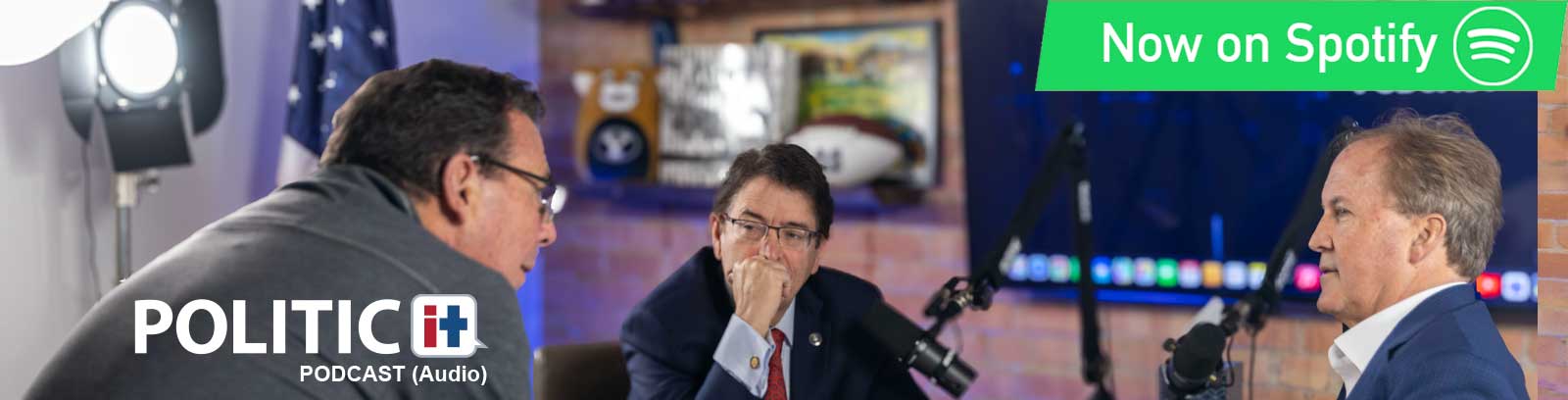
A PoliticIt Podcast conversation with Senator John D. Johnson and Todd Weiler
This story is drawn from a wide-ranging conversation on the PoliticIt Podcast, hosted by Senator John D. Johnson, with Senator Todd Weiler, longtime Utah legislator and cohost of Political as Heck. What follows is not a transcript, but a narrative rendering of that dialogue—capturing how media incentives, legislative process, and civic trust intersected in real time.
The conversation circles a deceptively simple question: How should elected officials explain power, process, and disagreement in an age built for soundbites?
What follows is not a transcript, but a reflection on that conversation and on a broader question it raises: how podcasts are quietly reshaping civic communication in Utah.
PoliticIt Radio – Long Enough to Explain
Together, they discuss how podcasting is giving Utah lawmakers a new platform for honest, long-form political discourse—beyond soundbites and headlines. Senator Weiler shares why more elected officials are turning to podcasts to engage voters, explain complex legislation, and have candid conversations about the Utah Legislature, judicial issues, public safety, and conservative principles.
Hosted by Senator John Johnson, this episode offers a behind-the-scenes look at how politics, media, and technology are intersecting in Utah—and what that means for voters heading into future legislative sessions.

Podcasting has become more than a hobby or a marketing channel. In Utah, it is reshaping how elected officials communicate, how policy debates are explained, and how citizens gain access to unfiltered political conversations. Senator Todd Weiler, a longtime Utah state senator and cohost of the Political as Heck podcast, shared an inside look at why more lawmakers are turning to long-form audio and livestream formats. His perspective reveals practical benefits for democracy, pitfalls in modern media, and a set of lessons for anyone interested in the intersection of politics, media, and public life.
Why podcasts matter in modern state politics
Utah’s political environment is compact and intense. State lawmakers are local figures to the few, and invisible to the many. Senator Weiler framed podcasting as a way to bridge that gap: a way to explain complex legislation, reveal the thought process behind votes, and humanize the people who hold office.
Unlike short-form media, podcasts allow for nuance. A legislator can spend 20 to 40 minutes explaining tradeoffs, history, and values without being reduced to a headline. For an audience that cares about policy—whether that is parents, community leaders, or politically active citizens—those long conversations build trust and understanding.
The value is not one-sided. Elected officials gain a direct channel to constituents, unmediated by newsroom editors or the demands of virality. Senator Weiler emphasized that podcasts are often not tied to the advertising-driven incentives that dominate much of modern journalism. As he bluntly put it:
“A journalist’s job is not to report the truth. A journalist’s job is to sell eyeballs to advertisers.”
That quote is a provocative encapsulation of a broader insight. Media businesses require attention. Podcasts can be structured differently: they can prioritize long-term relationship building and policy literacy rather than viral moments. For legislators who want to explain why they voted a particular way, podcasts provide the time and context a clip never can.
Three practical benefits of podcasting for lawmakers
- Context and explanation: One vote rarely tells the whole story. Podcasts let lawmakers walk through the legal, moral, and practical considerations behind decisions.
- Relationship building: Regular conversations create familiarity. Constituents who listen multiple times understand a legislator’s reasoning even when they disagree with a specific vote.
- Direct accountability: When people hear the deliberation live or in full, they are less likely to fill the gaps with cynicism or misinformation.

From small niche shows to sustainable formats
Senator Weiler’s earlier Toddcast focused on interviewing legislators and was deliberately niche. It appealed to insiders: lobbyists, policy wonks, and a segment of citizens who follow legislative minutiae. That niche model has advantages. It creates a loyal audience that values depth over spectacle. But it also introduced logistical burdens—guest coordination, production, editing, and distribution—that consume time.
The transition to a cohost model—Political as Heck with Corey Astell—illustrates a practical strategy for sustainability:
- Share the workload: Pair a public figure with a partner who can handle production, scheduling, and technical tasks.
- Leverage complementary expertise: One host can bring state-level experience while the other provides national context or production skills.
- Use a hybrid distribution approach: Bootstrap audience growth by streaming on social platforms for live engagement, then repurpose audio for podcast apps to reach commuters and audio-first listeners.
Senator Weiler noted a smart tactical decision: record via Zoom and stream to Facebook Live as a dress rehearsal, then roll the audio to podcast platforms. This creates two overlapping audiences—visual livestream fans and audio subscribers—without doubling production time.
How to avoid common podcasting pitfalls
Political podcasts face unique risks: misstatements can spread, guests may be polarizing, and resources can dry up. Senator Weiler offered a few pragmatic tips:
- Keep it conversational: The most compelling episodes feel like a candid chat rather than a rehearsed speech.
- Focus on issues, not soundbites: Resist the temptation to chase viral controversy; the long-term payoff is credibility.
- Accept that it will never be a full-time income in many cases: For most legislator-hosts, the goal is public service and communication, not monetization.
Pulling back the curtain on legislative life
One of the most underrated functions of podcasts in state politics is the ability to humanize officeholders. Senator Weiler described how short clips and headlines flatten people into caricatures. Long-form conversation restores texture—personal histories, formative experiences, and the reasons someone chose public service.
He recalled memorable anecdotes used to illustrate that every legislator has a story. These small biographies are more than trivia. They explain how priorities form and why certain issues resonate. For example, Senator Weiler mentioned Paul Ray’s surprising past as a trapeze artist traveling with the circus. That single detail can illuminate how risk tolerance, showmanship, or an outsider perspective informs a lawmaker’s approach.

Why personal stories matter
Personal stories do three important jobs when shared in a policy context:
- They build empathy: Hearing personal motivation reduces the reflex to demonize an opponent.
- They anchor abstract policy: Once a listener knows where someone is coming from, technical debates about indemnity clauses or school funding land on firmer ground.
- They persist: A memorable story remains with an audience long after a statute fades from memory.
Explaining legislative strategy and decision-making
Senator Weiler stressed that a single vote rarely captures the nuance of policymaking. Over a typical session, a legislator casts thousands of votes, and constituents will inevitably focus on the few that clash with their expectations. Podcasts create an opportunity to explain tradeoffs, coalition-building, and the procedural realities that shape legislation.
He used his own legislative approach as a case study: intentionally avoiding being pigeonholed. Rather than becoming “the education guy” or “the insurance guy,” he deliberately took on a broad portfolio—judiciary, public safety, anti-pornography measures, and innovative bills such as the App Store legislation that drew national attention. That diversity of topics demonstrates how legislators can use media to show the full scope of their work.

Lessons for public communicators
- Explain process as well as policy: Voters appreciate when the why and the how are both presented.
- Own the frame: Use long-form dialogue to set the narrative before opponents and headlines fill the vacuum.
- Be consistent: Regular publishing builds familiarity and credibility over time.
Media incentives and the attention economy
The conversation turned to the structural differences between modern journalism and podcasts. Senator Weiler challenged the assumption that newsrooms are always acting primarily in the public interest. Instead, he framed media as businesses that depend on attention:
“Their job is to sell your eyeballs to their advertisers. That is their core, that’s their business model.”
This is not to say that journalists do not aim for accuracy. But attention-driven incentives favor content that provokes emotional reactions. Podcasts, when done conscientiously, can counter that by offering depth and resisting the need for outrage.
How audiences should read media messages differently
Senator Weiler encouraged a more sophisticated media diet: treat short-form news and commentary as one input among many. Use podcasts and long-form interviews to reconstruct context. When a controversial headline appears, ask:
- What was the underlying policy or vote?
- What tradeoffs were considered?
- Has anyone directly involved explained their reasoning?
Answering those questions reduces the power of manipulative clips and encourages a more informed electorate.
Redistricting, Prop 4, and the role of courts
A significant portion of the discussion addressed a contentious recent topic: redistricting and the procedural fallout from Prop 4. Senator Weiler offered a pointed critique of how the judicial process handled a map dispute and argued the result departed from what voters had intended.
The plain-language description of Prop 4 includes these elements:
- An independent commission would hold statewide hearings and propose maps.
- The legislature would receive the commission’s proposed map and vote up or down.
- If a map were enjoined by a court, the legislature would propose a new map.
Senator Weiler argued the actual sequence this cycle departed from that framework. After litigation, a judge selected a map rather than returning the process to the legislature for an up-or-down vote. He framed this as a departure from the spirit and letter of Prop 4 and the method Utah voters approved.

Key concerns raised
Three main concerns were highlighted:
- Process fidelity: Prop 4 envisioned a commission to propose maps and a legislature to adopt or reject them. A judicially imposed map short-circuited that plan.
- Authority and precedent: For decades, the court system treated initiative power as equal to legislative power. A recent Utah Supreme Court decision altered that interpretation, elevating an “alter or reform” clause in ways that surprised some legal scholars.
- Public perception: Media coverage framed the judicial outcome as fulfilling the will of the voters, yet the judicial map selection was not an explicit element of the initiative voters approved.
The debate raises a broader question: when legal outcomes diverge from popular expectations, how should institutional authority be reconciled with democratic preferences? That is not a simple legal problem alone. It is a democratic legitimacy problem with civic implications.

Explaining the legal nuance
Senator Weiler pointed to an important constitutional law principle often taught in law schools. When a constitution contains both a general provision and a specific provision on a topic, courts usually give priority to the specific provision. He found it striking that a recent decision seemed to invert that principle, elevating a general “alter or reform” notion over the specific mechanics laid out by Prop 4.
That observation matters because it is not merely academic. If courts interpret initiative clauses in ways that change process expectations, the predictability of governance changes. Citizens who vote based on certain ballot language can reasonably expect a particular sequence of steps. Altering that sequence through judicial interpretation can produce frustration and claims of illegitimacy.
Political turnover and the continuing value of conversation
The session ahead will include notable turnover. Senator Weiler and the host discussed the prospect of 13 to 14 new House members next year, plus other resignations and potential primary and congressional bids. Turnover intensifies the need for communication channels that explain who new lawmakers are and what motivates them.
Podcasts serve the onboarding function informally. A newcomer can appear on a local podcast to explain why they decided to run, what shaped their policy priorities, and how being a representative will differ from being a private citizen. For citizens, these episodes are a low-friction way to get to know a candidate in a deeper manner than campaign statements permit.
Why early conversations matter
- Shape expectations: New members can present their priorities before committee assignments and lobbyist relationships complicate their public image.
- Build coalitions: Listening to a broad array of newcomers lets civic groups identify potential allies earlier in the session.
- Preserve institutional memory: Long-form interviews capture formative influences and legislative philosophy that matter when personnel shift.
From policy battles to public trust
Senator Weiler reflected on a hard truth about politics: people tend to remember and amplify grievances more than steady service. He described a persistent constituent who refused to support him after a single contentious vote in 2013 and had not changed their mind a decade later. That anecdote is a vivid reminder of polarization’s stickiness.
Podcasts are not a cure-all for polarization, but they are a practical tool to mitigate its worst effects. Regular, civil conversations allow officeholders to explain tradeoffs and reveal the reasoning behind hard votes. They also help opponents see the human side of people they disagree with—an important precondition for rebuilding civic norms.
Practical steps to increase public trust through media
- Adopt regular, unedited conversations: Consistency reduces the space for misinterpretation and shows a willingness to be accountable.
- Invite cross-ideological guests: Hearing honest exchanges with people across the spectrum demonstrates good-faith engagement.
- Focus on explainers: Short explainer segments on complex topics make policy accessible without oversimplifying.
When media coverage and institutional decisions diverge
The discussion touched on how media narratives can diverge from institutional nuance. Senator Weiler criticized coverage that portrayed certain legal outcomes as simple fulfillments of voter intent. He argued that accurate civic understanding requires careful parsing of process, not shorthand summaries.
To navigate these divergences, citizens and communicators should:
- Read primary documents: Ballot language, court opinions, and legislative text are the authoritative sources for understanding what happened.
- Ask clarifying questions: What steps did the law prescribe? Who had the authority at each step? Where did the process deviate?
- Demand deliberative explanations: Officials and media should explain why a process deviated and what the practical consequences are for representation.
Podcasting as a civic technology
Podcasts are not merely entertainment. They are civic tools—platforms that can enhance transparency, improve civic literacy, and encourage a healthier public square. In the Utah context, Senator Weiler’s experience highlights several features that make podcasts especially useful:
- Low distribution cost: Publishing an episode is inexpensive relative to the potential reach among politically engaged citizens.
- High engagement per minute: Listeners who choose a long-form episode are committed and likely to absorb complex content.
- Archive value: Episodes create an accessible record of statements and positions that can be referenced later.
Scaling the idea beyond Utah
The principles apply broadly. Any local or state politician who wants to increase policy literacy and rebuild trust can use podcasts. The key ingredients are authenticity, consistency, and a willingness to explain the procedural mechanics that underlie legislative action.
Practical blueprint for lawmakers who want to start a podcast
For those inspired to act, here is a concise blueprint distilled from the conversation:
- Start small: One episode a week or biweekly is sustainable and keeps the audience engaged.
- Find a production partner: Offload recording, editing, and distribution tasks to someone who enjoys the technical work.
- Mix formats: Alternate interviews, explainers, and Q&A episodes to keep content fresh.
- Use livestreams strategically: Simulcasts on social platforms boost discovery; keep a high-quality audio version for podcast apps.
- Keep it civil: Model the kind of political discourse you want to see in public life.
- Leverage archival value: Catalog episodes by topic and link them to your official communication channels so constituents can find relevant discussions on demand.

Final reflections: podcasts as a corrective
Podcasts are not a panacea for every problem in modern politics. They will not eliminate polarization overnight or replace the role of rigorous journalism. But when used thoughtfully, they are a corrective to a media ecosystem dominated by short attention spans and incentivized outrage.
Senator Weiler’s approach—intentional, diverse in topic, and rooted in the belief that explanation matters—offers a model for civic actors who want to rebuild trust by investing time rather than trolling. For constituents, the simple test is this: if an officeholder is willing to explain decisions, name tradeoffs, and tell their story in full, that is a stronger basis for civic judgment than a single viral clip.
Core takeaways
- Long-form conversation matters: It provides context, builds trust, and humanizes policymakers.
- Production partnerships scale impact: Share the technical load so content creation is sustainable.
- Understand process, not just outcome: Civic literacy improves when people know how maps, laws, and votes actually happen.
- Podcasts can be a civic technology: They archive reasoning, offer depth, and provide a counterweight to soundbite-driven media.
Whether a legislator, a civic journalist, or an engaged citizen, the challenge is to use available tools to enhance understanding rather than amplify outrage. Podcasts present a practical, scalable way to do exactly that.
Recommended next steps for readers
- Listen to a local long-form episode: Choose a conversation with a policymaker on a topic you care about and listen end-to-end.
- Ask a clarifying question: If a vote or legal ruling confuses you, request the underlying documents or an explainer episode from your representative.
- Support civil conversation: Share episodes that explain rather than inflame to encourage more of the same in your community.
Thoughtful political communication requires work from both officials and citizens. Podcasts lower the transaction cost of that effort. When used responsibly, they make politics less mysterious and public life more participatory.
#politicit #utahelections #utpol