Utah News Dispatch
Garfield County received thousands from opioid settlements. Is it spending the money properly?

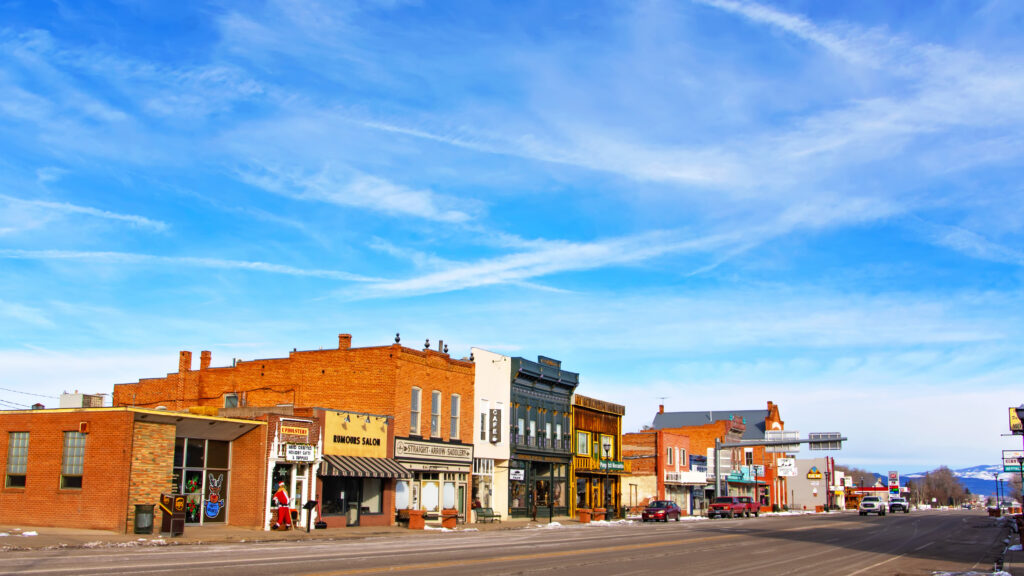

Main Street in Panguitch, Utah is pictured. Panguitch is home to the Garfield County Jail. (Photo by Kryssia Campos/Getty Images)
The following story was reported by The Utah Investigative Journalism Project in partnership with Utah News Dispatch.
Garfield County has received tens of thousands of dollars in opioid settlement money, but a lack of records and conflicting statements from county officials raise questions about whether the county is using the money to plug holes in its budget.
The lack of clarity not only disregards the principle of spending transparency but it’s also unclear whether the county is in compliance with state law, which restricts how the settlement money can be spent and requires annual reporting on how the funds are being used.
In the Utah Investigative Journalism Project’s reporting, Garfield was the only Utah county that could not provide detailed information about how it has used its share of opioid settlement money.
More than $50 billion from settlements with opioid manufacturers, distributors and pharmacies implicated in the U.S. epidemic of addiction and death is gradually being disbursed to states and local governments nationwide. Payments began in 2022 and will continue over the next decade.
Utah will receive a total of $543 million, with about half going to counties. The exact amount each county receives is based on a formula that factors in population and the local impact of opioids. Garfield County’s share is less than 1%, and county officials reported receiving $87,330 through October of 2024.
A statewide agreement outlines dozens of approved uses for the funds that fall under a handful of categories, namely drug misuse treatment and prevention. Approved examples vary widely, ranging from mobile treatment and recovery services to training first responders and health care workers and transitional housing programs for individuals with opioid use disorders.
Garfield County reported spending its share of the settlement funds on inmate treatment but said it could not provide documentation verifying the expenditures.
“We receive the opioid settlement funds and deposit them into an account designated to support drug programs that benefit inmates,” Garfield County Deputy Clerk/Auditor Kim Brinkerhoff said in an email. “If the expenses exceed the available opioid funds, additional money is drawn from the General Fund to cover the difference.”
The county did provide the 2023 budget and expenditures for the jail. The budget document, however, does not show any specific category or account for the drug programs that support inmates as Brinkerhoff described. The closest expenditure category was inmate medical expenses, which totaled $75,000, or 2% of the jail’s $3.8 million in spending.
Brinkerhoff and Clerk/Auditor Camille Moore did not respond to a request to clarify that discrepancy, and Sheriff Eric Houston declined to speak with a reporter from the Utah Investigative Journalism Project.
Utah laws passed in 2023 and 2024 prevent the opioid funds from being used for expenses and programs municipalities were previously funding, a practice known as supplanting.
“If you only ever supplant, then the net effect would be that the new money that came in just got spent on something else,” one of the legislation’s sponsors — Rep. Raymond Ward, R-Bountiful — told The Utah Investigative Journalism Project earlier this year.
For example, using opioid settlement funds to pay for an existing treatment program would then free up the original money to be used elsewhere. It’s unclear based on the lack of records whether the county is supplanting, or using it on existing programs.
County officials did not respond to questions from the Utah Investigative Journalism Project, including about whether the funds were supplanted and if the county is in compliance with reporting requirements.
On the record
Garfield County released the budget and disbursement ledger after The Utah Investigative Journalism Project appealed a public records request to the state seeking documents detailing the expenditures and receipt of the opioid money as well as any proposals for how the funds were to be used.
The same request was sent to the other 28 counties in the state. The majority provided the records, which showed many counties had spent little to none of the money they received and that a handful had poured cash into policing.
Garfield County, meanwhile, claimed it didn’t have records to verify the amount of funds it said it received and spent. The Utah Investigative Journalism Project unsuccessfully appealed the records request to the state last year.
Garfield County initially responded to the records request with only a PDF file stating it had spent all its funds between July 2023 and June 2024 on treatment for incarcerated individuals — specifically nearly $46,000 for 97 male inmates between the ages of 22 and 63. The county later clarified in an email that it had also received $11,377 in 2022 and provided a ledger showing it received $87,330 in settlement payments through October 2024.
The county did not respond to a request for records detailing how much it received or spent in 2025. Its reported spending so far — the $46,000 the county says it spent in 2023 and 2024 — would account for only half of the total payments it reported through fall of 2024.
The county also appears to be out of compliance with reporting requirements for the funds.
The Utah Association of Counties states that counties must:
- File annual reports on planned and actual uses of the funds.
- Maintain at least five years of records on the expenditures of the funds.
- Publish an annual report on their websites showing how much money was received and how it was spent the previous year.
Records from the Utah Department of Health and Human Services (which the association shares reports with) showed Garfield County did not submit reports for actual uses in 2023 or 2024. A search of the county’s website did not show any of the required reports.
Counties have been hit or miss with compliance to these reporting requirements. Previous reporting from the Utah Investigative Journalism Project showed that only two-thirds of counties reported actual uses for the funds in 2023 and a quarter did so in 2024.
Uses of the funds
County officials across the state have opted to use settlement funds on treatment for incarcerated men, but that was far from the only option.
Settlement funds have been used by Utah counties in a variety of ways, ranging from purchasing overdose reversal medication and funding prevention programs to expanding treatment in jails and recovery centers.
Mindy Vincent is the founder of Utah Harm Reduction Coalition, a nonprofit that serves and advocates for Utahns experiencing substance misuse.
She said spending the funds only on jail treatment programs misses the mark. Instead, she’s been a proponent for a more holistic approach that includes putting the money toward education, prevention, syringe exchanges and naloxone.
“There are plenty of people who are struggling with opioid use disorder that the government doesn’t know anything about,” she said. “So many people, when they overdose, they don’t call the police, they don’t call the paramedics.”
Narcan, a brand-name for the drug naloxone, is a life-saving medication that reverses opioid overdoses. Its use has been promoted in a number of opioid awareness campaigns, including in Utah.
Vincent stressed the drug’s importance for both first responders and people in their daily lives, especially in rural areas where long response times for first responders are more common.
“If you are a first responder of any sort and you do not have Narcan or naloxone on you, you’re not doing your job,” Vincent said. “There is literally one thing that reverses an opioid overdose, and it’s Narcan or naloxone, and to not carry that, not knowing what kind of calls you’re going out to, is so irresponsible.”
Garfield County emergency medical service director Kara Owens, however, said her agency doesn’t carry the drug.
“We really do not go on overdoses or any type of opioid call very often,” she said “In fact, we don’t even carry Narcan like other agencies do, just because we haven’t seen an increase of it in our area for EMS.”
While virtually nowhere has completely escaped the opioid crisis, local service providers say Garfield County, the state’s fifth-smallest with a population of about 5,100, has fared better than most.
The staff at Garfield Memorial Hospital, for example, believe the number of opioid cases has decreased based on anecdotal accounts, according to Intermountain Health spokesperson Brad Gillman, who said he was unable to get data on opioid case numbers at the hospital.
Likewise, Owens said the opioid epidemic “hasn’t had a huge impact” on EMS in the area and that the number of calls relating to substance use, including prescription drugs, has been fairly consistent over the two decades she’s worked for the county’s EMS. She estimated there are 10 to 15 opioid overdoses a year in the county.
“We’ve been very lucky,” Owens said. “We haven’t seen any huge increases like other counties have, like our neighboring counties, like Sevier and Iron County, have.”
Statewide, there were 18 opioid overdose deaths per 100,000 people in 2021, the latest year for which data is available, according to the Utah Department of Health and Human Services. The data does not break down deaths by county but by local health districts. The Southwest Utah Health District — comprising Garfield, Beaver, Iron, Kane and Washington counties — had about the same rate of deaths as the state as a whole.
The Southeast Utah Health District that includes Iron County registered 42.7 opioid deaths per 100,000 in 2021 — a 75% increase from the previous year and more than double the statewide rate. The Central Utah district that covers Sevier and five other counties also saw a 75% jump, to 17.8 deaths per 100,000. But that rate was below the state average.
Vincent, however, isn’t convinced the county has escaped the epidemic unscathed.
“I haven’t known anywhere in Utah that’s not been impacted,” she said. “This money was awarded because of the grave amount of money that it cost to bury these people, to put people into treatment, to send first responders out to overdoses and overdose deaths — if they don’t feel like they have a need for that money, then send it back so it can go somewhere where there is a need.”