
Utah News Dispatch
Eyeing planned ICE detention center, Salt Lake City puts limits on water use

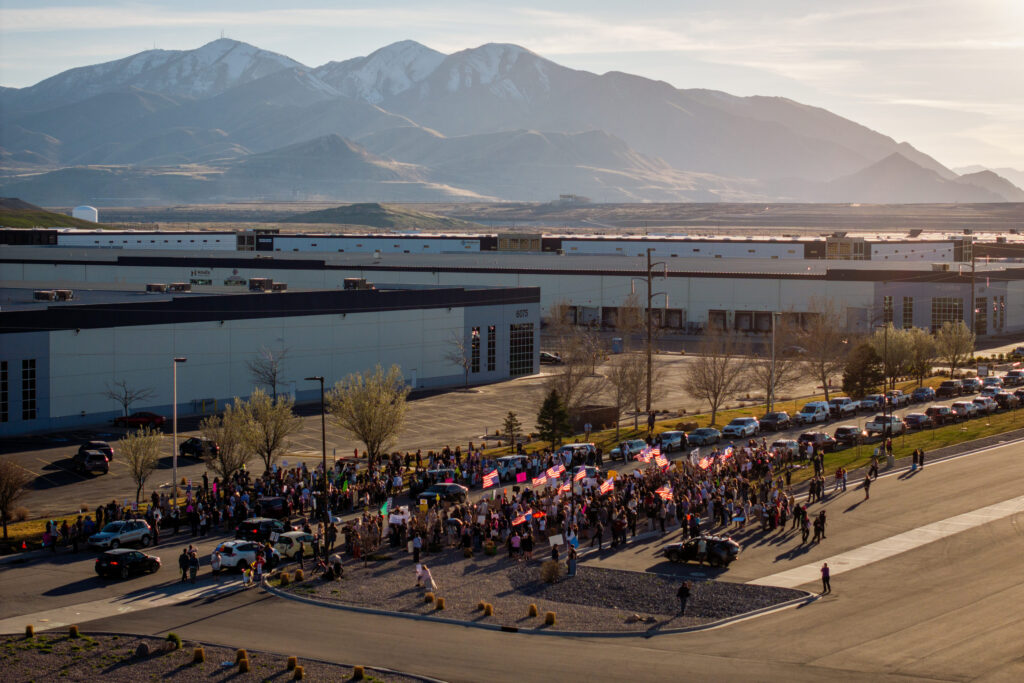

People protest outside a planned ICE detention facility in Salt Lake City on Wednesday, March 18, 2026. (Photo by Spenser Heaps for Utah News Dispatch)
Salt Lake City leaders opposed to a planned U.S. Immigration and Customs Enforcement detention center are capping how much water large government facilities can use.
The move adds Utah’s capital to the American cities and states that seem to be fighting ICE with water, although the mayor, council and the ordinance itself kept a focus on conservation, instead of the liberal city’s displeasure with the incoming detention facility.
The Salt Lake City Council on Tuesday approved the changes proposed by Mayor Erin Mendenhall, who raised concerns about city residents’ access to water in a worsening drought.
SUBSCRIBE: GET THE MORNING HEADLINES DELIVERED TO YOUR INBOX
“Put simply, a potential high-occupancy facility interferes with those needs,” Mendenhall said in a statement. “While we lack direct information from the U.S. Department of Homeland Security, a 7,500-person detention facility on our City’s west side would likely use 1-2 million gallons of water per day.”
ICE bought the warehouse near Salt Lake City’s airport two weeks ago for $145.4 million, confirming its plans to use the space to detain migrants. Mendenhall said under its previous ownership, the warehouse used about 5,600 gallons per day.
In the days after the sale, Mendenhall said the city’s public safety, water and sewer infrastructure can’t support a massive detention center and requested a meeting with the agency’s acting director.
She vowed in a prepared statement to “use every tool at the City’s disposal to stop it.”

After the warehouse became property of the federal government, the Salt Lake City Council said in a joint statement that “our neighbors — no matter where they were born — deserve safety, dignity and the opportunity to thrive. News like this undermines those goals for our community.”
A spokesperson for the mayor declined to talk Wednesday about how likely it is that this week’s moves could slow down or stop the detention center from opening. The Department of Homeland Security, which oversees ICE, did not immediately respond to a request for comment.
A small Georgia city, Social Circle, placed a lock on a facility’s water meter earlier this month and said it would stay put until ICE could demonstrate it can run the facility without overtaxing water and sewer services.
In Pennsylvania, the state’s Department of Environmental Protection effectively blocked the use of two warehouses until ICE proves it can follow water regulations, going so far as to prohibit ICE from driving in its own water.
Before this week, Salt Lake City already prohibited new commercial and industrial projects consuming more than 200,000 gallons daily. The new changes to city code extend the limit to “nonresidential development” and narrow an exemption for government buildings to those primarily providing social services. Accompanying zoning changes are temporary, set to last for 180 days.
The mayor noted the tighter restrictions apply to all government entities in an effort to keep water use within the city’s capacity.
Last week, she announced the city is under a drought advisory requiring government institutions to cut indoor use by 10%. Mendenhall also urged businesses and homeowners to conserve as the city tries to reduce water use by 10 million gallons per day.