Utah News Dispatch
Environmentalists warn: Changing ‘waters of the U.S.’ definition could damage Great Salt Lake

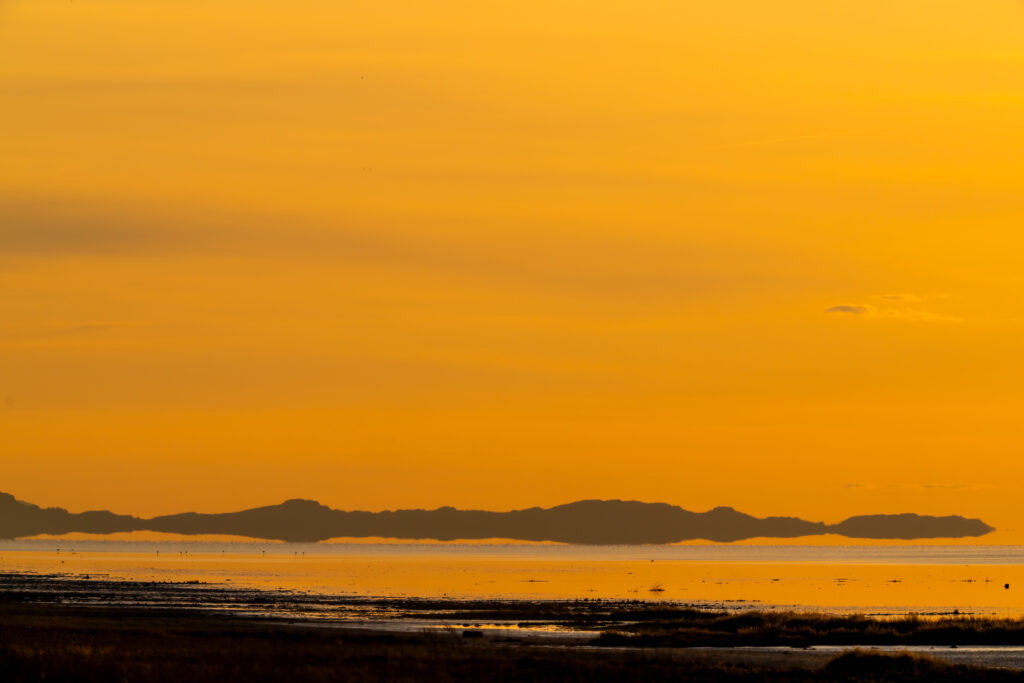

The shores of the Great Salt Lake near Antelope Island are pictured on Tuesday, May 21, 2024. (Photo by Spenser Heaps for Utah News Dispatch)
As the Trump administration spearheads federal rules revisions on water, considering the removal of Clean Water Act protections, Utah environmental advocates worry it could impact 79% of the water in the Great Salt Lake Basin.
The Environmental Protection Agency announced in March that it would review the definition of “waters of the United States” to streamline and speed up permitting and cut compliance costs, according to a news release. Also, to comply with a U.S. Supreme Court decision on what constitutes federally protected water.
That decision limited the scope of federally protected wetlands, ruling that water bodies would only be considered in the conservation provisions if they are “relatively permanent” waterways that are also adjacent to interstate navigable waters, which the U.S. Army Corps of Engineers defines as “waters which are currently used, or were used in the past, or may be susceptible to use in interstate or foreign commerce.”
However, the proposed rule is expected to go further.
SUBSCRIBE: GET THE MORNING HEADLINES DELIVERED TO YOUR INBOX
“If finalized as proposed, the EPA’s rule would exclude most of Utah’s seasonal streams and wetlands — waters that make up the bulk of the state’s freshwater ecosystems,” according to a news release by the Utah Wildlife Federation, a wildlife protection organization.
According to a Federal Register notice looking for public input on the proposed rule, “going forward, the (EPA and the Army Corps of Engineers) will seek to provide clear and transparent direction regarding the definition and will prioritize practical implementation approaches, provide for durability and stability, as well as for more effective and efficient jurisdictional determinations, permitting actions, and other actions consistent with relevant decisions of the Supreme Court.”
Any future action on the definition of “waters of the United States” will consider feedback from landowners, industry groups, the agricultural community, states, Tribes, local governments, community organizations, environmental groups, and the general public, according to the notice.
That narrower definition increases Utah environmentalists’ worries about the future of the already declining Great Salt Lake, since more than 79% of the water in the basin comes from rain-fed, seasonal streams, the release reads, citing a University of Massachusetts and Yale University study. In Utah, according to the Utah Department of Natural resources, 90% to 95% of water supply comes from seasonal snowfall which feeds the streams and rivers that fill reservoirs and natural lakes.
“Utah has invested millions in restoring watersheds to improve water quality and help more water reach the Great Salt Lake and drinking water reservoirs,” Isobel Lingenfelter, wildlife connectivity coordinator at the Utah Wildlife Federation, said in a statement. “It’s baffling that, at a time when drought and dust storms threaten our health and economy, the EPA is considering a rule that would make it easier to pollute or destroy the very waters we depend on.”
Cox considers emergency declaration as drought worsens in southern Utah and Lake Powell levels drop
But for Lee Zeldin, the EPA administrator, the policy would make rules clear and consistent across all states.
“The previous Administration’s definition of ‘waters of the United States’ placed unfair burdens on the American people and drove up the cost of doing business,” Zeldin said in a release. “Our goal is to protect America’s water resources consistent with the law of the land while empowering American farmers, landowners, entrepreneurs, and families to help Power the Great American Comeback.”
According to the EPA, the Biden administration failed to follow the Supreme Court ruling, maintaining uncertainty on what bodies fall under Clean Water Act protections. It’s now a priority for this administration to work with state and local officials “to protect their treasured water bodies while accelerating economic opportunity,” the EPA wrote in the release.
However, with vulnerable streams feeding drinking water reservoirs in Utah, the advocates warn that such policy changes will bring another burden to the state’s government.
“The Supreme Court tied EPA’s hands, but not completely,” Lingenfelter said. “The agency still has the authority — and the responsibility — to protect drinking water sources where it can. With Lake Powell less than a third full and the Great Salt Lake disappearing before our eyes, the state will need to step up if the federal government steps back.”