Utah News Dispatch
Economists warn Utah’s Medicaid-specific funds are insufficient if there’s a recession

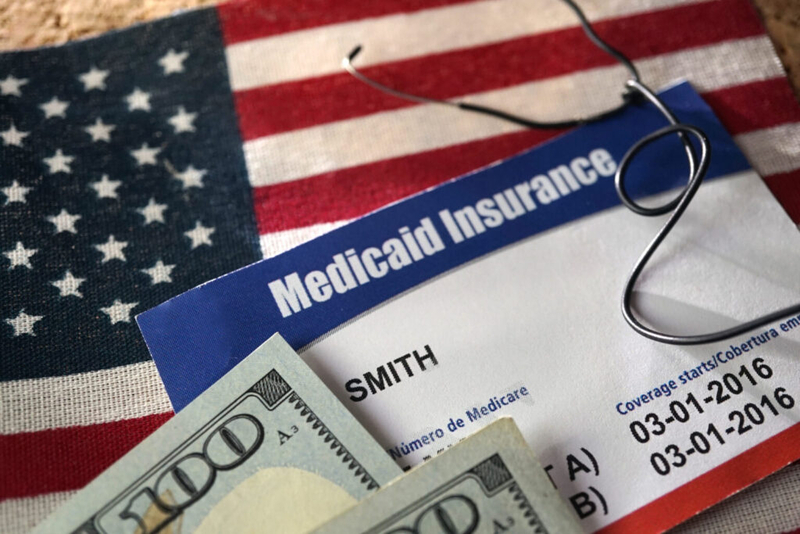

Legislative economists are advising Utah lawmakers to make a plan to cover Medicaid in case of a recession. (Photo via Getty Images)
Legislative economists are advising Utah lawmakers to further fund accounts that are meant to cover the state’s portion of Medicaid. If not, they may have to tap into other funds to cover the program in case of a severe recession.
Traditionally, if the economy declines, the federal government offers to cover a larger portion of Medicaid to give states a breather while they experience revenue difficulties. But, Utah economists are afraid that with the current federal deficit levels, the federal government may become unable to offer that option during a future downturn.
“This is not like a hair-on-fire thing, but it’s also not fake, it’s real,” Jonathan Ball, legislative fiscal analyst, told the Executive Appropriations Committee. “It’s something we should be thinking about, and over the long term, we should be building contingencies.”
SUBSCRIBE: GET THE MORNING HEADLINES DELIVERED TO YOUR INBOX
Currently, the state’s two accounts that work specifically as buffers to cover Medicaid expenses have $449.2 million in total. The Medicaid Affordable Care Act fund, which currently has $342 million, will be enough to cover all Medicaid expansion costs in the worst economic case scenario, Noah Hansen, economist at the Office of the Legislative Fiscal Analyst said in a presentation.
In 2025 the federal government funded 64.4% of the traditional Medicaid program in Utah, not counting the expansion. But, the economists are making projections for a future in which the federal government covers 50% of the program, its lowest-possible contribution.
A restricted account for the traditional Medicaid program, which currently has $107.2 million in it, would be insufficient, Hansen said. Additionally, that Medicaid rainy day fund can only be used if the cost of the program grows over 8% a year, Ball added. However, the way that’s calculated is unclear in statute.
“Is that 8% growth just natural growth of cost, or would a declining (Federal Medical Assistance Percentage) rate qualify as cost growth?” Ball said, advising lawmakers to start thinking about an answer to that question in the next few years.
General rainy day funds, since they are designed to create a buffer to economic risk, and not to tighten the gap in the case of losing federal funds, are “way insufficient,” Ball said.
Something else to consider, he said, is the extent of uses for the Medicaid Affordable Care Act fund, which was created for the full Medicaid expansion approved through a citizen initiative.
“Do you have the ability to modify that statute so that it could be used outside the (Medicaid expansion) population?” Ball asked.
But, if the Legislature were to consider that option, it could likely spark a constitutional question, since like Proposition 4, the ballot measure that established an independent commission to draw Utah’s congressional maps, the Medicaid expansion was approved by a citizen initiative.
And, according to a Utah Supreme Court decision on the redistricting legal fight, “the people’s right to alter or reform the government through an initiative is constitutionally protected from government infringement, including legislative amendment, repeal, or replacement of the initiative in a manner that impairs the reform enacted by the people.”
However, these “stress tests” of Medicaid are not taking big changes into account — one of them is a new work requirement passed this year in Congress’ spending package widely known as the “big, beautiful bill.” In Utah approximately 7,900 people who now have to start working, or show proof of job applications in order to remain eligible for the federal program.
“That’s a significant change,” said Senate Minority Leader Luz Escamilla, D-Salt Lake City. “You’ll have thousands of Utahns dropping out of the program, so that should be also accounted for.”
But, beyond that, Escamilla said, the state may also have to consider conducting other stress tests derived from the potential loss of health care for thousands of Utahns.
“We’re going to have thousands of Utahns with no health care coverage. I mean, are we stress testing our emergency rooms?” she said. “I don’t know. Maybe we should start considering a stress test on our emergency room capacity to take people who are going to be completely uninsured.”