
Critical Race Theory
Unpacking Critical Race Theory: A Deep Dive with Dr. James Lindsay


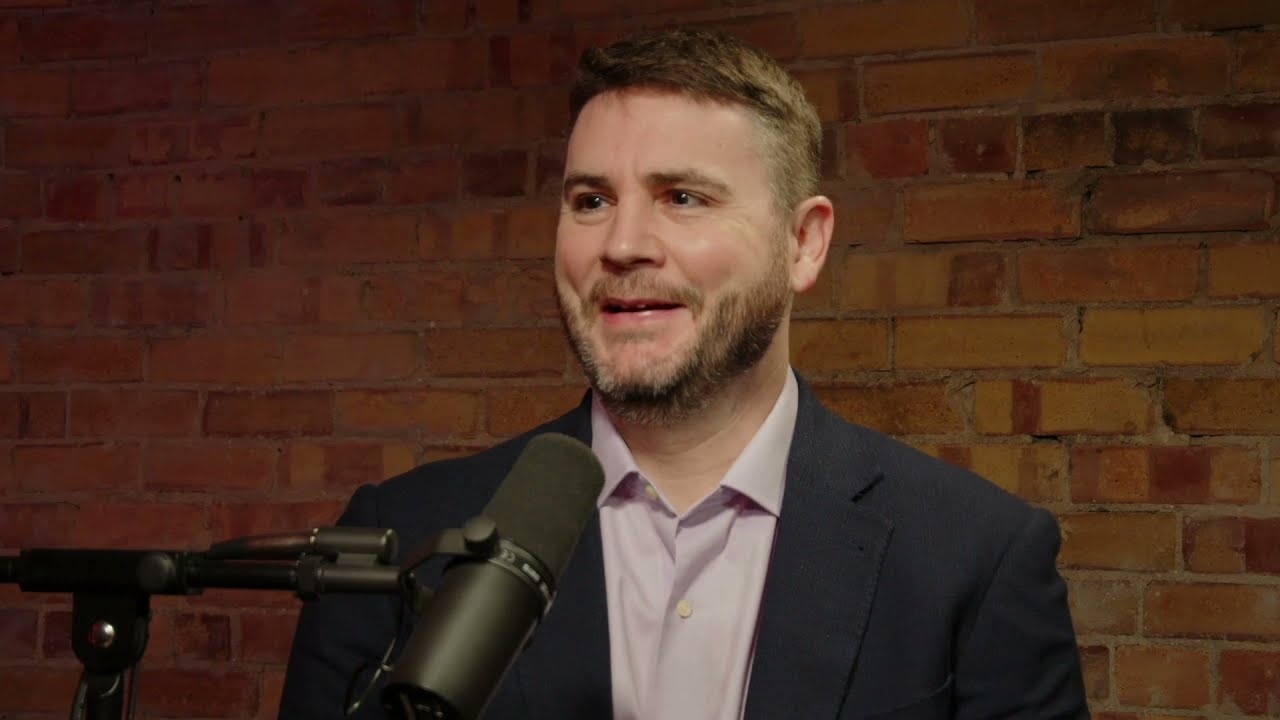

In this episode of the PoliticIt podcast, Senator John D. Johnson engages with Dr. James Lindsay, a noted critic of Critical Race Theory (CRT). They explore the intricate connections between CRT, Marxism, and contemporary societal challenges, shedding light on the implications for education and legislation.
Introduction
Critical Race Theory (CRT) has become a focal point in contemporary discourse, often sparking intense debates. As we delve into its intricacies, it’s essential to understand its origins, its philosophical underpinnings, and how it intersects with various ideologies, including Marxism. This exploration will illuminate the connections and implications of CRT in our society today.
How did you get into Critical Race Theory?
My journey into the realm of Critical Race Theory was somewhat serendipitous. After completing my PhD in mathematics, I became disillusioned with the academic environment. The emphasis on student retention over genuine learning left me frustrated. I observed faculty meetings focused on not failing students, which contradicted the very nature of education, especially in a field like mathematics.
Seeking a new intellectual pursuit, I initially engaged with the new atheism movement. However, as this movement began to adopt more progressive ideologies around 2011, I found myself drawn toward the scholarship in gender studies. This interest led me to explore systemic issues that I hadn’t previously considered, eventually guiding me to the study of CRT. It wasn’t long before I recognized the absurdities within this scholarship, prompting a collaborative effort to expose its flaws through what became known as the grievance studies affair.


Critical Race Theory and Marxism
Understanding the relationship between Critical Race Theory and Marxism is crucial. Many scholars, including Isaac Gottsman, argue that it’s more accurate to refer to CRT as critical Marxism. This terminology underscores the continuation of Marxist themes within CRT, albeit through a different lens. The original Marxist framework struggled to find traction until the Russian Revolution, which forced a reevaluation of Marx’s predictions regarding the industrial proletariat.
Critical Theory emerged as a response to the perceived failures of Marxism, particularly its inability to account for cultural factors that sustain capitalism. The Frankfurt School theorists began to analyze the cultural elements that perpetuate capitalist ideologies, leading to the development of critical Marxism. This perspective emphasizes negative criticism of existing societal structures, aiming to inspire social activism by highlighting systemic injustices.
Bio: James Stephen Lindsay
Lindsay was born in Ogdensburg, New York. He moved to Maryville, Tennessee at the age of five, later graduating from Maryville High School in 1997. Lindsay attended Tennessee Technological University, where he obtained both his B.S. and M.S. in mathematics; he later earned his Ph.D. in mathematics[4] from the University of Tennessee in 2010. His doctoral thesis is titled “Combinatorial Unification of Binomial-Like Arrays”, and his advisor was Carl G. Wagner.[5]
Lindsay began using the middle initial “A.” in order to pseudonymously write books about atheism and leftism in the predominantly conservative and Christian South.[2]
Lindsay, along with Peter Boghossian, is the co-author of How to Have Impossible Conversations: A Very Practical Guide,[6] a nonfiction book released in 2019 and published by Lifelong Books.[7] In 2020, Lindsay released the nonfiction book Cynical Theories, co-authored with Helen Pluckrose and published by Pitchstone Publishing. The book became a Wall Street Journal, USA Today, and Publishers Weekly bestseller upon release.[8][9][10] Harvard University psychologist Steven Pinker praised the book for exposing “the surprisingly shallow intellectual roots of the movements that appear to be engulfing our culture”.[11] Tim Smith-Laingit charged it with “leaping from history to hysteria” in a Daily Telegraph review.[12]
Lindsay has also appeared twice[13] on comedian Joe Rogan‘s podcast The Joe Rogan Experience.[14]
He is registered as a director of New Discourses LLC.[15]


Liberation Theology
Liberation theology represents another significant intersection with CRT. Originating in South America during the mid-20th century, it emerged as a response to oppressive political regimes. This theological movement sought to reinterpret Christian doctrine through the lens of social justice, aligning closely with Marxist principles. Figures like James Cone further expanded this theology within the context of racial oppression, merging it with critical race theory’s focus on identity and systemic inequality.
The influence of liberation theology on American religious and social movements cannot be understated. It provided a conduit for Marxist ideas to penetrate North American academia, exemplified by thinkers like Paulo Freire, whose work emphasized the role of education in social transformation.
State Religion
In our current landscape, the rise of “wokeness” can be viewed as a state religion. The principles of CRT have permeated various institutions, effectively establishing a new orthodoxy. This phenomenon raises critical questions about the implications of a state-endorsed ideology that operates with religious fervor.
The parallels between CRT and traditional religious structures are striking. Just as religious dogma guides moral and ethical behavior, CRT prescribes a framework for understanding societal interactions through the lens of power dynamics and systemic oppression. If the Supreme Court were to formally recognize CRT as a religion, it would dramatically shift the legal and cultural landscape.
Decentralization
Decentralization is a fundamental principle that underpins the success of democratic systems. The insights of thinkers like Alexis de Tocqueville and John Locke highlight the importance of divided powers and checks and balances in maintaining liberty. These principles are essential in countering the concentration of power, whether in government or corporate structures.
Historically, the concentration of power has led to societal distress, as seen in the late 19th century. Antitrust laws emerged as a response to the monopolistic practices of corporations, allowing for a resurgence of economic freedom. This concept of decentralization extends beyond economics; it encompasses the freedom to express ideas and engage in discourse without fear of retribution.

Life is Not a Zero-Sum Game
Life is not a zero-sum game. This concept is pivotal in understanding the economic and social structures that govern our interactions. Viewing life through a Marxist lens suggests a fixed pie; if one person gains, it’s at the expense of another. However, this perspective is fundamentally flawed.
Adam Smith illuminated a different reality: the potential for individuals to create value without detracting from others. The concept of the division of labor, exemplified by a pin factory, illustrates that productivity can increase, allowing everyone to benefit. This leads to the idea of a positive-sum game where all parties can prosper.
Religious Liberty is a Threat
The current ideological climate poses a significant threat to religious liberty. Historically, communists have been adversaries of religious freedom, favoring an enforced atheistic state. However, the reality is more nuanced; they often elevate the state to a position of deification.
This creates a paradox where rebellion against a perceived deity—such as the state—requires a belief in its existence. The danger lies in the manipulation of religious beliefs to serve a new agenda, often through the lens of liberation theology. This transformation risks perverting faith systems across the board.
James Lindsay’s Journey
James Lindsay’s exploration of critical race theory and its Marxist roots has been a profound journey. Initially skeptical, he delved deeply into the scholarship surrounding CRT, ultimately concluding that it is essentially Marxism rebranded. His work aims to clarify the historical and intellectual connections between these ideologies.
The forthcoming book, “Race Marxism,” encapsulates his findings, addressing how critical race theorists have shifted the focus from class to race while maintaining the same underlying principles. This evolution represents a significant moment in the intellectual landscape.
All Men Are Created Equal
The phrase “all men are created equal” is not just a statement; it is a foundational principle that has shaped American identity. Martin Luther King Jr. famously referred to this as a promissory note, urging the nation to fulfill its promise of equality. This ideal is central to the civil rights movement and remains relevant today.
However, critical race theory often distorts this legacy, focusing instead on divisions rather than unity. The emphasis should be on the merit of individuals, not the color of their skin. King’s vision was rooted in the potential for all individuals to be judged by their character, a sentiment that resonates deeply in the American ethos.

Martin Luther King and His Legacy
Martin Luther King Jr.’s legacy is often overshadowed by the complexities of his life and the various interpretations of his message. While some critics argue that he was co-opted or silenced, his true impact lies in his unwavering commitment to justice and equality.
King’s famous “I Have a Dream” speech encapsulates his vision for a future where people are judged by their character and not their race. This message is a cornerstone of American values, reminding us that the fight for equality is ongoing and that the principles of unity and justice should prevail.
E Pluribus Unum: Unity in Diversity
The motto “E Pluribus Unum,” meaning “out of many, one,” encapsulates the spirit of unity that is essential for a thriving society. In contrast to the divisive narratives promoted by some contemporary ideologies, this motto highlights the strength found in diversity.
True diversity is about inclusion and mutual respect. The American experience has demonstrated that when individuals come together, regardless of their backgrounds, they can create something extraordinary. This unity does not erase differences; instead, it celebrates them while fostering a collective identity.
The Jedi Mind Trick of Education
In the realm of education, there’s a compelling analogy to the Jedi mind trick—a subtle manipulation of perception. When educators assert that they do not teach Critical Race Theory (CRT), yet simultaneously promote concepts like equity, inclusion, and privilege, they engage in a linguistic sleight of hand. This disconnect raises critical questions about the integrity of our educational systems.
It’s vital to recognize that while formal CRT texts may not be part of the curriculum, the core ideas are embedded in lessons across various subjects. This infusion shapes how students perceive race and power dynamics, often without them even realizing it. The challenge lies in discerning the difference between teaching a theory and implementing its principles in everyday classroom discussions.
Understanding the Disconnect
Many educators and administrators may genuinely believe they are not teaching CRT, yet they propagate its ideologies through social emotional learning (SEL) frameworks. This leads to confusion and frustration among parents and legislators who are trying to understand what is truly being taught in schools.
To clarify, it’s not about the explicit teaching of CRT as an academic subject. Rather, it’s about the underlying concepts that permeate classroom discussions, shaping students’ worldviews. This is where transparency becomes essential.
The Portrait of Graduate Social Emotional Learning
Social Emotional Learning (SEL) has become a buzzword in educational circles, but its integration with CRT raises concerns. The portrait of a graduate often emphasizes attributes like empathy and social responsibility, yet it can also serve as a vehicle for critical race ideology.
When SEL programs encourage students to reflect on their own privileges or the systemic injustices faced by marginalized groups, they inadvertently align with CRT’s framework. This not only skews the educational experience but also risks alienating students who may feel targeted or shamed for their identities.
Redefining SEL
Redefining SEL to focus on universal values—such as respect, kindness, and understanding—could provide a more balanced approach. Instead of framing discussions around privilege and oppression, educators should aim to cultivate an environment where all students feel valued and respected, regardless of their backgrounds.
By shifting the focus to individual growth and collective responsibility, we can foster a more inclusive educational atmosphere, free from divisive narratives.
Moving Away from Critical Race Theory
To effectively distance educational frameworks from CRT, a multi-faceted strategy is required. Simply banning CRT in name is insufficient; it requires an understanding of its principles and their implications in the classroom.
Legislators must focus on what CRT does—scapegoating individuals based on race or other identity markers, fostering division, and promoting stereotypes. By identifying these actions and outlawing them in educational settings, we can begin to dismantle the pervasive influence of CRT.
Legislative Priorities
- Transparency: Mandate clear disclosure of curricula and teaching materials to parents and stakeholders.
- Accountability: Implement strict penalties for educators who misuse their authority to promote divisive ideologies.
- Alternative Pathways: Create alternative licensure routes for educators that do not require indoctrination into CRT frameworks.
Chasing Out Darkness: The Role of Transparency
Transparency is the antidote to the deception surrounding CRT in education. By shining a light on what is being taught, parents and community members can hold schools accountable. This not only empowers parents but also creates an environment of trust between educators and families.
Curriculum transparency allows parents to engage meaningfully with their children’s education. When parents can easily access information about what is being taught, they can better advocate for their children’s educational needs and values.
Implementing Transparency
To implement transparency effectively, schools should establish clear guidelines for information sharing. This includes the creation of easily accessible online portals where parents can review curricula, lesson plans, and supplementary materials.
Furthermore, schools should encourage open dialogue with parents and community members regarding educational content. This can be achieved through regular town halls, feedback sessions, and surveys to gauge parental concerns and suggestions.

Privilege Walk: A Tool of Division
The privilege walk exercise often used in classrooms serves as a stark illustration of how CRT concepts can create division rather than unity. By publicly highlighting differences in privilege among students, this exercise can foster resentment and discomfort.
Rather than promoting understanding, privilege walks can unintentionally shame students, particularly those who may not identify with the privileged group. This approach contradicts the very principles of empathy and respect that SEL aims to teach.
Alternatives to Privilege Walks
Educators should consider alternative methods that promote understanding without creating division. Group discussions that focus on shared experiences and values can foster a more inclusive classroom environment.
By emphasizing common goals and mutual respect, educators can help students appreciate diversity without resorting to divisive tactics that alienate some individuals.
FAQ: Understanding Critical Race Theory
What is Critical Race Theory?
Critical Race Theory is an academic framework that examines the relationship between race, law, and power. While it originated in legal studies, its principles have permeated various fields, including education.
Why is CRT controversial?
CRT is controversial because it can promote a divisive view of society, focusing on systemic oppression and privilege. Critics argue that it fosters resentment and undermines the concept of individual merit.
How can parents address CRT in schools?
Parents can address CRT in schools by advocating for transparency in curricula, engaging in discussions with educators, and participating in school board meetings to voice their concerns.
What are the implications of CRT for students?
The implications of CRT for students include a potential shift in how they view themselves and others based on race. It can create an environment where students feel pressured to align with specific ideologies rather than fostering independent thought.
Related Podcasts