Utah News Dispatch
Audit: ‘Inmates are often abandoned’ by mental health care system in the Utah State Prison

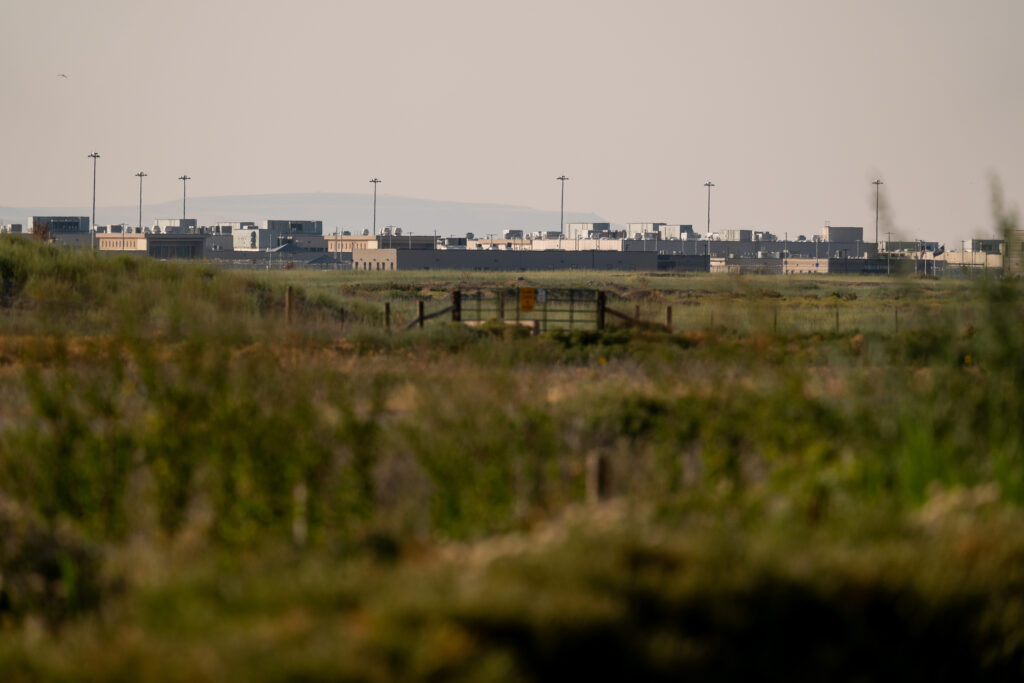

The Utah State Correctional Facility in Salt Lake City is pictured on Wednesday, Aug. 7, 2024. (Photo by Spenser Heaps for Utah News Dispatch)
Two new legislative audits paint a picture of inadequate and flawed mental health care in Utah’s state prison in Salt Lake City.
The reviews released Tuesday found employees failed to properly monitor those at risk of suicide, and the impact is illustrated in several examples of self harm, with one person taking their own life.
Auditors said a psychiatrist who assisted in the audit process concluded “inmates are often abandoned” because of a lack of consistent follow-up in care. They also recorded examples of some getting the wrong psychiatric medications and others missing doses.
Together, the two wide-ranging reviews totaled more than 160 pages, with one warning of “significant deficiencies and critical issues in need of immediate action.”
SUBSCRIBE: GET THE MORNING HEADLINES DELIVERED TO YOUR INBOX
One review focused on the Division of Correctional Health Services under Utah’s Department of Health and Human Services, and the other on the Utah Department of Corrections.
The reports come three years after the prison relocated from Draper to Salt Lake City, with a new design that state leaders and prison officials described as “humane,” with a focus on rehabilitation and therapy.
Auditors recommended that the division design a suicide prevention program and a process to review prescriptions, that the agencies collaborate and revise their policies and procedures, and that the prison ensures officers are adequately supervising inmates.
Stacey Bank, executive medical director for the Department of Health and Human Services, told legislative leaders on an audit review panel Tuesday that the agency has already developed new procedures on suicide. It has brought on two psychiatry fellows from the University of Utah who have helped provide more clinical oversight, she said.
Bank said there hasn’t been a suicide at the prison in over a year, “an outcome that reflects focused prevention, better integration and a patient-centered approach.”
The Utah Department of Corrections is also already at work on many of the recommendations, added deputy executive director Rebecca Brown.
“Our plan of action really centers on policy revision, enhanced supervision, improved coordination, and formalizing best practices between security and safety,” Brown told the panel.
Senate Minority Leader Luz Escamilla, D-Salt Lake City, said some of the audit’s findings were red flags and brought up questions about the staffing the prison needs to make sure it’s getting prescriptions and other issues right when it comes to mental health.
“I want to make sure you have what you need,” Escamilla said. “Some of these mistakes that are in this audit are alarming.”
Monitoring and suicide
Among other findings in the audits, reviewers found the correctional health services agency violated its own policy by failing to constantly monitor 26 inmates in the prison’s psychiatric infirmary who had attempted suicide or were deemed “acutely suicidal” from October 2024 to March 2025, the audit said.
They received the lowest level of observation in the prison’s psychiatric infirmary, which is monitoring in 15-minute intervals. In the time between checks, multiple patients attempted to harm themselves.
When it comes to checks by corrections officers, “we noted that some officers were filling out the logs without looking in the inmate cell and verifying their safety in the report,” auditor Brendon Ressler told the legislative panel.
One person’s suicide was not discovered for over an hour, Ressler said.
No tracking of suicide attempts
The audit found the Division of Correctional Health Services doesn’t collect or analyze data on suicide attempts, limiting its ability to evaluate risks, spot trends and make improvements.
“Identifying risk patterns can uncover trends,” auditors wrote. They did their own analysis and found 21 people attempted suicide, some multiple times, from October 2024 to March 2025.
By comparison, the Arizona Department of Corrections tracks its data, the audit says, and the Utah State Hospital does a similar analysis, with the added step of reviewing what happened to find a root cause.
Understaffing and its fallout
Auditors documented “the negative effect of not having a staff psychiatrist” at the prison.
After a full-time psychiatrist left the job in July 2024, it took more than a year for the state to hire a part-time replacement, a delay the division attributed to “the challenges associated with offering a competitive salary,” one audit says.
The prison has relied on advanced practice registered nurses who have more limited training, with only one of those nurses for every 609 people in the prison with moderate to severe mental health needs, the audit said.
They may be experiencing excessive workloads, the audit mentioned, leading them to feel overwhelmed or burned out.
“Consequently, inmates with severe mental health needs did not receive the level of attention and treatment that their condition required,” the report states. “The lack of consistent follow-up has led the consultant to conclude that ‘inmates are often abandoned,’ which is deeply concerning.”
Those housed in the psychiatric infirmary receive brief provider assessments daily, but do not have access to other services such as psychotherapy or group therapy, auditors noted.
They wrote that “many inmates in the psychiatric infirmary were suicidal due to identifiable life stressors such as divorce or bereavement — conditions that respond well to therapeutic intervention. Instead, these inmates were met with prolonged isolation.”