Utah News Dispatch
A national AI law is critical for small app developers like me

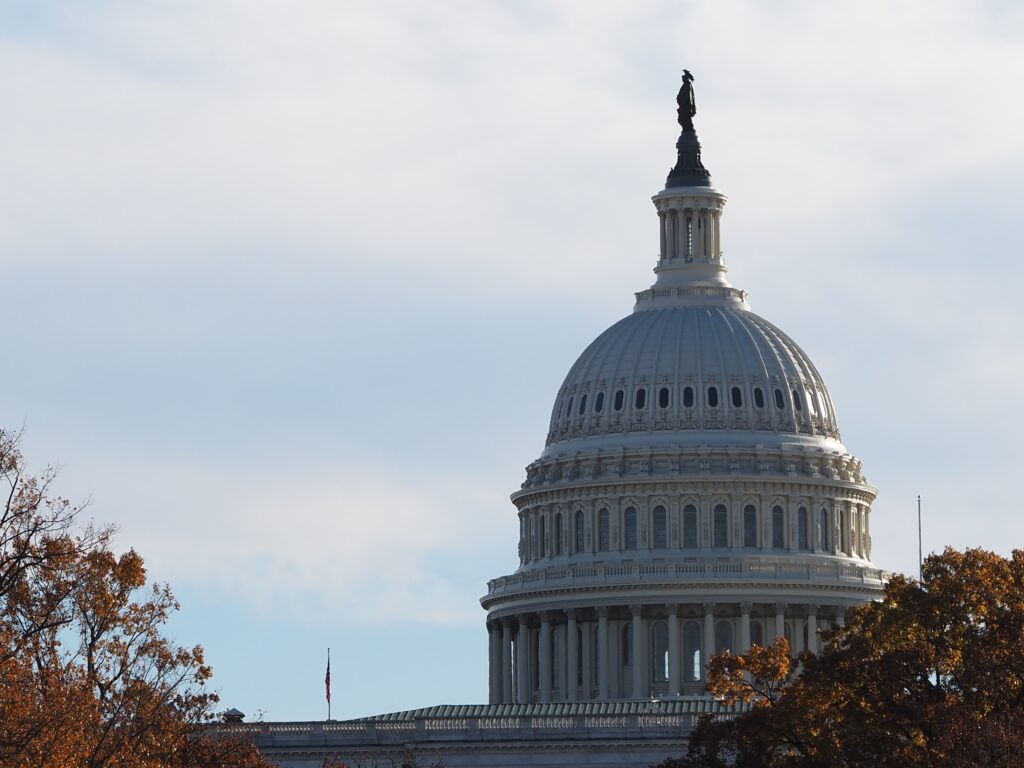

The U.S. Capitol pictured on Nov. 26, 2024, in Washington, D.C. (Shauneen Miranda/States Newsroom)
I’ve never been one to sit still. As a youth, I was a gymnast and figure skater, and competed in the World Cheerleading & Dance Championships. Today, I’m an avid rock climber, biker, and skier. As a young adult, I studied computer engineering and management science, worked at some of the biggest tech firms, and helped launch one of the first mobile analytics platforms.
As mobile technologies took off, I realized I could combine my passions for fitness and technology, and co-founded an app business that offers free and affordable personalized fitness coaching. Our app is AI-powered and expert-led, and has helped members log millions of exercise minutes.
But there’s a new challenge on the horizon. This year, lawmakers across the U.S. have introduced nearly 1,000 bills regulating AI, and several states have already passed new AI laws. To be clear, I’m in favor of AI regulation. The challenge is that the new and proposed laws vary widely from state to state, which means independent app developers like me will have to navigate scores of different compliance requirements. As more states pass AI laws, we’ll face an increasingly complex regulatory patchwork that’s likely to raise costs, slow innovation, and make it harder for people to access our app. We’d be much better served by smart, comprehensive, national AI legislation.
My company’s mission is to help people live stronger, healthier lives — and AI plays a vital role in our work. For example, we offer video-based AI-assisted feedback on members’ exercise technique. That helps them maximize their workouts’ effectiveness and minimize their chance of injury, and means millions of people can access the kind of personalized training long reserved for elite athletes and affluent individuals.
We’re always thinking about integrating new AI tools to make our app even more helpful and accessible. But a patchwork of state AI laws could make that much harder. Utah’s law takes a light-touch approach, requiring only AI-use disclosures. But our customers come from across the country, and many states’ laws are likely to be far more demanding. The Colorado AI Act, for instance, requires costly audits for some companies that develop or use AI. The Colorado AI Act is an ambitious, well-motivated effort to mitigate AI’s risks. That’s a good thing. My concern is that if lawmakers in numerous states enact different but similarly ambitious AI laws, they’ll inadvertently snare small developers in a tangle of complex regulations and high costs.
In the European Union, requirements similar to those in Colorado typically cost businesses tens of thousands of dollars to implement. Small developers, many of whom are self-funded, will struggle to pay those costs in even one state. If multiple states adopt such requirements, it will quickly become prohibitively expensive for entrepreneurs to launch and grow AI-powered startups.
Even tracking the different rules and determining whether we fall within a law’s scope will require lawyers and compliance teams. That could put us at a major disadvantage against bigger industry players that can handle those requirements and costs. Worse, it means we’ll have to spend time and money on compliance instead of improving our app, and we may be forced to raise prices for our end users.
Lawmakers’ concerns about AI are understandable; AI needs guardrails. But a haphazard patchwork of state regulations is likely to stifle innovation and prevent app developers from succeeding, and could lead to dramatically inequitable outcomes. In states with strict regulations, residents may miss out on life-enhancing AI-powered tools that help with things like job searches and medical care. In states with weak — or no — regulations, residents may be subject to dangerous scams and misinformation.
The U.S. urgently needs a national AI law. It’s time for lawmakers in Washington to craft smart, balanced AI legislation that gives developers clear, consistent rules, protects all Americans from AI’s risks, and allows all of us to benefit from its transformative capabilities.