Podcast
Teaching the Search for Truth: What Universities Owe a Democracy a conversation with Leah Murray
Dr. Leah Murray joins Senator John D. Johnson on the PoliticIt Podcast for a candid, wide-ranging conversation on civic education, political discourse, and the future of higher ed. From family debates in upstate New York to primary texts in the classroom, Murray defends the liberal arts, challenges ideological orthodoxy, and calls for curiosity over combat. This episode is a powerful reminder: democracy begins with dialogue—and it starts in the classroom.

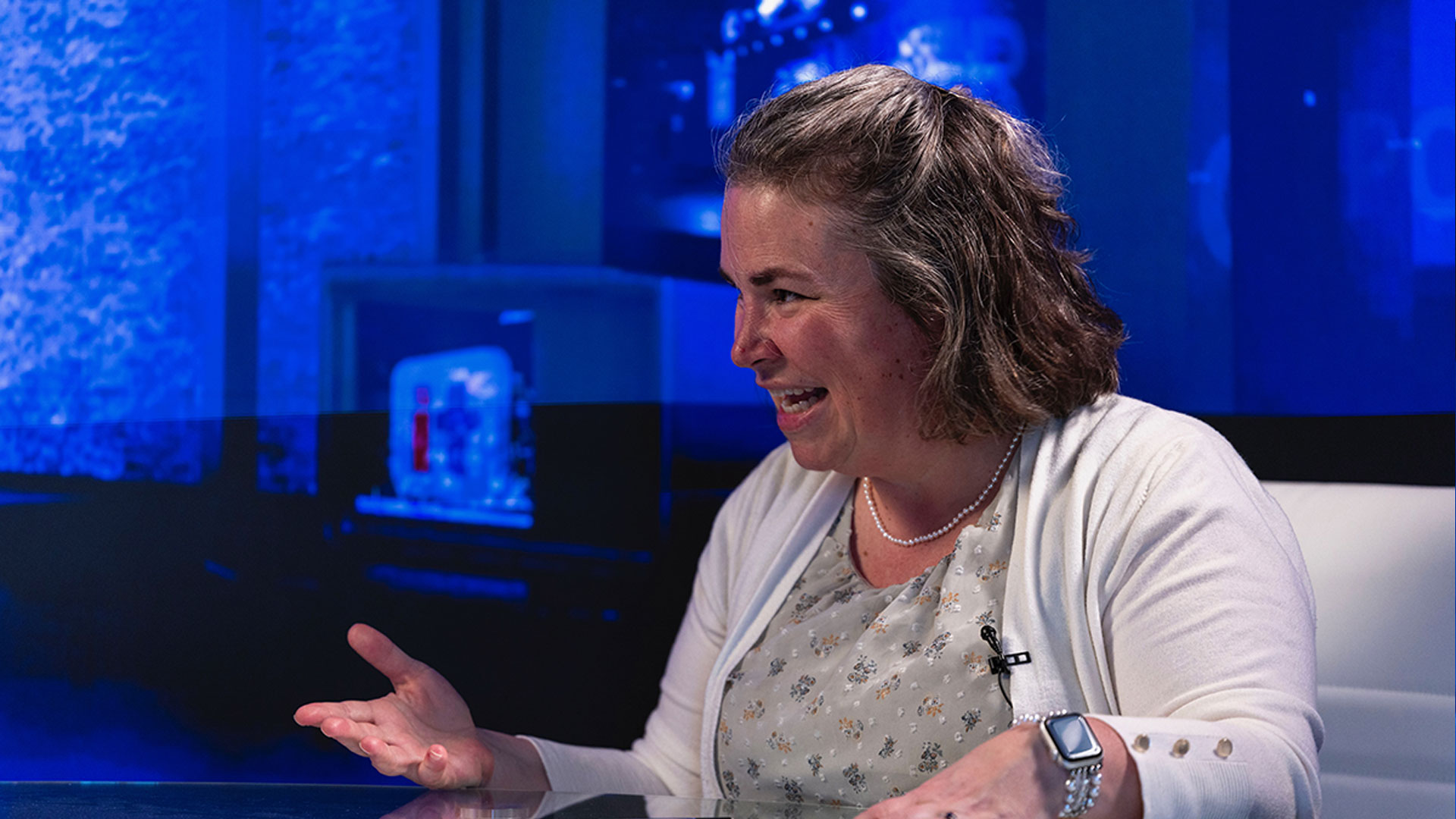
Inside the Classroom, Inside the Republic:
A PoliticIt Podcast Conversation with Dr. Leah A. Murray, Brady Professor, Political Scientist, and Civic Bridge-Builder
On this episode of the PoliticIt Podcast, we sat down with Dr. Leah A. Murray — Brady Presidential Distinguished Professor of Political Science and Director of the Olene S. Walker Institute of Politics & Public Service at Weber State University — for a far-reaching discussion on education, politics, and the soul of civic dialogue. The episode, hosted by Utah State Senator and Emeritus Professor John D. Johnson, wove together decades of experience, institutional insight, and a candid assessment of the challenges facing American democracy today.
PoliticIt Radio – Truth in the Hallway
From her Schenectady roots to the front lines of classroom discourse in Utah, Dr. Murray has become one of the state’s most thoughtful voices on how we teach — and how we talk — about political life in a polarized age.

Family, Faith, and First Votes: Murray’s Early Political Formation
Raised in upstate New York, Murray’s political awakening began not in the classroom, but around the dinner table. Her father — a self-described independent — influenced her earliest political memory: endorsing third-party candidate John Anderson in the 1980 presidential race, when Murray was just five years old.
Her household was politically diverse and unafraid of disagreement. One grandparent was a Democrat, the other a Republican. “You can love people and have very different political opinions,” she recalled. “A lot of people say there are two things you shouldn’t talk about, religion and politics, but they went ahead and talked about them.”
That theme — disagreement without disdain — would become central to Murray’s later academic and public work.
From Political Science to Public Purpose
Murray completed her undergraduate studies at Syracuse University, followed by a Ph.D. in political science at the University at Albany. It was her grandfather, a history teacher and school superintendent, who nudged her toward political science — and it clicked.
Her father studied economics and worked in the New York State budget office. Murray laughed when recalling how she avoided economics in high school, only to later find herself surrounded by economist colleagues in academia.
“My dad was an economics major, and I will just tell you — in New York, senior year of high school, you have to take half a year of government and half a year of economics. I didn’t love economics, so I avoided it. But now I have so many friends who are economics professors and I’m like, ‘That’s actually a really cool discipline.’”
On the podcast, she noted the connection between economics and political science, calling economics “applied math for people who are good at math but not great at math.” Johnson echoed the sentiment, pointing to the overlap in policy analysis and public systems thinking.
How Do We Talk About Politics Today?
One major theme of the episode was the erosion of civil discourse in America — and especially in universities. Murray’s teaching experience reveals that many students fear discussing politics at all, assuming disagreement will lead to social ostracism.
She challenges that mindset head-on.
“I hate that idea that you shouldn’t talk about politics because I think it’s genuinely interesting. The more divided people are, the more you learn from it.”
Senator Johnson echoed the concern and and Murray introduced the “explorer vs. warrior” mindset dichotomy — a framework drawn from Jonathan Haidt and the Constructive Dialogue Institute. Too many enter conversations as warriors aiming to win; we need more explorers, he said, curious about what others believe and why.
“So often you walk into a conversation thinking, ‘I’m going to win.’ That’s the warrior mindset. But if you have an explorer mindset — asking, ‘Why do you think that?’ — those conversations become much more interesting.”
That posture of curiosity — and humility — became a through-line for the entire episode.
Critical Theory and the Collapse of Middle Ground
Murray and Johnson both expressed concern that critical theory, once a tool of analysis, has increasingly become the unquestioned foundation in many classrooms.
Dr. Murray believes critique is vital — but that students should first understand foundational texts and principles. Otherwise, they’re arguing against a system they’ve never actually studied.
“We used to have what I’d call the middle ground, where debate was important — the whole humanities was about discovery. Now, some of that foundation has been destroyed.”
That intellectual flattening, they argued, undermines the liberal arts and suppresses robust civic education.

The Case for Primary Documents
Both guests praised recent legislative efforts in Utah to ground civic education in primary documents — including the Federalist Papers, the Seneca Falls Declaration, and MLK’s Letter from Birmingham Jail.
Murray emphasized how rarely students engage these texts firsthand. “No one actually reads Federalist 10 or the Letter from Birmingham Jail. We argue without grappling with the foundational ideas.”
Senator Johnson noted how this kind of curriculum, also supported in Utah’s SB334 and similar efforts, helps students move beyond slogans and secondhand interpretations. It equips them to wrestle with original ideas and contradictions.
Jefferson, Lincoln, and the Imperfect Union
The episode also featured a deep dive into the American Founding, with Murray and Johnson agreeing that history must be taught in its full complexity.
Dr. Murray reflected on Jefferson’s contradictions — the man who penned “all men are created equal” but also owned slaves. She reminded listeners that Jefferson’s original draft included a condemnation of slavery, later removed to preserve unity among the colonies.
“These people are complicated. Jefferson wrote that all men are created equal, but also owned slaves. The pursuit of happiness replaced certain contentious phrases as a compromise. It’s a conversation — a civil discourse — that shaped the nation.”
Lincoln’s invocation of a “more perfect union,” they agreed, reveals the aspirational and evolving nature of American ideals. Johnson added
“Jefferson penned the words “all men are created equal” and four score and seven years later Lincoln made us a more perfect union”

The Higher Education Reckoning
Dr. Murray raised a critical issue: declining trust in higher education. Nationally, enrollment has fallen. In Utah, one of the top Google searches is “Is a college degree worth it?”
“People are Googling whether a degree is worth it. That should trouble every faculty member. We are not making our case effectively to the next generation.”
Senator Johnson pointed to Utah’s House Bill 265 as one response — reallocating university funding to reward performance and accountability. Far from an attack on education, he argued, it’s an effort to restore public trust.
“If legislators don’t think an agency is accountable, they use their budget authority to make changes. That’s what House Bill 265 is about — cut and reallocate.”

Fear, Free Speech, and the Op-Ed Arena
Murray has written op-eds on concurrent enrollment, civic education, and campus culture — and has faced blowback from colleagues. Some, she says, privately agree but refuse to speak publicly.
“Op-eds are part of a conversation. Some colleagues agree privately but won’t speak publicly because they fear backlash. Some of us have to be brave and keep the conversation going.”
She and Johnson both lamented the chilling effect ideological orthodoxy can have on campus debate.
“If you’re not part of the orthodoxy, something’s wrong. That’s not right. The campus should be a free marketplace of ideas.”
A Conversation with Buckley — and a Warning
In a striking anecdote, Johnson recalled speaking with William F. Buckley Jr. at the University of Mississippi. Buckley’s worry? That universities had drifted from their founding mission — no longer serving as homes for debate, faith, and truth.
“Buckley’s major concern was that the university wasn’t a place for ideas and debate anymore. That hit me pretty hard.”

The Civic Purpose of Liberal Education
Both guests contrasted American civic education with the bureaucratic obedience training of the Prussian state. They agreed that general education must serve the republic, not just the workforce.
“General education in America is about creating informed citizens. The content is the civic good, not just training cogs in a machine.”
Jefferson’s vision for the University of Virginia was a space for inquiry — not religious orthodoxy or ideological conformity. Dr. Murray warned against the Marxist temptation to “destroy the past” and reinvent society from scratch.
“It’s about setting up a framework where you can have discussions, pursue the truth, and form better citizens.”

Toward a Shared Civic Identity
The episode concluded with a challenge — and a note of hope. Can America recover a shared identity in the age of algorithms, activism, and outrage?
Dr. Murray believes it begins with educators willing to model honest conversation. Senator Johnson added that new models of leadership — including the humble global example of Pope Leo XIV — can help shift the tone.
“We need more people like us willing to have conversations in public and get back to a shared American identity.”
Conclusion: Podcast as Civic Practice
This PoliticIt Podcast episode was more than a profile — it was a case study in civic pedagogy. Through candid conversation, Senator Johnson and Dr. Murray modeled the kind of cross-disciplinary, cross-perspective dialogue our moment demands.
Together, they reminded us that politics isn’t just a power game — it’s a human endeavor. Not merely a contest of views, but a crucible of learning. And not just disagreement, but the possibility of discovery.

* Leah Murray is a Brady Presidential Distinguished Professor of Political Science and the Olene S. Walker Institute of Politics & Public Service director at Weber State University.
#politicit, #utahelections, #utpol,
#PoliticItPodcast, #UtahPolitics, #CivicEducation, #FreeSpeech, #HigherEd, #SB334, #HB265, #LeahMurray, #AcademicFreedom, #MarketplaceOfIdeas
Certainly! To enhance the visibility and reach of your podcast episode featuring Dr. Leah A. Murray and Senator John D. Johnson on X (formerly Twitter), here are some effective and relevant hashtags:
🎯
Top Hashtags for Your Podcast Episode
These hashtags are tailored to resonate with audiences interested in civic education, higher education reform, political discourse, and Utah-specific topics:
- #CivicEducation – Engages those passionate about civic learning and democratic engagement.
- #HigherEdReform – Connects with discussions on transforming higher education.
- #FreeSpeechOnCampus – Highlights issues surrounding freedom of expression in academic settings.
- #MarketplaceOfIdeas – Emphasizes open dialogue and diverse perspectives in education.
- #AcademicFreedom – Focuses on the rights of educators and students in scholarly environments.
- #UtahPolitics – Targets audiences interested in political developments within Utah.
- #SB334 and #HB265 – Specific to Utah legislative bills discussed in the episode.
- #LeahMurray – Directs attention to Dr. Murray’s contributions and perspectives.
- #JohnDJohnson – Highlights Senator Johnson’s involvement and viewpoints.
- #PoliticItPodcast – Brand-specific hashtag to consolidate content related to your podcast.
🔥
Trending Hashtags to Broaden Reach
Incorporating these popular hashtags can help attract a wider audience interested in current events and educational discourse:
- #Education – Broadens appeal to general educational topics.
- #Learning – Engages lifelong learners and educators.
- #Students – Connects with the student community.
- #University – Targets discussions around university-level education.
- #College – Appeals to college-related content seekers.
- #Motivation – Attracts audiences seeking inspirational content.
- #TrendingNow – Captures the attention of users following current trends.
- #NowPlaying – Useful for promoting current media content.
🗓️
Day-Specific Hashtags for Timely Engagement
Utilize these hashtags based on the day of the week to tap into daily trending topics:
- #MondayMotivation – Ideal for sharing inspiring content at the start of the week.
- #TuesdayThoughts – Encourages sharing insightful ideas on Tuesdays.
- #WednesdayWisdom – Perfect for midweek educational insights.
- #ThrowbackThursday – Great for revisiting past discussions or episodes.
- #FridayFeeling – Captures the end-of-week sentiments and reflections.
📝
Sample Tweet Incorporating Hashtags
🎙️ Inside the Classroom, Inside the Republic
Utah Sen. @johnforutah & Dr. Leah Murray discuss:
🧠 Civil discourse
📚 Civic education
🏛️ Higher ed reform
🎧 Watch now: Teaching the Truth: What Universities Owe a Democracy a conversation with Leah Murray
CivicEducation #HigherEdReform #FreeSpeechOnCampus #MarketplaceOfIdeas #UtahPolitics #SB334 #HB265 #LeahMurray #JohnDJohnson #PoliticItPodcast
By strategically using these hashtags, you can enhance the discoverability of your podcast episode and engage with audiences interested in the themes discussed.