Utah News Dispatch
Utah group says there’s a faster way to block Flock cameras — without legislation

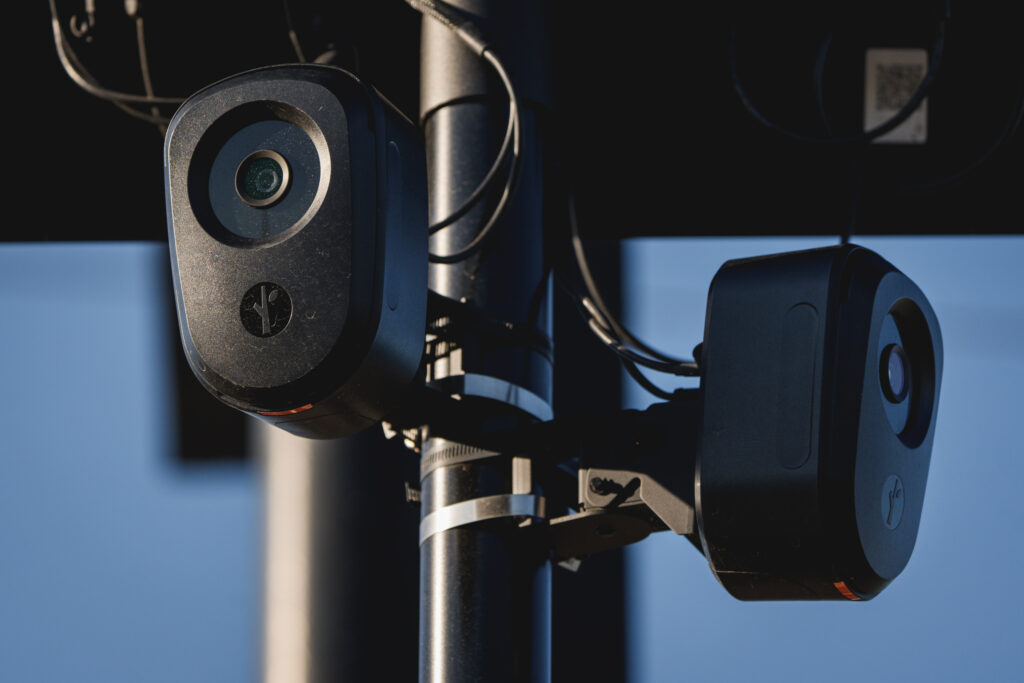

Flock Safety cameras are mounted on a pole in the parking lot of the Home Depot in Salt Lake City on Tuesday, Aug. 25, 2026. (Photo by Spenser Heaps for Utah News Dispatch)
A group opposed to automated license plate readers in Utah says state transportation managers largely hold the keys to the future of the technology on state roads, even though they don’t use it themselves.
The nonprofit Utah Civic Compact is urging the Utah Department of Transportation to cut its contract with the company, a move they say would sharply limit the number of cameras and the surveillance they conduct.
Members of the group are lobbying state lawmakers for tighter restrictions on license plate data, but they told reporters Friday that immediate intervention from UDOT would be faster and easier than an act from the Legislature.
Utah lawmakers are eyeing new Flock camera regulations amid misuse controversies
They found the workaround by reading line-by-line through the agency’s contract with Flock Group Inc., which allows it to end the agreement centered on installations in the event it “determines that the public does not support the Company’s activities,” according to a copy provided to Utah News Dispatch.
Utah Civic Compact members say widespread public outcry in recent months shows Utahns disapprove of the technology, noting in some cases the cameras have been vandalized or cut down.
“They do not trust this new technology, and they do not feel safe when they are being surveilled, cataloged, and surveilled and and watched,” said Clark Dice, a spokesperson for the group, at Friday’s news conference at the Capitol in Salt Lake City.
The devices and the vast trove of data they collect have met strong public outcry centered on privacy concerns and cases of police throughout the country improperly using them to stalk people they know.

While Utah’s transportation department is a third party granting permits for the cameras along state highways at the request of law enforcement agencies, it’s also a party with the ability to help restore trust in government that’s been damaged by misuse use of the cameras, Dice said.
At the Department of Transportation, attorneys were looking over the contract Friday, said spokesperson John Gleason. He said the department’s focus right now is on verifying the cameras bordering state roads have the proper permits, and it’s still working to count them all.
“We wouldn’t be determining the big-picture questions of whether these cameras should be out there or, you know, what the purpose is,” Gleason said. “So those types of questions would have to go to the law enforcement agencies that put them out there.”
He said the department considers matters of equipment, highway safety and paperwork instead. It cannot access the information obtained by the devices and doesn’t determine the location, number of cameras or how they operate, Gleason said.

While the state agency is required by law to permit cameras designated for official police use, Gleason said he didn’t know under which circumstances, if any, the department could pull a particular permit.
The cameras have long been a tool for law enforcement across the country, with police saying it’s a major help in solving crimes. Last month at the Capitol, law enforcers urged lawmakers to keep the technology in Utah, pledging to use it responsibly.
For its part, the Flock network says its platform helps to solve about 2,000 crimes per day.
Utah governor says he’s ‘deeply troubled’ by Flock cameras, calls for review to protect privacy
State leaders have expressed their own misgivings about the technology, with Gov. Spencer Cox saying in August he thinks Americans “should be deeply concerned” about police combing through the data for personal reasons.
He directed the Utah Privacy Governing Board and the Utah Privacy Commission to review the state’s rules and regulations for the cameras, he said, “especially how they’re being used with local agencies to make sure that they are not being abused, to make sure that the public understands how and when they can be used, and if there are abuses taking place, people are held accountable.”
Existing state law restricts use of the cameras to law enforcement for an active criminal investigation, to arrest someone with an outstanding warrant, find a missing or endangered person, or track down a stolen car.
Using or sharing the data for another reason is a misdemeanor offense, but Utah Civic compact says there’s a gap in the law because there’s no way to ensure out-of-state agencies are following Utah’s requirements.