Utah News Dispatch
Facing another year of ‘sensitive material’ bills, some Republicans are getting fatigued

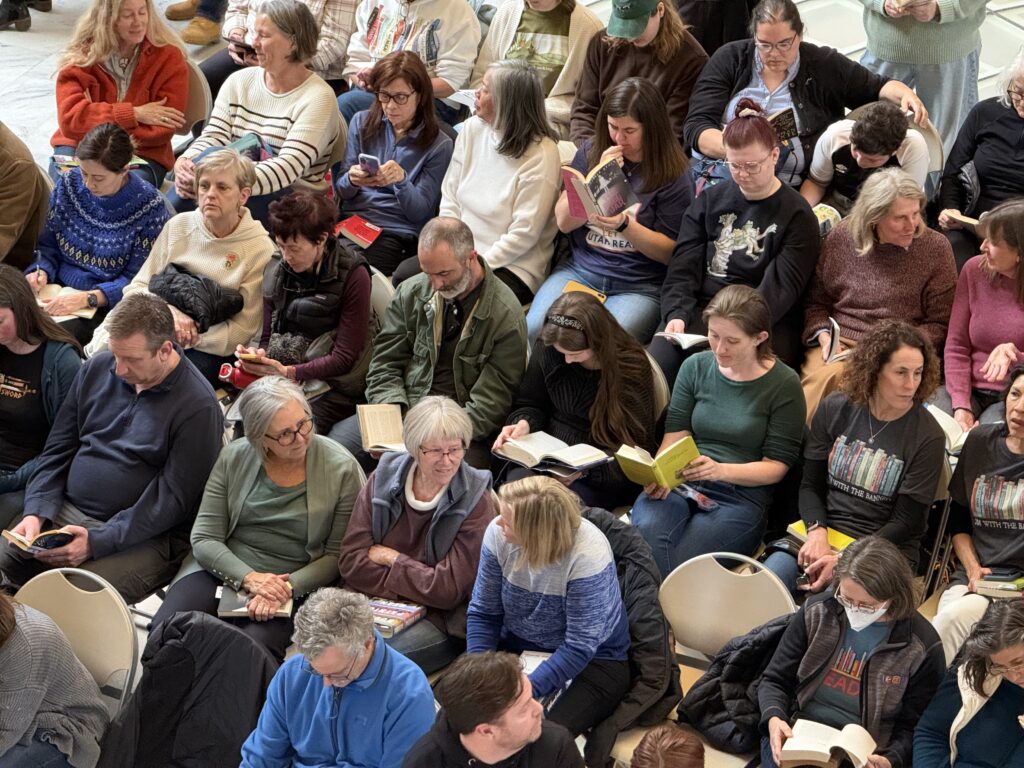

Protestors gather at the Utah State Capitol rotunda for the ACLU’s Let Utah Read event against book bans on Feb. 13, 2026. (Alixel Cabrera/Utah News Dispatch)
After several years of passing laws banning “pornographic or indecent” books from Utah schools, legislative audits, and a growing statewide list of prohibited titles, lawmakers are continuing to sponsor more bills restricting content allowed in schools this year.
However, the work to keep up with all the law changes has been arduous for state officials and schools — and some Republicans are opposing any additional rules, citing exhaustion.
“I’m 100% supportive of our efforts to protect our children, but I also think we need to give our (local education agencies) a chance to catch up,” said Rep. Neil Walter, a Santa Clara Republican who is also chair of the House Education Committee.
SUBSCRIBE: GET THE MORNING HEADLINES DELIVERED TO YOUR INBOX
Walter’s comments came Thursday while weighing in on Tooele Republican Rep. Nicholeen Peck’s bill to require schools to have a review process for the instructional material they add to their collection, including digital databases, before making them available to students to avoid unnecessary exposure to content the state deems sensitive.
The proposal follows a series of bills the Legislature has approved in recent years initially allowing parents to challenge certain sensitive materials in schools, and later, giving school districts a path to ban books from school libraries throughout the whole state. Currently 22 books have been banned statewide, and hundreds of books have been removed from individual libraries.
Walter wasn’t opposed to Peck’s new proposal, he said. But he said he would like to allow schools to implement the work the state mandated in previous years, after four years of discussions around “sensitive materials.”
More changes
Even some who voted for Peck’s bill, like River Heights Republican Rep. Jason Thompson, recognized there’s fatigue around the regulations.
“I was a ‘no’ out of the gate, because for me, I am extraordinarily frustrated that protecting our kids from harm of harmful materials even needs to be a political debate in conversation,” Thompson said. “And I’m hoping and praying that we can, that we can have policy in place and move on and not have a reoccurring conversation that continues to go on and on.”
But still, lawmakers have filed more sensitive materials regulations during the 2026 session.
Majority Assistant Whip Sen. Mike McKell, R-Spanish Fork, is proposing a bill requiring schools to adopt a policy “guiding selection, removal, and maintenance of a school library collection,” including both physical and digital materials found through a school library.
Utah bill would make it easier to ban ‘sensitive materials’ in schools
That’s a bill the Senate Education Committee voted 3-2 Friday to recommend to the full Senate’s consideration. However, some of the most conservative lawmakers on the panel expressed concern about a provision allowing schools to reconsider their decisions on banning or allowing books in their libraries.
McKell, however, insisted his legislation isn’t a sensitive materials bill, and delineated in his draft that nothing in the new provisions would override or negate the prohibition on sensitive materials. In fact, he said, this would not have an impact on books that have been removed under that law.
His bill received the support from library associations representatives who argued that McKell’s legislation relies on the expertise of librarians and local control to curate safe collections for children, and would diminish the amount of book challenges in schools.
But some Republicans remained skeptical.

“I feel like this might be moving backwards from process that’s in place,” said Sen. Lincoln Fillmore, R-South Jordan. “The Legislature, for better or for worse, has taken a lot of steps to move forward empowering parents in that process, and I don’t want to undermine any of those protections that we put in place for parents.”
It would also make clear that instructional materials shouldn’t be removed or prohibited from schools solely based on “the origin, background, or views of the person who created the instructional material,” or “partisan, ideological, or religious disapproval.”
Under McKell’s bill, the books should also be added to a library collection if they fulfill five or more characteristics on a list of 14 criteria, including educational significance, accuracy, request from teacher, parents or students, recreational needs, and special needs support.
First Amendment challenge
West Jordan Republican Rep. Ken Ivory, who has led the state’s flagship sensitive materials laws in recent years, is also running legislation this session clarifying that bans of specific books may not be enforced if they violate the U.S. or the state constitutions.
But also, the bill establishes legal processes that the American Civil Liberties Union of Utah consider to be a response to a First Amendment lawsuit the organization, authors and two high school students filed early this year.
Award-winning authors and Utah high school students challenge book ban law in court
Ivory’s bill hasn’t been assigned to a committee yet.
The lawsuit challenges Utah’s sensitive materials law for blocking students’ “right to read,” which the ACLU of Utah said is inseparable from the right to free speech.
Aaron Welcher, director of communications for the ACLU of Utah, said Ivory’s bill would take people “out of the actual legal system and into basically mediation and arbitration, which is like these private ‘courtrooms’ that aren’t actually courtrooms that don’t operate and can make it so that people waive their rights away.”
The ACLU will continue to fight censorship, Welcher said, though the organization is currently focusing on its pending litigation.
“What we really want people to realize is that it was never just about books,” Welcher said, referring to Peck’s proposal. “Right now, they’re going to digital materials. They’re trying to tell libraries what their mission and purpose is when it comes to educational materials, which is all a very biased approach.”
However, the organization did find some balance in McKell’s bill.
“It seems to actually just follow the way that libraries should be operating, and doesn’t look to be like an attempt to censor,” Welcher said.
‘I think they need to just put a pause on it’
Some parents are also fatigued by the book bans.
For Jessica Horton, co-founder of Let Davis Read, a group of parents and residents advocating against book bans in the Davis School District, every book removed from library shelves is a stark reminder of the moving target the sensitive materials law has been across the state.

The state, for example, conducted an audit of schools’ compliance with the law before they had a chance to implement the changes the Legislature approved in 2025.
“They’re moving so fast that schools can’t even keep up,” she said. “And especially it affects rural schools who may not necessarily have the funding or the ability to keep up with some of the regulations that come from the legislature every year.”
Horton spoke from the ACLU’s Let Utah Read event, which, like the sensitive materials bills, has transformed into an annual tradition for the last four years.
“Every time that sensitive materials bill comes up, I get frustrated because I don’t think we need any more legislation on this issue, especially since there’s an active lawsuit with the ACLU,” Horton said. “Honestly, I think they need to just put a pause on it while everybody has a chance to breathe and catch up and while this lawsuit works its way through the courts.”