Utah News Dispatch
Ex-attorney general candidate charged with bribery reaches plea deal

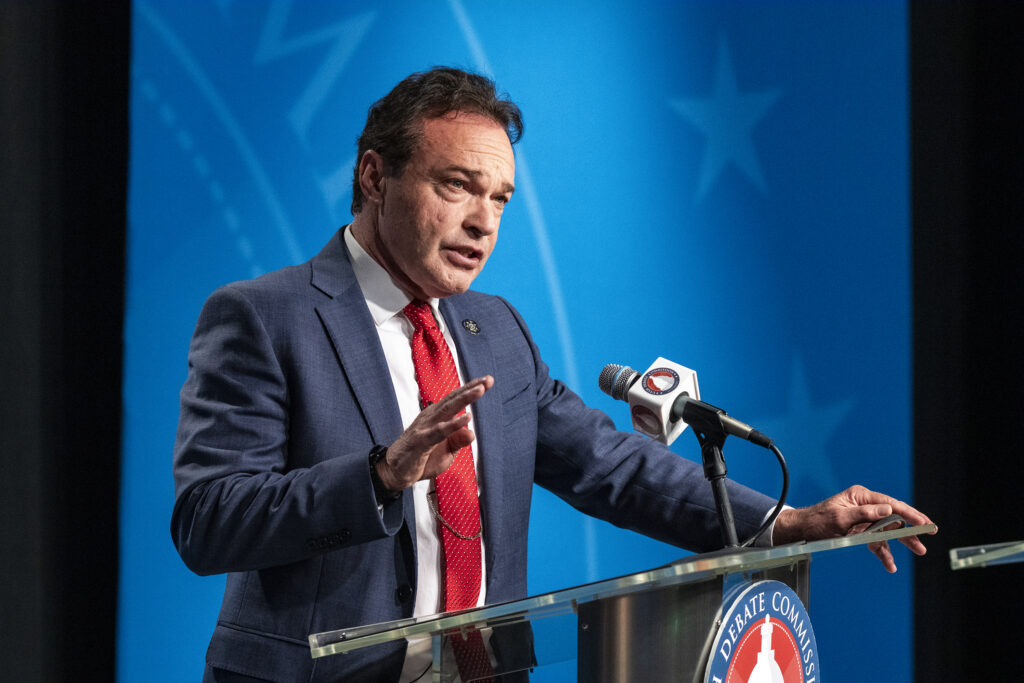

Frank Mylar answers questions during a media scrum after the attorney general GOP primary debate with Derek Brown and Rachel Terry at the KUED Studio, on Tuesday, June 11, 2024. (Pool photo by Rick Egan/The Salt Lake Tribune)
The bribery case against a Utah lawyer who ran for attorney general in 2024 will be dismissed in a year if he doesn’t run for public office again and takes on two legal cases without charging those clients, court records show.
The terms of his plea agreement also place Frank Mylar on probation and bar him from committing any offense beyond a minor traffic violation. On Jan. 2 in Salt Lake City’s 3rd District Court, Mylar entered a guilty plea to a reduced charge of bribery in elections, a class A misdemeanor. The plea be held in abeyance, court records state, meaning it will be dismissed in January 2027 if he follows the conditions.
Mylar, a Republican candidate and longtime Utah attorney, was originally charged in July 2024 with a third-degree felony count of election bribery. He lost in the Republican primary in June after receiving 24% of the vote.
Attorney general candidate and longtime Utah lawyer Frank Mylar charged with bribery
Prosecutors said he sent a text message to fellow GOP candidate for attorney general Trent Christensen in April 2024, saying “If you could endorse me before the convention I would definitely include you in my office. Think about it for a few days.”
He followed up later that day with another message reading, “Please disregard that text” and saying he didn’t mean to send it and “it is not an offer etc,” charging documents said. Christensen got in touch with the Murray Police Department about the texts, according to the Salt Lake County District Attorney’s Office.
Mylar’s defense attorney, Richard Van Wagoner, did not immediately respond to a request for comment Friday.
Utah law permits pleas in abeyance for many offenses, but not for sexual crimes with victims younger than 14 or DUI. They’re also prohibited when the prosecutor and defendant do not both agree to the plea.