
Utah News Dispatch
Utahns with disabilities don’t need more enemies

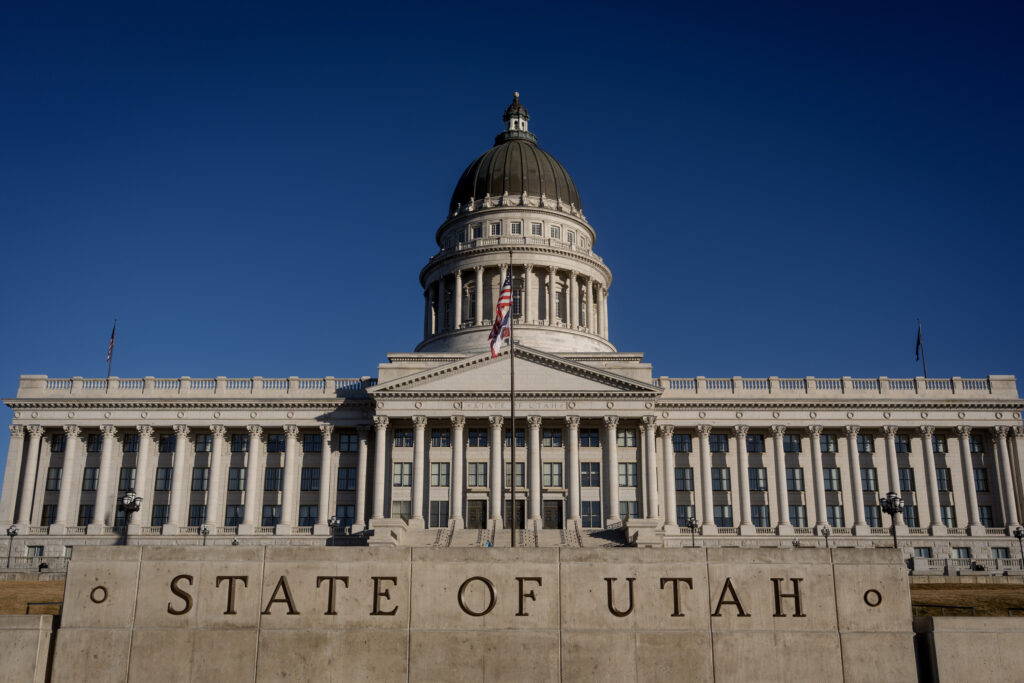

The Capitol in Salt Lake City is pictured on the first day of the legislative session, Tuesday, Jan. 20, 2026. (Photo by Spenser Heaps for Utah News Dispatch)
For almost 50 years, the Disability Law Center (DLC) has served Utah as the state’s Protection and Advocacy Agency (P&A), providing free legal services statewide by enforcing and advancing the legal rights, choices, and opportunities of Utahns with disabilities. There are 57 organizations like ours, serving every state and territory in the country. Recently, our agency and our network have come under attack, highlighted in a recent opinion piece.
The P&A network was created in the 1975 with the Developmentally Disabled Assistance and Bill of Rights Act (DD Act). When amended in 2000, it was noted that the purpose of the DD Act “is to assure that individuals with developmental disabilities and their families participate in the design of and have access to needed community services, self-determination, independence, productivity, and integration and inclusion in all facets of community life, through culturally competent programs” including the work of the P&As like the DLC.
The Cicero Institute, an Austin-based organization with only nine years history and no meaningful ties to Utah, has offered a punitive approach to treatment and services for Utahns with disabilities, including the expansion of forced treatment and institutionalization. In the Nov. 20, 2025, Homeless Services Board meeting, they recommended an expansion of “civil commitment processes to include substance abuse and expanding involuntary psychiatric holds beyond 72 hours for a maximum of 60 days for certain substance abuse cases,” and allowing “civil commitments to include repeated and continuous violations of the social order.” The expansion of civil commitment, forced treatment, and institutionalization are not novel ideas. They roll back decades of progress in behavioral health treatment.
Utahns deserve solutions that lift people up — not lock them away. These proposals may sound like progress, but they divert resources from what truly works: affordable housing, community mental health, and wraparound supports that keep families stable and individuals thriving. Institutionalizing our most vulnerable neighbors will not solve homelessness — it will hide it, at a staggering cost to taxpayers and human dignity. We can choose a better path: invest in housing, expand proven services, and build a system rooted in compassion and evidence.
While the Cicero Institute has made similar efforts in other states, they have never contacted the DLC to learn about our work with those with mental illness, our policy advocacy concerning the mental health system, or understand our position on civil commitment. As far as we’re aware, the Cicero Institute has not spent hours visiting mental health facilities across Utah, speaking with countless individuals with serious mental illness, including those experiencing homelessness, or documenting and reporting instances of abuse and neglect of Utahns with mental illness. The DLC has, as have P&As across the nation.
The DLC’s work has helped numerous Utahns with mental illness find and keep their jobs and receive an appropriate education. We have done systemic investigations that highlight problems in the mental health system, including in institutional settings where there has been horrific abuse and neglect. The DLC never blocked treatment for individuals with mental illness and has consistently fought for access to care and supportive services. Similarely, the claim that lawsuits or the threat of litigation from P&As cause individuals to leave hospitals prematurely or without proper aftercare is false. P&As serve as advocates for proper discharge planning and access to necessary services.
Furthermore, Cicero’s claim that clinical psychiatric settings carry fewer concerns about problematic conditions due to state oversight is a laughable position. The DLC has frequently documented problems with that oversight, including repeated sexual assaults at a psychiatric facility that was colloquially known as “the rape hospital.”
The research cited by the opinion piece is questionable. The Government Accountability Office report referenced actually notes that that those with mental illness “can face abuse, neglect, and rights violations in both institutional and community treatment settings… and that state (P&A mental illness) programs play an important role in reducing these serious issues for this vulnerable population.” We file nine federal reports each year that we’re happy to share because we’re proud of our work, and we can cite our sources.
While we continue to work with our Legislature and Sen. Todd Weiler on his resolution regarding the DLC’s designation as Utah’s P&A, it is unfortunate that an out-of-state entity that has never spoken to the DLC and knows little about the work of the P&As would use this opportunity to attack. Organizations dedicated to protecting the rights of people with disabilities should be celebrated, not diminished. We can only hope the Utah State Legislature agrees.