Utah News Dispatch
Utah veterans may be able to take an ‘occupational crosswalk’ into the workforce


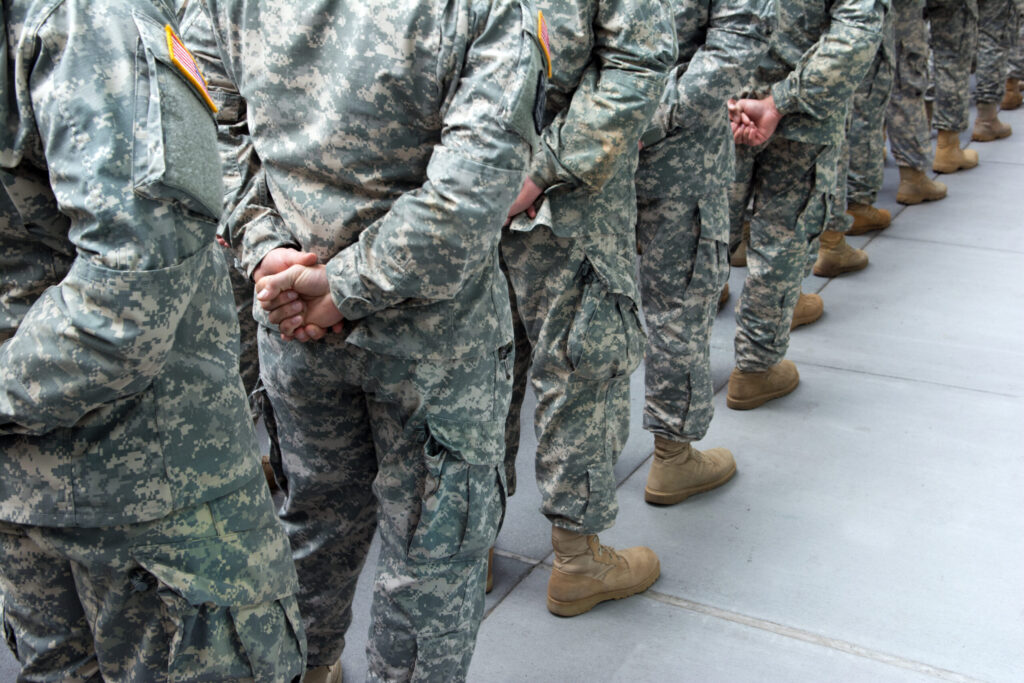


Soldiers line up for the annual New York City Veterans Day Parade. (Getty Images)
Veterans and service members in Utah may have an easier way to transition back into the workforce next year, when lawmakers consider a bill counting their skills learned in the military toward state occupational licensing coursework.
The Veterans and Military Affairs Commission had an initial view of the draft sponsored by Sen. Heidi Balderree, R-Saratoga Springs, that would direct the Utah Division of Professional Licensing to create a public document identifying where military experience is substantially equivalent to state licensing requirements in consultation with the Utah Department of Veterans and Military Affairs.
SUBSCRIBE: GET THE MORNING HEADLINES DELIVERED TO YOUR INBOX
“Right now, many veterans complete rigorous, high-level training in the armed forces, skills that often match or exceed civilian standards, but they still face redundant coursework or certification hurdles when applying for a professional license,” Balderree told the commission on Monday.
The bill would also require the division to count verified military training and experience toward civilian licensure. A report due late 2028 would inform the Legislature how the program has been utilized.
During the meeting, Jason Chipman, director of public policy at the Libertas Institute think tank, said the legislation is modeled after the “military occupational crosswalk” implemented in Pennsylvania, a law that eases and expedites the path to licensure for service members, veterans and their spouses.
SLC ranked among ‘most patriotic cities,’ but how many veterans use their benefits?
“All of the money and time that we spend putting somebody through school, through all the training year after year, especially if they if they do a career in the service, is almost wasted when they get out and they’re told they can’t keep doing what they were trained to do in the civilian world,” Chipman said, “even though they’re probably just as qualified, if not more, than many civilians are.”
Veterans and service members would still be required to take exams for certain licenses, but could skip mandatory training for skills they acquired in the military.
The Libertas Institute has already created a document to advise the Division of Professional Licensing on equivalences between licenses and military occupational job duties. Mostly it tackles some of the “heavy jobs,” Chipman said.
Under the proposal, veterans trained on pavement, construction equipment, quarrying or cargo work could fast-track their crane operator license, Navy barbers could count military work hours toward a cosmetology license, and so on.
Mark Steinagel, director of the Division of Professional Licensing said his office is eager to become a leader in helping military members and veterans to receive credit for their education and experience. However, the division is neutral on the proposal after the bill sponsor updated the draft with a couple of suggestions that moved some dates and eliminated the potential requirement to create a complete new interface for the system.
“Probably the primary reason we’re neutral is that the current bill draft probably has a fiscal impact,” Steinagel said. “And of course, we need to support whatever budget the governor submits.”