
Editorial
Reclaiming Jefferson’s University: Academic Freedom, Civic Renewal, and the Utah Model
Thomas Jefferson envisioned education as essential for liberty, founding the University of Virginia to cultivate an informed citizenry capable of self-governance. However, modern universities have veered from this mission, resulting in widespread civic illiteracy. Utah’s Senate Bill 334 aims to restore civic education and philosophical inquiry to higher education, ensuring students engage with foundational texts and ideas.


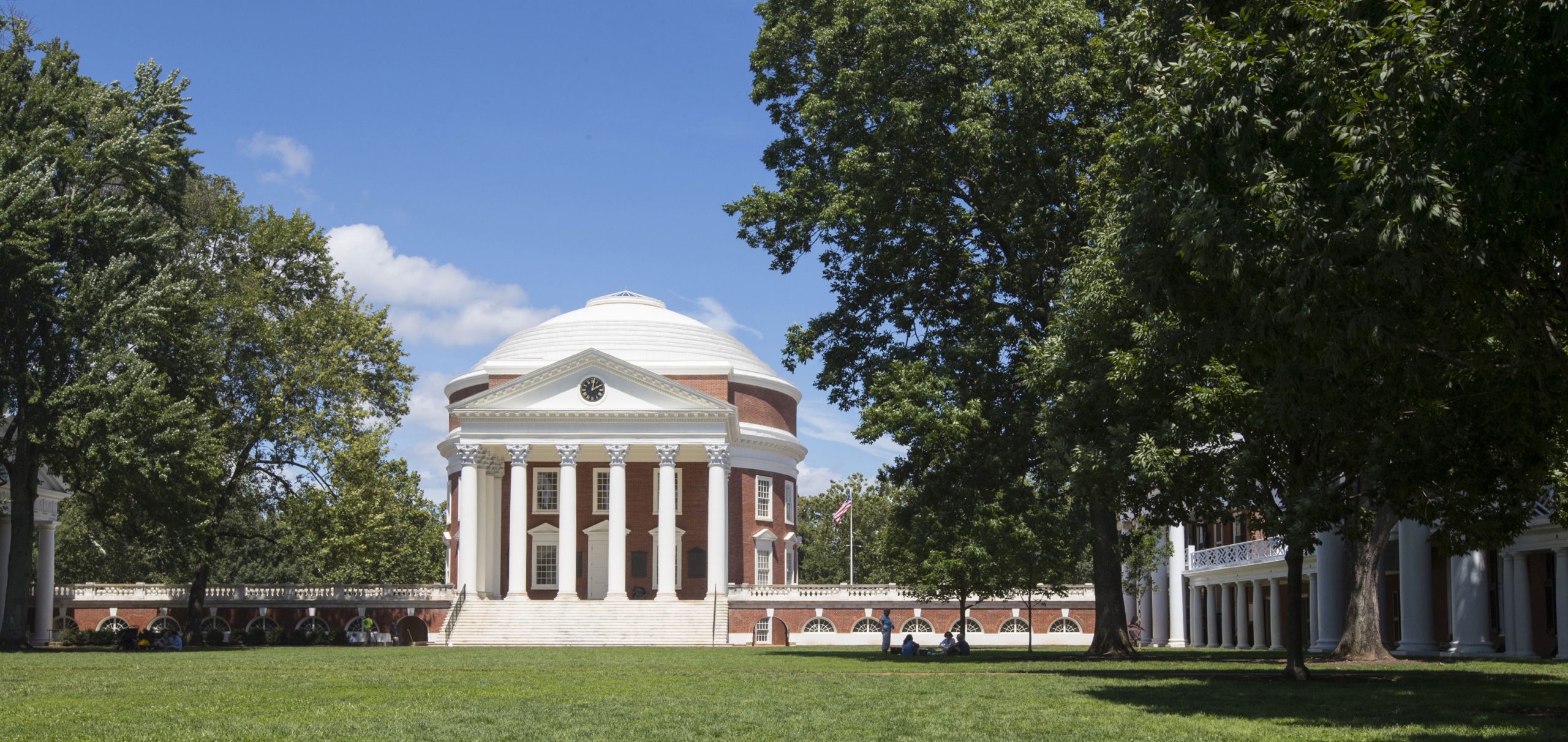


The Rotunda photo courtesy University of Virginia
“Educate and inform the whole mass of the people… They are the only sure reliance for the preservation of our liberty.”
—Thomas Jefferson
I. Jefferson’s Vision: A University for a Republic
Thomas Jefferson considered the founding of the University of Virginia not merely an academic project, but a political imperative. For him, education was the essential safeguard of liberty—not a luxury of the elite, but a lifeline of the republic. A citizenry untrained in reasoning, unversed in history, and unmoored from moral reflection could not long sustain the institutions of self-government. It was with this conviction that Jefferson turned to architecture, curriculum, and civic philosophy to build a new kind of university for a new kind of nation.
Unlike the colleges of Europe—many of which were entangled with ecclesiastical authorities or aristocratic privilege—Jefferson envisioned a public university governed by citizens, dedicated to reason, and structured to serve a free society. The university he designed would have no chapel, a then-radical decision meant to uphold “the illimitable freedom of the human mind.”¹ It would be governed by a lay Board of Visitors, not a church hierarchy. It would teach moral philosophy, political theory, mathematics, natural science, and classical languages—but no catechism. Students would not be trained in what to believe, but taught how to think.
Jefferson’s physical design for the University of Virginia was itself a philosophical statement. At its center stood the Rotunda, modeled on the Roman Pantheon, a symbol of reason and intellectual majesty. It was not placed above students in a distant tower or hidden behind cloisters. Instead, it anchored the top of an open, terraced lawn, flanked by student and faculty residences—a physical embodiment of open dialogue, republican equality, and moral formation.
This was not mere aesthetic preference. It was political architecture. Jefferson believed that just as the republic needed checks and balances to avoid tyranny, it needed schools of thought to counter ignorance. Universities, in his view, were not neutral vessels—they were deliberate instruments of civic cultivation.
“If a nation expects to be ignorant and free… it expects what never was and never will be.”²
The curriculum Jefferson envisioned included the study of history, law, moral philosophy, mathematics, languages, and the physical sciences. But more than that, it was intended to equip students with what he called “habits of reflection and the capacity for self-government.” His ultimate goal was a society where freedom was sustained not by force or fear, but by the reasoned will of an educated citizenry.
He did not pretend that education guaranteed virtue, but he was convinced that ignorance guaranteed servitude. The university, then, was not merely a place of inquiry—it was a pillar of the republic, the “bulwark of liberty.”
Jefferson’s vision excluded many—women, the enslaved—but its core idea endures: liberty demands learning. SB334 extends this to all Utah State students, reflecting a republic he imagined but didn’t fully realize.
In Jefferson’s eyes, a democratic people could not long remain free if they ceased to understand what made them so. The university, when properly ordered, would serve as the intellectual inheritance chamber of the nation, transmitting its best principles from one generation to the next.
“The university was never meant to isolate truth—it was meant to illuminate liberty.”


PoliticIt Radio – The Light on the Lawn
II. The Modern Malaise: The Collapse of Civic Education
Two centuries after Jefferson laid the intellectual foundations of the University of Virginia, the American university has, in many ways, wandered from its civic mission. While our campuses have grown in size, amenities, and specialization, their commitment to the fundamental task of forming citizens capable of sustaining a republic has dramatically weakened.
This is not mere conjecture. It is empirically measurable.
According to a 2022 survey by the Annenberg Public Policy Center, only 47% of Americans can name all three branches of government.³ More than one in four cannot name even a single right guaranteed by the First Amendment. The public square is increasingly filled with citizens who are politically impassioned but civically illiterate. The collapse of civic education is not a theoretical threat—it is a present and growing reality.
Worse, this civic deficiency often worsens rather than improves during college. Many students graduate from our most prestigious universities never having studied the Constitution, never having read the Declaration of Independence, and never having encountered the classical texts that shaped the American idea of liberty. They know slogans, but not sources; grievances, but not foundations.
General education programs—once the shared intellectual core of the undergraduate experience—have become fragmented, incoherent, and often ideologically loaded. A 2022 report by the American Council of Trustees and Alumni (ACTA) found that only 18% of colleges and universities require a course in U.S. government or history.⁴
In their place are courses with narrow topical focus and ephemeral cultural appeal. Students may fulfill their general education requirements by studying “The Politics of Beyoncé,” “Climate Grief and Eco-Anxiety,” or “Social Justice in YA Fiction”12—but never read The Federalist Papers, Democracy in America, or Lincoln’s Lyceum Address. Many graduate without any serious engagement with Plato, Locke, Tocqueville, or Douglass.
““This isn’t innovation—it’s a drift from our civic roots.”
Today’s universities balance career preparation and cultural diversity; SB334 complements this by ensuring students also gain civic grounding—skills employers value and democracy demands.
The university that once offered a broad and liberal education now too often offers a marketplace of preferences, a cafeteria of ideologies, or worse—a space where diversity of thought sometimes gives way to conformity.


The result is that general education is no longer general, and education is no longer educative. It trains, it certifies, it categorizes—but it no longer forms. The disintegration of a common curriculum has mirrored the disintegration of common culture.
The tragedy is not simply that students are no longer introduced to the foundations of the West or the American experiment. The deeper tragedy is that they are increasingly taught to distrust or deconstruct these very foundations without ever having first understood them. Many are taught to dismantle a system they have never seriously studied.
“They are taught what to disrupt, but not what to defend.”
We are raising a generation that lacks not only historical memory but philosophical vocabulary. Without the words to name their inheritance, they will not know when it is being taken from them.
If Jefferson’s nightmare was a free people slipping into ignorance, we now stand squarely in that twilight. What began as curricular neglect has become cultural erosion.
III. Academic Freedom: Principle, Misuse, and the Path to Restoration
To reform higher education today, one must first navigate the charged terrain of academic freedom—a principle rightly cherished but too often misunderstood. Originally defined to preserve the integrity of scholarly inquiry, academic freedom is now frequently invoked as a kind of sovereign immunity, shielding even the most unserious or ideologically partisan curricula from public scrutiny.
The critique that SB334 constitutes external interference in the academy overlooks a central fact: this legislation does not impose a new tradition—it reclaims an old one. The ideas at the heart of SB334—liberty, the American founding, constitutionalism, markets, and the philosophical inheritance of the West—were not authored by lawmakers in a vacuum. They were curated, debated, and taught for generations within the academy itself. What has changed is not the tradition, but the academy’s willingness to defend and transmit it.
Far from undermining academic freedom, SB334 affirms the university’s public trust. The four-course sequence it establishes is a response to the erosion of that trust—a direct effort to recover the coherence, seriousness, and civic purpose that once defined general education. Faculty play a meaningful role in shaping the course syllabi, ensuring that its implementation reflects both scholarly standards and public aims. The bill’s civic and intellectual framework emerges not from political fiat but from centuries of academic consensus, now too often dismissed in favor of fragmented electives or ideologically narrow inquiry.
Even the AAUP’s 1915 Declaration understood that academic freedom is not a license for institutional drift. It is a structured liberty, contingent on the pursuit of truth and the fulfillment of the university’s obligation to the public. SB334 does not disrupt that vision—it renews it. The original defenders of academic freedom understood it as a conditional trust, not an unlimited license.
In its 1915 Declaration of Principles, the American Association of University Professors (AAUP) declared:
“The liberty of the scholar within the university to set forth conclusions… is conditioned by their being the logical results of trained methods and honest investigation.”⁵
Freedom in the classroom was never meant to become freedom from standards. It was predicated on rigorous inquiry, fair-mindedness, and responsibility to truth. Professors were entrusted with intellectual liberty because they were public servants in pursuit of the common good, not because they were insulated from accountability.
But this balanced vision has eroded. In many institutions, academic freedom has come to mean unrestricted autonomy for faculty regardless of curricular coherence, intellectual diversity, or civic consequence. The result has been a culture of ideological rigidity, where certain viewpoints dominate and dissent is chilled.
A 2023 study by the Foundation for Individual Rights and Expression (FIRE) found that 63% of college students report self-censorship in the classroom, fearing social or academic backlash.⁶ Over 70% of surveyed universities maintain policies that explicitly restrict constitutionally protected speech.
The environment that once celebrated open inquiry now often punishes heterodoxy.
This is not the academic freedom Jefferson envisioned, nor what the AAUP defined. It is, at best, a distortion—and at worst, a retreat from the courage inquiry demands.
“Academic freedom has been transformed from a covenant of courage into a tool that can shield conformity.”
The irony is that while some faculty decry SB334 as an attack on academic freedom, it is precisely this principle—properly understood—that the bill seeks to protect. By creating space for a curriculum rooted in foundational texts and philosophical inquiry, SB334 ensures that students encounter multiple intellectual traditions, including the very ones being suppressed elsewhere.
SB334 creates a civic and intellectual framework for a four-course general education sequence—not to mandate dogma, but to restore direction. These courses—focused on the American political tradition, constitutional government, economic liberty, and the philosophical and literary heritage of the West—anchor general education in the enduring questions and ideas that prepare students for self-government.
This framework is not imposed from without; it arises from within the very traditions the academy once championed. Themes such as liberty, constitutionalism, and the Western canon were long considered essential components of a liberal education. SB334 does not fabricate them—it re-centers them. The framework defines the mission and scope of the courses, ensuring public institutions serve public purposes. Faculty retain discretion in delivery, but the destination is not up for debate.
In this light, SB334 is not a threat to academic freedom. It is a rescue operation—a modest effort to restore the conditions under which that freedom can be meaningful: a shared vocabulary, a reverence for truth, and a willingness to engage with the best that has been thought and said.
Without these, academic freedom becomes little more than an empty slogan—repeated but rarely realized.
“Freedom without formation is not education—it’s entropy.”


IV. Utah’s Response: From SB226 to SB334
Faced with the national erosion of civic education, the Utah Legislature took deliberate and incremental steps toward recovery. What emerged was not an impulsive reaction, but a measured, multi-year effort to re-center public universities around their original civic mission.
In 2024, I introduced Senate Bill 226, the School of General Education Act. Its purpose was straightforward: to restore coherence, seriousness, and civic relevance to the general education curriculum at Utah’s public institutions. The bill proposed that all students complete a core sequence of courses rooted in moral and political philosophy, Western civilization, and American constitutionalism.
Though SB226 did not advance beyond committee, it succeeded in a critical respect: it launched the conversation. University presidents, department chairs, student leaders, and national scholars took notice. The debate that followed—sometimes spirited, often sincere—made clear both the need for reform and the importance of collaboration in executing it well.
Rather than retreat from the issue, we chose to refine it.
In 2025, Representative Karianne Lisonbee and I co-sponsored Senate Bill 334, which emerged from months of consultation, negotiation, and institutional input. SB334 retained the essential goal of its predecessor—to restore civic formation as a central aim of higher education—but focused its implementation through a pilot initiative: the creation of a Center for Civic Excellence at Utah State University.
The Center’s charge is both academic and philosophical: to design and deliver a four-course general education sequence that re-engages students with the foundational texts, debates, and virtues of a free society. Its courses are:
• Three interdisciplinary humanities seminars, exploring human nature, political obligation, virtue, justice, reason, faith, and freedom.
• One course in American institutions, examining the Constitution, separation of powers, natural rights, federalism, and civic responsibility.
These courses are writing-intensive, designed not only to expose students to great texts but to cultivate their capacity for clear, reasoned, and persuasive expression. The emphasis is on dialogue, deliberation, and disciplined argumentation—skills essential not only in the academy, but in the public square.
The critique that SB334 constitutes external interference in the academy overlooks a central fact: this legislation does not impose a new tradition—it reclaims an old one. The ideas at the heart of SB334—liberty, the American founding, constitutionalism, markets, and the philosophical inheritance of the West—were not authored by lawmakers in a vacuum. They were curated, debated, and taught for generations within the academy itself. What has changed is not the tradition, but the academy’s willingness to defend and transmit it.
Far from undermining academic freedom, SB334 affirms the university’s public trust. The four-course sequence it establishes is a response to the erosion of that trust—a direct effort to recover the coherence, seriousness, and civic purpose that once defined general education. Faculty play a meaningful role in shaping the course syllabi, ensuring that its implementation reflects both scholarly standards and public aims. The bill’s civic and intellectual framework emerges not from political fiat but from centuries of academic consensus, now too often dismissed in favor of fragmented electives or ideologically narrow inquiry.
Even the AAUP’s 1915 Declaration understood that academic freedom is not a license for institutional drift. It is a structured liberty, contingent on the pursuit of truth and the fulfillment of the university’s obligation to the public. SB334 does not disrupt that vision—it renews it.
“The legislature sets the civic mission. The faculty shapes the intellectual map.”
It is also important to clarify a constitutional and historical reality often overlooked in these debates: public officials—whether legislators, boards of trustees, or governing regents—have long exercised rightful authority over the general framework of public education. This is not a disruption of academic freedom; it is a reaffirmation of the public trust. General education requirements, especially at public universities funded by taxpayers, have always involved public input and oversight. Legislators set the destination; faculty determine the route. SB334 simply reorients the compass toward a civic goal that is as old as the university itself—forming citizens capable of sustaining a free society.
“This is not a revolution in governance. It’s a restoration of rightful responsibility.”
The readings for these courses are to be drawn from a wide array of texts, including but not limited to the Western canon. Plato and Cicero will sit alongside Achebe and Woolf. Augustine and Locke may be paired with Douglass and Confucius—as faculty see fit, ensuring a rich, varied dialogue.
“SB334 doesn’t impose ideology. It invites inquiry. It doesn’t indoctrinate—it educates.”
The purpose is not antiquarianism. These texts are not chosen because they are old, but because they are enduring—because they confront the permanent questions of political and moral life. They are, in Matthew Arnold’s phrase, “the best that has been thought and said,” and they remain our most reliable guides for understanding human dignity, social order, and political freedom.
The creation of the Center for Civic Excellence is thus not a retreat into the past, but a recovery of first principles—an attempt to ensure that students inherit not just information, but orientation.
“We’re not turning back the clock. We’re putting the compass back in students’ hands.”
SB334 does not reject modernity. It simply refuses to reduce education to workforce preparation or ideological signaling. It recognizes that public universities must serve the public by cultivating not only employable skills, but enlightened judgment—the kind of judgment Jefferson saw as essential to the survival of liberty.
By rooting general education in foundational questions and permanent texts, SB334 offers students something too rare in contemporary higher education: a shared intellectual inheritance, and the tools to steward it.
V. Rebutting the Critics: Myths, Misreadings, and Misguided Resistance
The passage of SB334 was met with enthusiasm by many Utahns—but also, predictably, with resistance from certain corners of the academic establishment and progressive media. In a Salt Lake Tribune opinion piece dated March 14, 2025, faculty members at Utah State University charged that the bill was “an attack on higher education,” describing it as “ideologically driven,” “intellectually regressive,” and “dangerous to academic freedom.”⁷
Such claims do not withstand scrutiny.
Let us address them directly.
MYTH #1: “SB334 was rushed through the legislature without sufficient input.”
Reality: SB334 followed over a year of public debate initiated by SB226. The original bill, introduced in 2024, failed in committee—but its introduction sparked widespread discussion among lawmakers, educators, and citizens. Rather than abandon the reform effort, legislators engaged in an iterative process of refinement. SB334 was the result of that deliberation, not its replacement.
“This wasn’t a rushed revolution. It was a reflective restoration.”
MYTH #2: “The bill imposes an ideology on the curriculum.”
Reality: SB334 entrusts faculty with implementation through a multidisciplinary curriculum committee. Professors select readings, structure syllabi, and guide instruction—but within the civic and intellectual framework established by law. This honors the proper role of academic freedom: not detachment from public purpose, but engagement in service of it.
The tradition of the Great Books, civic education, and the liberal arts arose from the academy, not from legislative mandate. SB334 respects this lineage by asking faculty to steward, not resist, that inheritance. Professors remain the authoritative voices in shaping how the material is taught—but the what and why have already been justified by the very history of the university itself.
Academic freedom here is rightly conditioned by public trust. Faculty autonomy is preserved where it matters—in interpretation and pedagogy—but exercised within a framework that reasserts the academy’s obligation to the republic it serves.
“This isn’t a mandate—it’s a mission. The content is curated by scholars, not senators.”
MYTH #3: “SB334 promotes a Western or Christian supremacist worldview.”
Reality: The bill’s aim is not to enshrine one tradition, but to ensure that students understand the ideas that shaped the American political order. These include voices from the Western canon—Plato, Cicero, Locke—but also non-Western and postcolonial voices like Confucius, Achebe, and Douglass. The inclusion of Christian thinkers like Augustine or Boethius does not make the curriculum religious; it reflects their role in shaping civic ideas faculty deem essential—ideas secular society inherited.
“Religion is part of Western civilization, but Western civilization is not reducible to religion.”
“SB334 doesn’t proselytize—it contextualizes. It doesn’t preach—it teaches.”
To study Augustine is not to convert. It is to understand the development of political theology, the nature of justice, and the concept of dual citizenship in city and state. The Salt Lake Tribune’s suggestion that SB334 represents a “rise of Christianity in public education” confuses catechism with curriculum—and, ironically, reveals a dogmatism more rigid than the bill itself.

MYTH #4: “SB334 displaces essential writing instruction.”
Reality: Far from replacing composition, SB334 strengthens it. All four required courses are writing-intensive and built around argumentative engagement with enduring ideas. Students won’t just write more—they’ll write with purpose. Rather than learning to write for writing’s sake, they’ll be writing about justice, freedom, responsibility, and the moral condition of man.
“SB334 teaches students to write—and gives them something worth writing about.”
MYTH #5: “This is a partisan effort to take over the university.”
Reality: There is nothing partisan about reading the Constitution. There is nothing ideological about engaging with Plato, Locke, or Lincoln. These are not culture war provocations—they are the pillars of a serious education. What is ideological is the status quo, where the canon is often dismissed, and students are too frequently guided by ephemeral trends rather than enduring texts. SB334 doesn’t politicize the curriculum; it reclaims it. It restores coherence and civic purpose to general education in a way that reflects centuries of academic tradition and the rightful expectations of a free society.
“If teaching the Constitution is political, the problem isn’t the legislation—it’s the academy.”
Some argue that SB334 reduces faculty freedom or narrows student choice. In reality, it addresses the long-standing fragmentation of general education by offering a cohesive intellectual experience, rooted in foundational texts and civic responsibility. The four-course sequence is not a restriction—it is a revival of general education as it was once understood: a common intellectual foundation for all students.
The law leaves ample space for elective diversity and disciplinary exploration elsewhere in the curriculum. What it restores is a shared core, grounded in the principles of ordered liberty and the philosophical traditions of the West. Academic freedom, as originally conceived, thrives within such a structure—it depends on institutions having the courage to define and defend what matters most.
By integrating philosophy, history, politics, and economics, SB334 cultivates the habits of mind essential for citizenship in a constitutional republic. It does not constrain inquiry—it directs it toward enduring questions. In doing so, it reclaims the academy’s public mission and reorients higher education toward truth, virtue, and civic renewal.
Ultimately, critics of SB334 mistake structure for suppression, and restoration for regression. This bill doesn’t limit education—it rescues it. It gives students what too many have been denied: the opportunity to wrestle with the great questions, to encounter the great books, and to become the kind of citizens a constitutional republic requires. All it does is give students the education they deserve—the kind of education that too many universities have abandoned.
V-a. Legislating with Principle, Not Dogma
As the legislative sponsor of both SB226 (2024) and SB334 (2025)—alongside Representative Karianne Lisonbee—I can speak plainly and with full clarity of intent: this legislation was never designed to promote religious doctrine or establish a state-sanctioned faith tradition. It was designed to restore intellectual seriousness and civic formation in the public universities funded by the people of Utah.
Yet some critics have claimed otherwise. In a Salt Lake Tribune op-ed, SB334 was described as heralding “the rise of Christianity in public education.” That statement is not just inaccurate—it is a profound distortion of the bill’s purpose, design, and philosophical foundation.
Let us set the record straight.
SB334 establishes a Center for Civic Excellence, not a Department of Theology. Its curriculum is grounded in philosophical, political, and literary inquiry, not religious dogma. While the course sequence includes texts from Christian thinkers such as Augustine or Boethius, they appear not to preach, but to probe justice and order—ideas faculty ensure remain philosophical, not theological.
The Christian tradition, like the Jewish, classical, Enlightenment, and postcolonial traditions, is part of the fabric of Western civilization. To omit it would be historically dishonest. To include it is intellectually honest. And to examine it through critical reading, discussion, and writing is precisely what a university should do.
“Religion is part of Western civilization, but Western civilization is not reducible to religion.”
What SB334 restores is intellectual pluralism—not religious orthodoxy. Students will read Locke and Douglass, Plato and Achebe, Confucius and Woolf. They will not be told what to believe. They will be asked to grapple with questions of belief, justice, authority, virtue, and freedom—across traditions, cultures, and centuries.
“SB334 doesn’t proselytize—it contextualizes. It doesn’t preach—it teaches.”
Those who object to Augustine’s presence in the curriculum rarely object to the near-ubiquity of critical theory, Marxist frameworks, or identity-driven ideologies in general education courses across the country. The inconsistency is revealing: the problem isn’t religion—it’s tradition. For many, what’s truly offensive is not theology, but the idea that there might be truths worth preserving.

What SB334 affirms is that our students deserve better. They deserve more than fashionable dogmas and siloed grievances. They deserve an education that grounds them in the best of our inherited wisdom, even as it invites them to critique and contribute to it.
The whole point of SB334 is to create a viewpoint-diverse, non-ideological curriculum. The humanities sequence will be predominantly—though not exclusively—grounded in the Western intellectual tradition. That is not an innovation; it reflects the current structure of many general education programs. But unlike many contemporary offerings, SB334’s curriculum draws from a tradition that is inherently diverse, dynamic, and self-critical.
“The Western canon is not a monologue—it’s a centuries-long argument.”
A curriculum that teaches both Adam Smith and Karl Marx, both Augustine and Nietzsche, is not trying to brainwash students into a particular worldview. It is exposing them to dramatically different, often incompatible, visions of human nature and society—each of which has profoundly shaped our world. This is not indoctrination. It is formation.
The aim is not to tell students what to think, but to train them how to think, how to communicate, how to analyze, and how to wrestle with complexity and contradiction.
“This isn’t about training students in one way of thinking. It’s about training them to think—period.”
This is not religious education. It is civic education—Jeffersonian in spirit, republican in purpose, and public in accountability.
And in that light, the claim that this legislation represents a “rise of Christianity” is not only false—it is a form of cultural amnesia. It ignores the diverse traditions that shaped our institutions, and it misrepresents the very idea of a university.
SB334 does not ask students to believe anything. It asks them to understand everything worth knowing about the civilization they are poised to inherit.
VI. Unburdened by What Has Been? A Dangerous Creed
In recent years, one phrase has surfaced repeatedly in speeches by former Vice President Kamala Harris: “We must be unburdened by what has been.” Delivered with rhetorical flair, the line has become something of a motto for a particular vision of social and political change—one that views the past less as a foundation to understand than as a weight to discard.
At first hearing, the phrase may sound inspirational. Who doesn’t want to be free of injustice, prejudice, or inherited error? But taken seriously, this mantra is not a call to reform. It is a call to rupture—an appeal to sever ourselves from tradition, history, and even memory.
“‘Unburdened by what has been’ sounds poetic—until you realize it’s the motto of every ideology that replaced wisdom with rubble.”
It is not a coincidence that the most radical revolutions—from the French to the Marxist to the Maoist—have all sought to erase the past. The goal is always the same: to create the “new man,” the liberated self, unshackled from inherited norms and unmoored from existing institutions. History becomes a burden. Culture becomes a chain. Truth becomes a construct.
This mindset is not merely anti-historical. It is anti-civic, for it undermines the very basis of republican education.
Contrast this with Jefferson, who wrote of the need to pass down “the habits of reflection and the capacity for self-government.” Or Lincoln, who warned that a nation forgetful of its past would lose its sense of moral direction. Or Washington, who in his Farewell Address stressed the need for “institutions for the general diffusion of knowledge.”
All understood that while the past is imperfect, it is also indispensable. It provides the narrative scaffolding by which we make sense of justice, freedom, sacrifice, and duty. To be unburdened by it is not to be freed—it is to be disoriented.
SB334 represents the opposite approach. It calls not for forgetting, but for formative remembering. It insists that students must understand the ideas that made freedom possible before they rush to remake the world. It does not resist progress—but it does resist amnesia.
“We’re not unburdening students from the past. We’re equipping them to carry it—critically, carefully, and with courage.”
To engage the past is not to be trapped by it. It is to test it, interrogate it, and measure its relevance against enduring human questions. And yes, it is to recognize that some ideas—natural rights, moral equality, the rule of law—are not historical accidents, but moral achievements.
SB334 doesn’t prevent students from critiquing these ideas. It prevents them from never encountering them at all.
VII. National Drift vs. Utah’s Civic Recovery
Across the American higher education landscape, the deterioration of general education is not the exception—it is the norm. Once the bedrock of the undergraduate experience, the core curriculum has been replaced at most universities with a patchwork of hyper-specialized electives that allow students to bypass foundational knowledge in favor of personal preference or political trend.
A student can graduate from many top-tier universities today without ever taking a course in U.S. government, constitutional law, economics, or Western political thought. They are more likely to engage with the language of intersectionality or climate justice than with Lincoln’s Second Inaugural or Madison’s Federalist No. 10.
This drift is not only curricular—it is institutional and ideological. Universities are now governed as much by bureaucratic expansion and branding strategy as by faculty and mission. In many institutions, administrative staff now outnumber full-time professors. Offices of diversity, compliance, and engagement proliferate, while philosophy departments contract and history majors dwindle.
The result is what many scholars have called the hollowing out of the university. The form remains—the libraries, the lecture halls, the diplomas—but the substance is fading. In its place is often a kind of institutionalized activism, where education is treated not as a means to pursue truth, but as a tool to advance policy, preference, or protest.
Public trust in higher education has plummeted accordingly. A 2023 Gallup survey found that only 36% of Americans express confidence in the leadership of colleges and universities—a sharp decline from just a decade prior.⁹ Among conservatives and independents, the numbers are even lower.
And yet, amid this national malaise, Utah stands apart.
Rather than succumb to the intellectual trends of the hour, Utah has chosen to recover the principles that made public education valuable in the first place. With the passage of SB334, the state has aligned itself not with the whims of academia, but with the enduring wisdom of the American founding—and with Jefferson’s vision that public universities should serve the republic, not replace it.
“In a time of drift, Utah chose direction. In a culture of confusion, it chose clarity.”
SB334 does not attempt to replicate the old curriculum word-for-word. It honors its spirit by adapting it to a pluralistic, twenty-first-century student body. Its faculty-led model protects intellectual freedom. Its interdisciplinary scope allows for voices from both East and West, ancient and modern. Its writing-intensive design promotes intellectual discipline, not just ideological engagement.
Other states are taking notice. SB334 equips Utah State students with civic tools. Its success here could inspire others, but its focus is Utah’s public good, funded through existing state resources.
If these efforts succeed, it will not be because of a cultural backlash. It will be because a new generation of citizens—and their representatives—recognized that freedom without formation is fragile, and that higher education cannot fulfill its public trust if it abandons the public good.
“Utah is not imposing a new orthodoxy. It is reviving the university’s original calling: to form free citizens, capable of self-rule.”


“Reading Federalist No. 10 showed me why debate matters—it’s not just old words, it’s our system.”
USU Freshman
VIII. Jefferson, Washington, Tocqueville: A Triumvirate of Civic Wisdom
The philosophical foundation of SB334 is not partisan. It is not even uniquely American. It is drawn from the accumulated wisdom of those who understood that freedom is not the default condition of mankind, but a fragile inheritance that must be taught, renewed, and defended.
No single figure shaped this vision more than Thomas Jefferson, whose lifelong commitment to civic education was both radical and enduring. In his correspondence and public writings, Jefferson made clear that education was not simply an individual good—it was a public duty. As he wrote in a letter to Charles Yancey in 1816:
*“If a nation expects to be ignorant and free… it expects what never was and never will be.”2
For Jefferson, liberty required literacy—not just in reading, but in reason, rhetoric, and republican principle. The university, as he designed it, would be a seedbed of citizenship, not a shelter for private preference.
His vision was echoed by George Washington, whose 1796 Farewell Address remains one of the most profound civic documents in American history. In it, Washington urged the nation to maintain its institutions by ensuring that public opinion be guided by knowledge:
“Promote then, as an object of primary importance, institutions for the general diffusion of knowledge… it is essential that public opinion should be enlightened.”10
Washington feared not foreign invaders, but domestic decay—a people vulnerable to manipulation because they lacked the intellectual tools to discern demagoguery from principle. He saw education as the true national defense.
Nearly four decades later, Alexis de Tocqueville, the French aristocrat turned American admirer, offered a third pillar of this civic philosophy. In Democracy in America, he noted the moral basis of liberty:
“Despotism may govern without faith, but liberty cannot.”¹¹
Tocqueville did not mean institutional religion in the European sense. He meant a shared moral framework—a culture in which conscience was cultivated, restraint was respected, and rights were understood as bounded by responsibilities. What he witnessed in the American township and schoolhouse was a moral ecology, sustained not by force, but by formation.
Together, these three figures—Jefferson, Washington, and Tocqueville—form a triangular frame of civic sanity. They understood that free institutions cannot endure without free minds; that liberty without learning is license; and that democratic life requires moral ballast as much as legal structure.
SB334 places Utah within this tradition—not in name only, but in substance. It does not return us to 1789, 1796, or 1835. It renews the idea that a republic must be taught how to remain a republic, and that this work begins in the classroom, not just at the ballot box.
“The Founders believed liberty needed an education. SB334 delivers one.”
IX. Conclusion: A Restoration, Not a Revolution
SB334 does not seek to overthrow the modern university. It seeks to redeem it—to recover its foundational purpose, restore its moral clarity, and renew its public trust. It does not impose theology, censor dissent, or replace faculty control with legislative fiat. Rather, it reorients public higher education toward the mission it was always meant to fulfill: to form free citizens, capable of sustaining the republic they inherit.
This is not a culture war tactic. It is a civic recovery strategy. And it is long overdue.
For too long, higher education has drifted toward fragmentation, careerism, and intellectual triviality. It has abandoned the idea that there are permanent questions worth asking and enduring texts worth reading. It has, in many cases, traded wisdom for specialization, seriousness for sentiment, and truth for trend.
SB334 marks a turning point.
It says to students: we believe you are capable of great thinking.
It says to professors: we trust you to lead a serious, pluralistic, and rigorous curriculum.
And it says to the public: your investment in higher education should yield not just degrees, but democrats—in the classical sense: citizens capable of self-government.
This is not a partisan vision. It is a Jeffersonian one.
It does not call for indoctrination but for instruction. It does not retreat into nostalgia but advances into formation. It dares to believe that young people, when given real books, real arguments, and real expectations, will rise to the challenge.
“We’re not asking students to forget the past. We’re asking them to understand what has been—and how much it cost to preserve it.”
SB334 is a first step. But it is a bold one. And it places Utah at the forefront of a national movement to rescue civic education—not with slogans or mandates, but with curriculum, courage, and clarity of purpose.
Let Utah be the first state to realign public education with public virtue. May others soon follow.
“You can’t defend liberty if you’ve never studied it. SB334 makes sure our students do.”
APPENDIX A: LEGISLATIVE TIMELINE
• SB226 introduced – 2024
The School of General Education Act was brought forward in the Utah Senate to restore coherence and civic content to general education. Though it failed in committee, it sparked public and institutional dialogue that laid the groundwork for future reform.
• Deliberative development – 2024 to early 2025
After SB226, legislative leaders, university faculty, scholars, and policy experts worked collaboratively to refine the bill into a more focused and institution-specific initiative.
• SB334 introduced – 2025
Co-sponsored by Senator John D. Johnson and Representative Karianne Lisonbee, SB334 created the Center for Civic Excellence at Utah State University and a four-course general education track rooted in civic and philosophical texts.
• SB334 signed into law – March 2025
Governor Spencer Cox signed SB334, marking the most significant reform to general education in a generation and positioning Utah as a national leader in civic renewal through public education.
APPENDIX B: CLARIFYING MEDIA CLAIMS
In a March 2025 opinion piece published by the Salt Lake Tribune, critics claimed that SB334 represented “the rise of Christianity in public education.” This mischaracterization not only misrepresented the legislative text, but also confused philosophical engagement with religious indoctrination.
SB334 does not mandate Christian doctrine, nor does it impose theological commitments. It includes Christian thinkers like Augustine only insofar as they played an integral role in the development of Western civic, moral, and legal thought—just as it includes Confucius, Achebe, Woolf, and Douglass. The curriculum is intellectually pluralistic, faculty-designed, and philosophically rigorous.
To claim that SB334 is a religious project is not only inaccurate—it is a form of historical illiteracy. It erases the reality that religion, philosophy, law, literature, and liberty have always been interwoven in the tapestry of Western thought.
“To include Augustine is not to impose Christianity. It is to tell the truth about what shaped the conscience of the West.”
BIBLIOGRAPHY
• American Association of University Professors. “1915 Declaration of Principles.” AAUP.org.
• American Council of Trustees and Alumni. What Will They Learn? 2022–2023 Report. ACTA, 2022.
• Annenberg Public Policy Center. “2022 Annenberg Constitution Day Civics Survey.” University of Pennsylvania.
• Foundation for Individual Rights and Expression (FIRE). 2023 College Free Speech Rankings. thefire.org, 2023.
• Jefferson, Thomas. “Letter to Charles Yancey,” 6 January 1816. In The Writings of Thomas Jefferson, edited by Andrew A. Lipscomb.
• Tocqueville, Alexis de. Democracy in America. Trans. Harvey C. Mansfield and Delba Winthrop. University of Chicago Press, 2000.
• Washington, George. Farewell Address, 1796.
• Salt Lake Tribune. “Voices: A New Utah Bill is an Attack on Higher Education.” March 14, 2025.
• Salt Lake Tribune. “Gov. Cox Signs Bill Directing Utah Universities to Teach the Great Books.” March 25, 2025.
• The Federalist. “Utah Passes Historic Bill Installing Great Books at All State Universities.” March 25, 2025.
NOTES
1. Thomas Jefferson, letter to George Wythe, August 13, 1786, in *The Papers of Thomas Jefferson*, ed. Julian P. Boyd.
2. Thomas Jefferson, letter to Charles Yancey, January 6, 1816, in *The Writings of Thomas Jefferson*, ed. Andrew A. Lipscomb.
3. Annenberg Public Policy Center, ‘2022 Annenberg Constitution Day Civics Survey,’ https://www.annenbergpublicpolicycenter.org.
4. American Council of Trustees and Alumni, *What Will They Learn? 2022–2023 Report*, https://www.goacta.org.
5. AAUP, ‘1915 Declaration of Principles on Academic Freedom and Academic Tenure,’ https://www.aaup.org.
6. Foundation for Individual Rights and Expression, ‘2023 College Free Speech Rankings,’ https://www.thefire.org.
7. Salt Lake Tribune, ‘Voices: A New Utah Bill is an Attack on Higher Education,’ March 14, 2025.
8. Salt Lake Tribune, ‘Gov. Cox Signs Bill Directing Utah Universities to Teach the Great Books,’ March 25, 2025.
9. Gallup, ‘Confidence in Higher Education Down Sharply,’ 2023, https://news.gallup.com.
10. George Washington, *Farewell Address*, 1796.
11. Alexis de Tocqueville, *Democracy in America*, trans. Harvey C. Mansfield and Delba Winthrop (University of Chicago Press, 2000).
12. Such courses have been offered at institutions like Rutgers and the University of Missouri, often as electives rather than core curriculum.
#AcademicFreedom, #CivicEducation, #GeneralEducationReform, #WesternCivilization, #GreatBooks, #LiberalEducation, #PublicUniversities, #UniversityCurriculum, #CivicVirtue, #JeffersonianEducation, #SB334, #UtahLegislature, #EducationPolicy, #HigherEdReform, #UtahModel, #CenterForCivicExcellence, #PublicEducationPolicy