Candidates for Public Office
Brooks Benson: Protecting Liberty in the Age of Surveillance.
Brooks Benson, Republican nominee for Utah Senate District 11, is preparing for the Legislature with a focus on constitutional rights, responsible growth, and practical problem-solving. After securing 73 percent of the convention vote, Benson has turned his attention to Fourth Amendment protections in an era of cameras, artificial intelligence, and centralized data. He supports technology that helps law enforcement while arguing for clear limits on access, retention, profiling, and surveillance. Benson also discusses infrastructure, water, energy, and the challenges facing one of Utah’s fastest-growing areas today.

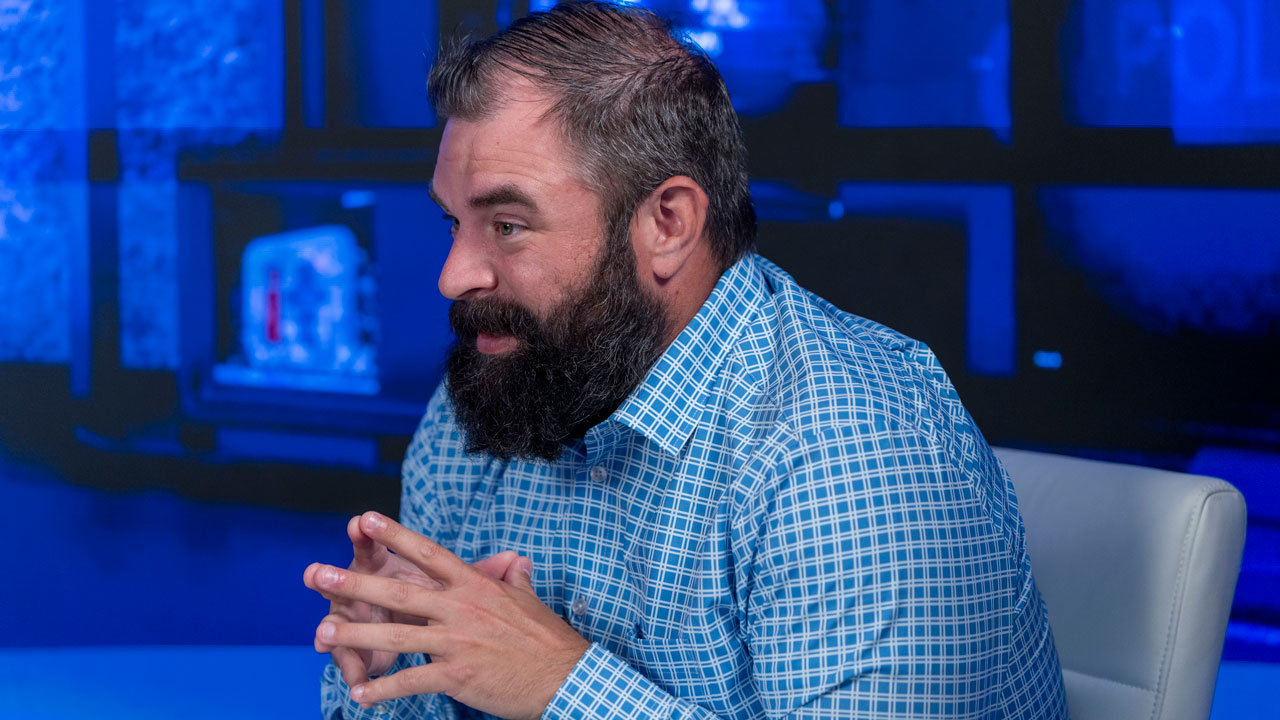
Benson came through a three-way convention race with 73 percent of the vote, clearing the 60 percent threshold required to become the Republican nominee without going to a primary. He credits the result to a straightforward campaign approach: knock doors, meet people, work hard, and keep learning along the way.
It was a cordial race, but Benson treated it seriously. He says the campaign process helped him refine himself as a candidate, understand the district better, and build connections with the people he hopes to represent. With the nomination secured, his focus turned to the general election, where he expected another three-way race involving a Forward Party candidate and a Democrat.
PoliticIt Radio – Where Liberty Still Stands
Key Takeaways
- Benson won the Republican nomination for Utah Senate District 11 with 73 percent at convention.
- His leading legislative interest is protecting Fourth Amendment rights as surveillance technology and data aggregation expand.
- He supports public safety tools but wants clear limits on data access, retention, use, and profiling.
- District 11’s rapid growth makes infrastructure, energy, water, and long-term planning major priorities.
Flock Cameras, Data, and the Fourth Amendment
Why has the debate over Flock cameras become a central issue for Benson?
Benson’s concern is not limited to cameras themselves. In his view, the real issue is whether modern technology is outpacing the privacy protections guaranteed by the Fourth Amendment.
The Fourth Amendment protects against unreasonable searches and seizures. Benson argues that as technology has changed, lawmakers have had to keep redefining how that principle applies, from homes to vehicles and now to data, automated cameras, artificial intelligence, and large-scale digital tracking.
His objective is to make sure the original purpose of the Fourth Amendment remains meaningful in a world that can collect, store, connect, and search information at a scale that was never possible before.

Is the concern about cameras in public places?
Not exactly. Benson acknowledges that people have less privacy in public than they do inside their homes. But he rejects the idea that being in public means a person gives up every privacy interest.
He compares the issue to ordinary filming. Someone may generally be able to record in public, but continually following a person who asks not to be followed can cross into harassment or stalking. Benson’s question is whether government systems should be allowed to create a permanent, searchable trail of a person’s movements simply because that person passed through public spaces.
For him, the question is where surveillance becomes too broad, too persistent, and too disconnected from an actual reason to investigate someone.

Why does data centralization matter so much?
Benson argues that fragmented data is not the same thing as centralized surveillance. A phone, a private camera system, a business camera, and other sources may all collect information, but the information is typically spread across many places.
Today, gathering that information often requires separate requests, legal processes, and warrants. That friction matters. It creates limits and accountability before someone can assemble a detailed picture of another person’s life.
The concern grows when a company or government system aggregates information into one place that can be easily queried and analyzed. Benson sees that convenience as the danger. The easier it becomes to pull together location data, license plate data, camera footage, and behavioral patterns, the easier it becomes to bypass the practical protections that once existed.
- Decentralized data requires effort, legal process, and separate access points.
- Centralized data can make broad tracking and analysis much easier.
- AI tools can turn stored footage and data into a far more powerful profiling system.
Balancing Public Safety and Constitutional Rights
Does Benson dismiss the public-safety value of camera technology?
No. Benson recognizes the strongest argument in favor of modern camera systems: they can help solve crimes, locate missing children, investigate serious offenses, and support law enforcement. He does not deny those benefits.

But he argues that effectiveness alone should not settle the question. Constitutional safeguards often make investigations harder. The Fourth Amendment requires warrants, reasonable suspicion, evidence, and a real justification before government can search or seize. Those limitations may prevent some crimes from being solved, but Benson believes they exist for an essential reason.
His position is that Utah should not discard constitutional protections simply because a technology can make investigations more efficient.
What risks does Benson see with AI and automated identification?
Benson is particularly concerned about the possibility of overreliance on technology that is not always correct. He pointed to an example in which a woman was confronted by law enforcement over footage believed to show her stealing a package. The officer was confident the person in the video was her, but the identification was wrong.
The lesson, in Benson’s view, is not that cameras have no value. It is that even seemingly convincing technological evidence can fail. When systems are treated as infallible, people may lose the opportunity to challenge an error, provide context, or present contrary evidence.
He warns against drifting toward a “Minority Report” style of policing, where data and predictive systems are used to profile behavior or anticipate wrongdoing before a crime has occurred. That is not a direction he believes serves citizens or protects liberty.

A Framework for Technology-Neutral Privacy Policy
What kind of legislation is Benson considering?
Benson says he is still exploring the details and talking with people who have worked on privacy issues for years. He does not want to claim he has every answer before hearing from legislators, privacy advocates, law enforcement, and others who understand the issue deeply.
His focus is likely to involve the rules surrounding data access, storage, brokering, retention, use, and purpose. The goal is not to target one company or one piece of technology. It is to build an architecture that can protect constitutional rights as new tools arrive.
That distinction matters. A narrow law written only for one camera platform could quickly become outdated. Benson wants a durable framework that asks the more important questions:
- Who can access collected data?
- How long can that data be retained?
- What purposes justify its use?
- When should a warrant or other legal process be required?
- How can Utah prevent data collected for security from becoming a tool for broad profiling?
Can privacy protections coexist with law enforcement?
Benson believes they can and should. He speaks positively about law enforcement and recognizes that officers use the tools available to protect communities. At the same time, he argues that law enforcement officers also benefit from clear rules and constitutional protections.
He sees privacy as a bipartisan issue. The basic question is not partisan: should anyone have a searchable camera system tracking them at all times, and should that information be retained indefinitely? Benson believes people across the political spectrum should be willing to ask that question honestly.

What is the difference between home security and mass data collection?
Benson supports a person’s ability to use cameras to secure a home, property, and family. The concern begins when security footage becomes a source of large-scale data collection that can be used to profile people, analyze behavior over time, or build detailed records unrelated to a specific safety need.
His argument is not against personal security. It is against allowing data gathered for one legitimate purpose to become an open-ended system for surveillance and behavioral analysis.
Representing a Fast-Growing District
What issues does Benson see as most important for Senate District 11?
Alongside privacy and constitutional rights, Benson identifies everyday district needs that require attention: road infrastructure, energy, water, and the pressures created by rapid growth.
He describes District 11 as the highest-growth area in Utah. That growth brings opportunity, but it also creates problems that other districts may not experience in the same way. Roads, water systems, energy needs, and community planning can become urgent when population growth moves faster than infrastructure.
How does Benson plan to represent a hyper-growth area?
Benson says the district needs someone who listens, understands the Constitution, and is prepared to build relationships that turn local concerns into legislative action. He believes relationship-building is essential because no single legislator can solve large infrastructure and growth challenges alone.
He also believes District 11 can help shape policy for Utah as a whole. As one of the state’s fastest-growing areas, the district may become an early example of the challenges Utah will face elsewhere. Benson wants to help ensure that the area grows the right way and that statewide policy adapts before growth creates avoidable problems.

What does Benson want constituents to know about his candidacy?
Benson’s message is direct. He is energized, ready to learn, and committed to making sure his district is represented and heard. He wants to protect constitutional rights while working on practical local priorities, from transportation and water to energy and responsible growth.
He presents himself as a relationship-driven candidate who intends to bring people together, understand the details, and get things done for District 11 and for Utah.
#politicit #utahelections #utpol