Candidates for Public Office
From City Hall to County Leadership: Rich Hyer’s Run for Weber County Commission
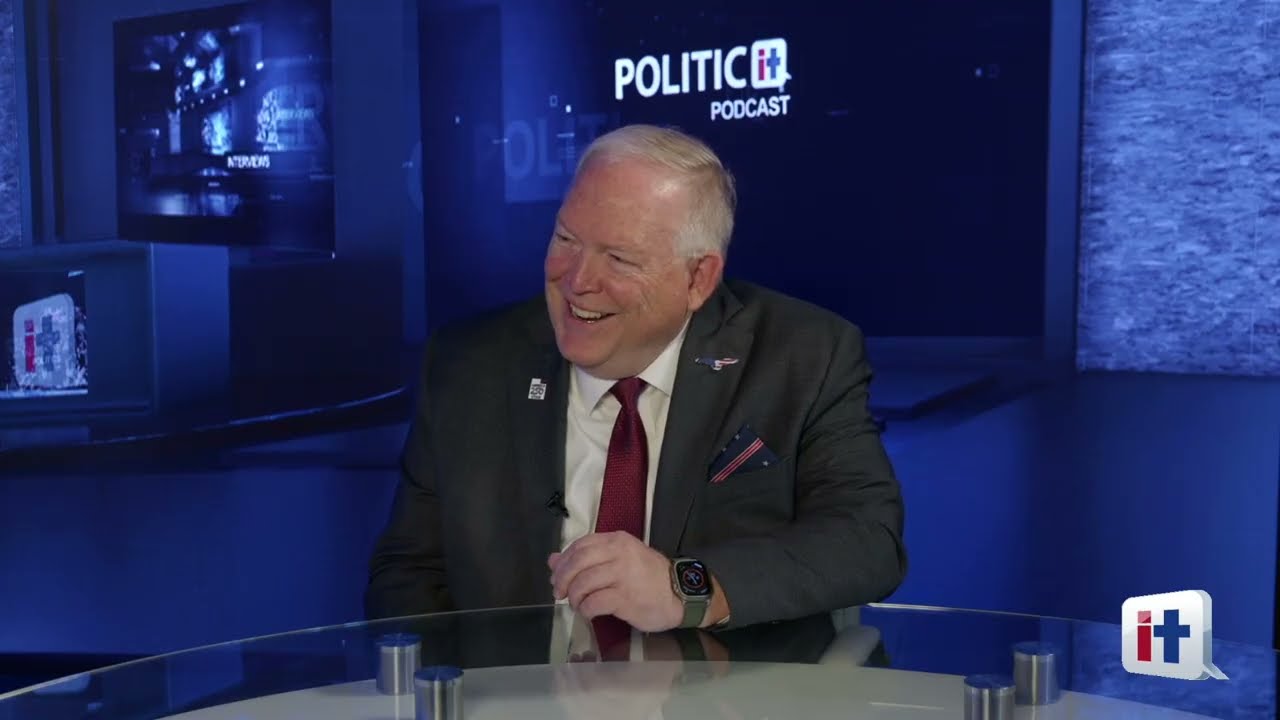
Rich Hyer frames leadership at the county level as practical, not theoretical. Drawing from years on the planning commission and city council, he emphasizes better coordination between county and cities, especially for smaller communities with limited staff. He points to budget discipline as essential, even committing to a 20% pay reduction, and stresses the need for stable funding for public safety. His broader focus is proactive planning, asking better questions, and building partnerships that help communities grow without losing what makes them home.

Leadership at the local level is often overlooked in national political conversations, but it is where day-to-day life gets shaped: where housing guidelines are negotiated, how budgets are prioritized, how public safety gets resourced, and how communities coordinate growth without losing what makes them home.
Rich Hyer’s candidacy for Weber County Commission Seat A is rooted in that kind of practical leadership. His path runs from hands-on craftsmanship and community involvement into public service at the city level, and now into the county conversation. The throughline is consistent: ask good questions, partner better across government, and be willing to look hard at spending and accountability.
PoliticIt Radio – Built in the Quiet Work – A Ballad of Rich Hyer
A hometown beginning: learning duty early
Hyer’s story starts with a hometown upbringing and parents who worked in public service roles. He describes himself as a “typical hometown boy,” born in what was then a hospital on Harrison Boulevard, growing up on the north end of town. His father worked for the Department of something abbreviated as DDO, and his mother worked for the sheriff’s office for years.
What stands out in Hyer’s recollection is that his mother’s work was not abstract or distant. She managed civil office paperwork, complaints, summonses, and related processes. There is also a memorable anecdote about how evidence storage overflowed into the civil office when there were dozens of marijuana plants. It is a detail offered with humor, but it carries the larger point: public service is often the unglamorous coordination of procedures that keep systems functioning.
Even a sheriff-driven “you have to go arrest somebody before you can retire” moment, as Hyer tells it, reflects the culture of the time. People stayed engaged in public duty, and that expectation carried into the way Hyer understands responsibility today.

Education, hobbies, and the craft that became a career
Hyer attended Horace Mann Elementary, then Highland Junior High and Ben Lomond High School. In high school, he was part of the Fighting Scots Clan, and he participated in football and track. He admits he was “never good,” but enjoyed the experience.
Academically, he describes himself as a student of art and science, with art playing an especially pivotal role. In junior high, he excelled enough in art that he completed the curriculum early. The teacher then began assigning additional work, including cutting stones through a lapidary setup in the classroom.
That hobby became an obsessive craft. Hyer learned how to make jewelry, including Indian jewelry, alongside his teacher in high school. Over time, that passion became his career as a jeweler and goldsmith.
He and his wife started a business in the early 1980s when the construction industry faltered. He was making cabinets, the work slowed, and he got laid off. His response was telling: instead of abandoning the skills he already had, he and his wife leaned into what they could do.
He describes it as “a hobby that got out of hand,” a small start that blossomed because there was a need in the area. The business evolved into wholesale goldsmithing, with the family closely involved over time. His wife works with him, and every one of their kids worked in the business at some point.

Mission experience and work ethic
Before fully settling into the long-term business path, Hyer served a mission. He worked for O.C. Tanner for a time, then served in the Pittsburgh Mission, describing himself as the first missionary called to that mission.
He recalls that period as “Steeltown, USA,” full of life and activity. When he returned home, he continued work and then, again, adjusted when economic conditions shifted. The theme is flexibility grounded in competence: learn a skill, build expertise, and when circumstances change, adapt without losing integrity or commitment.
From planning commissions to city council: learning how decisions get made
Hyer’s pivot into public service did not begin with a grand political ambition. It began with an invitation.
More than twenty years ago, a neighbor who was Ogden City Engineer approached him and asked if he would be interested in serving on the Ogden Planning Commission. Hyer did not fully know what it meant at first, but the explanation was straightforward: the planning commission makes recommendations to the city council and mayor about land use.
He accepted, and once he joined, he experienced a learning curve that shaped him. He had to understand city ordinances and how they apply to different uses, and he served for about a decade and a half.
That tenure mattered. He watched city council during a turbulent period marked by friction between the mayor and some council members. Hyer says it became frustrating for him because the planning commission did a lot of work to make recommendations, only to see that process strain under disagreements.
So he took the next logical step: if he wanted to bring more consensus to land use and governance, perhaps he needed to be at the table where votes get cast. He ran for city council, lost once, then returned to run again. He also had a church calling that kept him busy for about eight years before he ran again.
This is how his public service trajectory developed: planning, listening, learning the system, and then stepping in again with more experience.

What motivated the county run: partnerships, budgets, and proactive planning
Weber County governance sits at a level where issues spill across city boundaries. Hyer describes the relationship between the county and cities as “somewhat strange,” arguing that the county and cities must work together but often do not partner as well as they could.
He points to a perceived dynamic where the county wants cities to do what the county wishes, rather than approaching local government as shared problem-solving. For smaller cities, that can be especially difficult when staff capacity is limited.
Hyer also identifies the county budget as a core concern. Compared to nearby counties along the Wasatch Front, he describes Weber County as having a large budget relative to its size. He notes that commissioners are the highest paid commissioners in their set, and he anticipates the criticism that might come with that fact.
His response is not to dismiss concerns but to propose an example: he promised a 20% decrease in his pay as a single commissioner. It is the kind of move that signals priorities, not just policy. He says he cannot control the pay decisions of the other commissioners, but he intends to encourage them to do something similar.
Beyond his own salary, he advocates benchmarking to determine what is reasonable compensation for county leadership.
The goal, as Hyer frames it, is to reduce “bloat” and improve how money is spent so that services actually match what citizens need.

Public safety and the jail ballot initiative
Public safety is another key theme. Hyer discusses the sheriff’s ballot initiative regarding the jail: increasing beds, installing a health wing, and adding a mobile court. He called those moves “brilliant,” and he actively supported the sheriff by stumping and putting up signs.
However, the initiative failed. Hyer says he was disappointed because it did not feel like the commissioners supported it very much, although he acknowledges they may have had reasons he does not know.
His deeper concern is practical: he wants the sheriff’s department to have a solid, stable budget so the department does not feel like it is constantly “begging for money.” If public safety leadership has to operate under chronic uncertainty, it becomes harder to plan, hire, and deliver reliable services.
He also ties this to broader fairness: commissioners and county officials should support employees with reasonable pay, benefits that support family life, and a culture that respects the work people do.
A leadership style built on questions and collaboration
When asked what he can contribute to the job, Hyer does not position himself as an all-knowing fixer. Instead, he emphasizes collaboration and common ground.
He describes the mindset he brings: you can get to the best output by working from common ground, asking the right questions, and bringing in smart people with the data needed to make better decisions. He also repeats a point that comes up earlier in his remarks: he is not “the smartest person in the room,” so he relies on inquiry and expertise rather than ego.
In local government, that can be a big deal. Small misalignments between departments, or between county and city leadership, can create ripple effects in approvals, timelines, and resident outcomes. Hyer’s approach seems designed to reduce those mismatches through better listening and better coordination.

Helping smaller communities plan for growth
One of Hyer’s most specific policy visions involves partnership with smaller cities in the county. Many of these cities, he notes, have populations under 10,000 and limited staffing. They may not have full-time engineers and planners.
Hyer argues the county should be “more eager to partner” with smaller communities to help them with future guidelines. He lists the kinds of questions that planning must answer:
- Where should density be appropriate?
- How can a community organize a plan or master plan for growth?
- Where are heavy traffic areas likely to develop?
- How can communities plan for the growth of their residents without undermining what residents value?
He also frames housing goals as something more personal than political slogans. People want their kids to live close, and communities want to avoid changes they do not choose. That creates a need for local input, not one-size-fits-all directives.
Housing master planning: building consensus across communities
Weber Area County of Governments board and an all-in resolution
Hyer references prior work on a county-wide housing master plan. When he served on the city council, he was the city council’s representative on the Weber Area County of Governments Board.
He says he undertook an assignment to form a resolution to create a county-wide housing master plan, and it received unanimous vote. The housing master plan was intended as guidelines to shape the future.
To achieve that, Hyer describes bringing smart volunteers and having them help communities reach out to their citizens to learn what residents want. The rationale was grounded in empathy: people like where they live, and they do not want disruptive changes driven from outside.
However, he also recounts a frustrating twist. County employees, in his view, did “pretty much everything they could to kill that,” meaning the resolution and plan never fulfilled in the way it was intended.
That disappointment became part of his motivation to consider a county commissioner role, where he believes he could reduce that kind of bureaucratic friction and ensure cooperative planning actually happens.

Sewer improvement board frustrations: permits and consultation
Hyer also notes service on the Central Weber Sewer Improvement Board, a board he describes as “full of mayors.” He says there was discussion among mayors who were upset with the county’s decisions involving land approvals and permits for housing projects.
In the case he describes, some housing projects were approved even though they fell between communities with minimum lot size requirements in their master plans. The mayors felt those approvals happened without consulting them, and Hyer agrees that the situation was “rotten,” as he put it.
That is another example of Hyer’s theme: decisions that affect multiple communities should involve those communities, not just bypass them. Even when county actions are permissible under some interpretation, the governance process itself matters. It shapes trust.
Proactive growth vs. reactive growth
Hyer’s planning philosophy comes down to timing. Growth happens, but the county and cities need to be proactive rather than reactive.
He argues that reactive growth planning rarely has a good end because it forces decisions into crisis mode, when options are narrower and residents are less able to influence outcomes. Proactive planning, by contrast, creates room for feedback, coordination, and better infrastructure alignment.
He ties his planning priorities to state-level pressure as well. He says the legislature is concerned about housing and population growth, and if cities do not handle it, the state will. As a person who values local government and “small government,” he believes local decision-makers should shape outcomes whenever possible.
But local planning can only succeed if the county helps rather than overrides and collaborates with cities so they can act early and effectively.

Economic development and preventing the “in-between” slide
Hyer also frames county growth as a question of economic development and identity. He wants the county to grow in an economic way so it does not become the “poor county between Davis County and Box Elder.”
That line highlights a concern about being squeezed geographically and economically, lacking the resources to compete while still carrying the consequences of regional growth. His perspective is that planning, infrastructure, and budget discipline should support stable outcomes for residents.
Tax increases, sheriff stability, and pay discipline
As election messaging moves toward the finish line, Hyer’s pitch emphasizes restraint and focus. He says he will be mindful of tax increases and the stability of the sheriff’s department.
He also returns to the commitment he made about his own pay. He says he is not running “for the money,” which he demonstrates by taking a 20% pay reduction on the first day. Then he adds that county leaders should look at areas where spending can be cut.
He places culture and partnership alongside finance. In his view, leadership is not just spreadsheets. It is how a county works with cities, how it supports public safety, and how it treats employees so families can thrive.
What kind of leader does this approach require?
What makes Hyer’s candidacy interesting is not only the policies he points to, but the leadership method he seems to value. The method includes:
- Collaboration over confrontation: seeking common ground and getting consensus on outcomes rather than maximizing conflict.
- Questioning over assuming: asking smart people for answers and using data to shape recommendations.
- Fiscal honesty: publicly committing to pay reductions and using benchmarking to guide compensation and spending.
- Proactive planning: engaging growth early rather than dealing with consequences after the fact.
- Partnership with smaller communities: helping cities that lack full planning and engineering staff.
Those elements can sound abstract, but Hyer grounds them in concrete examples: planning commission learning, city council involvement, housing master plan efforts, and sheriff budget stability concerns.
The core issues in plain language
Local elections can be filled with jargon, and residents often have trouble translating candidate statements into what will actually change. Hyer’s key priorities can be summarized in straightforward terms.
1) Fix county-city coordination
He believes the county should partner more effectively with cities instead of directing them. He highlights complaints from mayors and discusses the need for outreach to communities, especially smaller ones with limited staff.
2) Reduce budget bloat and improve accountability
He points to a relatively large county budget and argues there is opportunity for better spending. His commitment to a 20% reduction in his own pay is presented as a starting example, paired with benchmarking for leadership compensation.
3) Protect a stable budget for public safety
He strongly supports the sheriff’s jail and court-related initiatives and wants the sheriff’s department to have stability so it is not constantly scrambling for funding.
4) Plan for housing and growth proactively
He believes local governments should shape growth plans early. If cities do not address housing needs, the state may step in. He supports proactive guidelines for density, traffic, and community master planning.
Why his background matters
Rich Hyer’s journey from craft to governance is not just a personal storyline. It helps explain his approach. Running a wholesale goldsmithing business requires patience, quality standards, and long-term thinking. Public service in planning and city council requires procedural discipline and an ability to synthesize multiple viewpoints into usable recommendations.
He also appears to carry forward a sense of family-centered responsibility. In his words, “people’s most important thing is their family,” and that connects back to how he frames employee pay and benefits.
In short, his background suggests he values:
- Work that compounds over time (craft skill, planning experience, incremental governance learning).
- Systems that function reliably (budget stability, procedural transparency, stable public safety resourcing).
- Practical collaboration (partnership between county and cities, consensus building).
What residents should listen for in this race
Even if a voter does not know Hyer personally, local elections require judgment based on priorities and accountability. If someone is evaluating candidates for county leadership, Hyer’s statements provide a useful lens for asking questions.
Residents can consider:
- How does the candidate propose to handle county spending and potential bloat?
- Do they commit to measurable discipline, such as pay reductions or budget cuts, or do they only talk generally?
- How will they support public safety agencies with stable planning and budgets?
- Will they partner with cities and help smaller communities with planning capacity?
- Do they emphasize proactive housing and growth planning or only react to crises?
Hyer’s pitch is built around those exact themes. He repeatedly returns to budgets, partnership, and proactive planning, while anchoring his approach in collaboration and questioning.
A closing pitch: service, restraint, and culture
In his closing remarks, Hyer emphasizes gratitude for the opportunity to run and acknowledges the stress that comes with campaigning. He presents himself as highly engaged, with a goal of providing good service to county residents.
He says he will be mindful of tax increases, support the sheriff’s department stability, and strengthen partnership and county culture. He reiterates that he is not doing this for money, and he again points to his willingness to take a 20% pay reduction on day one and encourage leadership to look for cost savings where possible.
If there is a single idea that ties his remarks together, it is this: local government should be competent, coordinated, and accountable, with growth planned proactively and resources deployed in a way that supports families, public safety, and community trust.
Quick takeaway
Rich Hyer’s campaign for Weber County Commission Seat A emphasizes three practical pillars: better county-city partnership, disciplined budget oversight, and proactive planning for housing and growth, alongside stable public safety funding. His leadership style is collaborative, question-driven, and grounded in a “small government” philosophy that argues local decisions should shape local outcomes before the state is forced to intervene.
#politicit #utahelections #utpol